Best High-Efficiency Solar Panels (2026)
We compared the top high-efficiency solar panels across every category — from portable foldable panels for camping and backpacking to premium rigid panels for permanent rooftop and RV installations. Every panel on this list is available on Amazon and represents the best we found in its specific category after evaluating specs, real-world buyer feedback, and long-term value.
High-efficiency solar panels — those rated above 20% conversion efficiency — are a strong choice when space is limited or maximum energy density matters. We evaluate examples across PERC, TOPCon, HJT, and IBC technology using published specifications, warranty terms, compatibility information, and buyer-reported patterns. We do not claim hands-on laboratory testing unless a page explicitly documents it.
Disclosure: As an Amazon Associate, we earn from qualifying purchases. This helps support our site at no extra cost to you.
Quick Comparison Table
Prices and availability change often. Use the Amazon button to check the current price and product details for each panel.
| # | Product | Best For | Cell Type | Watts | Efficiency | Price |
|---|---|---|---|---|---|---|
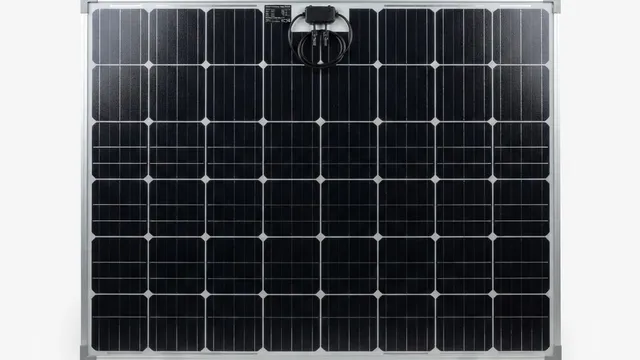
| 1 | Best Overall High-Efficiency | MonocrystallineRigid | 400W | 22.8% | Check Current Price | |
| 2 | Best Portable Solar Panel | MonocrystallinePortable | 100W | 23.7% | Check Current Price | |
| 3 | Best Solar Panel for RV | MonocrystallineRigid | 200W | 21.6% | Check Current Price | |
| 4 | Best Solar Panel for Camping | MonocrystallineFoldable | 200W | 23.4% | Check Current Price | |
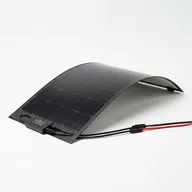
| 5 | Best Flexible Solar Panel | MonocrystallineFlexible | 200W | 22.4% | Check Current Price | |
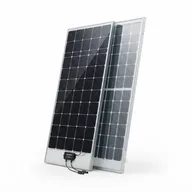
| 6 | Best Bifacial Solar Panel | TOPConRigid | 400W | 22.5% | Check Current Price | |
| 7 | Best Solar Panel Kit | MonocrystallineKit | 200W | 21.4% | Check Current Price | |
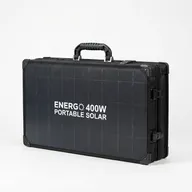
| 8 | Best for Solar Generator | MonocrystallinePortable | 400W | 22.6% | Check Current Price | |
| 9 | Best Budget High-Efficiency | MonocrystallineRigid | 100W | 21.2% | Check Current Price | |
| 10 | Best Premium Solar Panel | IBCRigid | 400W | 22.8% | Check Current Price |
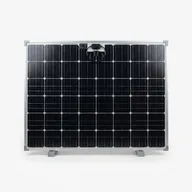



Watts
400W
Cell
Monocrystalline
Eff.
22.8%
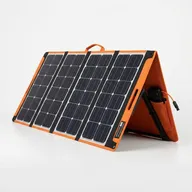
Watts
100W
Cell
Monocrystalline
Eff.
23.7%
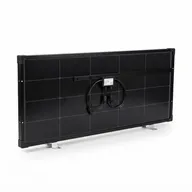
Watts
200W
Cell
Monocrystalline
Eff.
21.6%
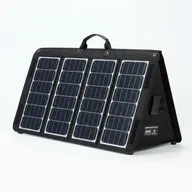
Watts
200W
Cell
Monocrystalline
Eff.
23.4%
Watts
200W
Cell
Monocrystalline
Eff.
22.4%
Watts
400W
Cell
TOPCon
Eff.
22.5%
Watts
200W
Cell
Monocrystalline
Eff.
21.4%
Watts
400W
Cell
Monocrystalline
Eff.
22.6%
Watts
100W
Cell
Monocrystalline
Eff.
21.2%
Watts
400W
Cell
IBC
Eff.
22.8%
Detailed Reviews by Category
WATTS
400W
EFF.
22.8%
TYPE
Rigid
CELL
Monocrystalline
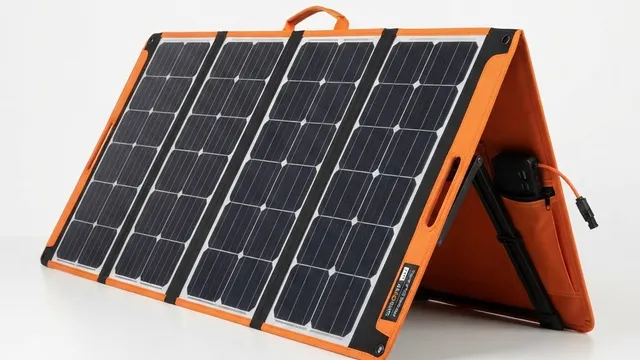
Renogy 400W Monocrystalline Solar Panel Kit
by Renogy
Listed as a monocrystalline PERC panel. Treat efficiency, warranty, and electrical values as manufacturer or listing specifications that should be verified before purchase.
Who this is for
- 400W-class rated output
- Rigid format for permanent mounting
- Standard solar-system use case
Avoid if
You need a portable, foldable, or very lightweight panel
WATTS
100W
EFF.
23.7%
TYPE
Portable
CELL
Monocrystalline
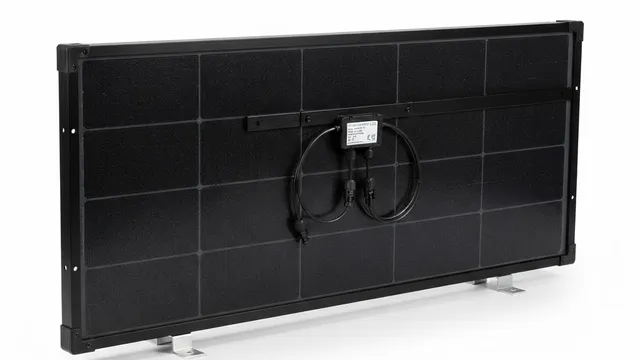
Jackery SolarSaga 100W Air Portable Solar Panel
by Jackery
Listed as a portable monocrystalline panel. Verify current cell-efficiency, connector, weather-resistance, and power-station compatibility information in current manufacturer documentation.
Who this is for
- Portable folding form factor
- 100W-class rated output
- Designed for temporary outdoor deployment
Avoid if
You need substantially more solar input or require a connector standard not supported by the current model
WATTS
200W
EFF.
21.6%
TYPE
Rigid
CELL
Monocrystalline
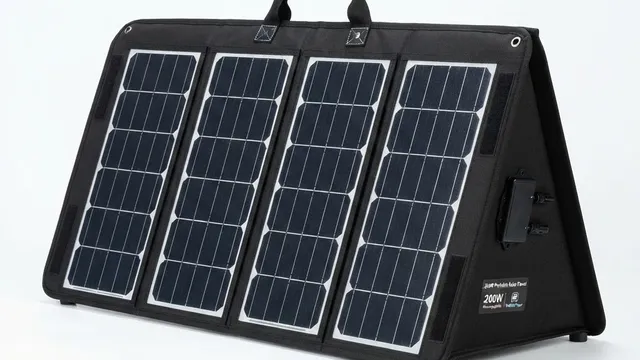
Rich Solar 200W 12V Monocrystalline Panel
by Rich Solar
Listed as a 12V-class monocrystalline module. Verify current electrical values, dimensions, mounting requirements, and warranty terms before designing an array.
Who this is for
- 200W-class rated output
- Rigid permanent-mount format
- Common use case for RV and small off-grid arrays
Avoid if
You need a flexible or frequently moved panel
WATTS
200W
EFF.
23.4%
TYPE
Foldable
CELL
Monocrystalline
BougeRV 200W Portable Camping Panel
by BougeRV
Listed as a foldable monocrystalline panel. Verify current unfolded dimensions, connectors, weather rating, and electrical specifications with the manufacturer.
Who this is for
- 200W-class portable format
- Foldable for transport and storage
- Suitable category for power-station charging
Avoid if
You need backpack-scale weight or a permanently mounted module

WATTS
200W
EFF.
22.4%
TYPE
Flexible
CELL
Monocrystalline
Renogy 200W Flexible Solar Panel
by Renogy
Listed as a flexible monocrystalline module. Do not exceed the manufacturer-specified bend radius, and verify current mounting, temperature, warranty, and weather-resistance guidance.
Who this is for
- Low-weight flexible format
- Thin profile for constrained mounting situations
- 175W-class rated output
Avoid if
You prefer a ventilated rigid rack, frequent panel removal, or maximum structural protection

WATTS
400W
EFF.
22.5%
TYPE
Rigid
CELL
TOPCon
Epoch 400W Bifacial Solar Panel
by Epoch
Listed as a bifacial TOPCon module. Rear-side contribution is site-dependent and varies with clearance, surface reflectivity, racking, shading, season, and installation geometry.
Who this is for
- 455W-class front-side rating
- Bifacial construction can use rear-side light
- TOPCon cell architecture listed for this model
Avoid if
The module will be mounted close to an opaque dark surface or you need portability

WATTS
200W
EFF.
21.4%
TYPE
Kit
CELL
Monocrystalline
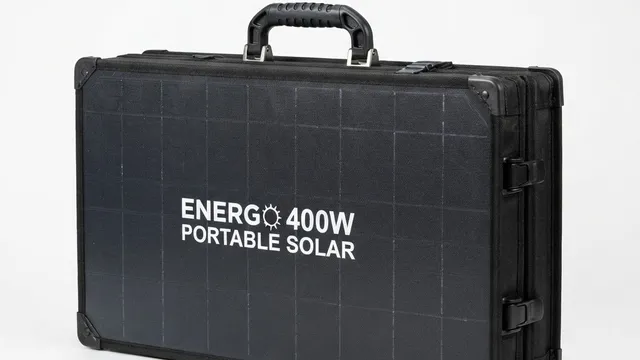
Renogy 200W Solar Starter Kit
by Renogy
Listed as a kit containing solar components intended to work together. Verify the exact controller, wiring, mounting hardware, battery requirements, and included accessories in the current listing.
Who this is for
- Bundle format can simplify component selection
- 200W-class panel capacity
- Useful starting point for learning small-system architecture
Avoid if
You already own major system components or need a larger array
WATTS
400W
EFF.
22.6%
TYPE
Portable
CELL
Monocrystalline
EcoFlow 400W Portable Solar Panel
by EcoFlow
Listed as a 400W portable monocrystalline panel. Verify the current unfolded size, weight, weather rating, connector arrangement, and power-station input compatibility before purchase.
Who this is for
- 400W-class portable nameplate rating
- Portable rather than permanent-mount format
- Relevant to large power-station charging setups
Avoid if
You need a lightweight backpacking panel or your power station cannot accept the proposed input
WATTS
100W
EFF.
21.2%
TYPE
Rigid
CELL
Monocrystalline
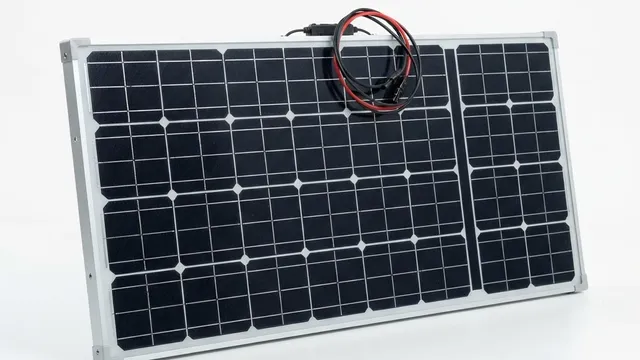
HQST 100W Monocrystalline Solar Panel
by HQST
Listed as a 100W monocrystalline rigid panel. Verify current dimensions, electrical specifications, weather rating, connectors, and warranty terms before use.
Who this is for
- Compact 100W-class format
- Rigid construction for permanent mounting
- Common size for small-system expansion
Avoid if
Your daily energy needs require substantially more array capacity

WATTS
400W
EFF.
22.8%
TYPE
Rigid
CELL
IBC
Renogy 400W ShadowFlux N-Type Solar Panel
by Renogy
Listed as an IBC module. Verify current efficiency, warranty, degradation, electrical, and availability information using current manufacturer documentation before designing around this model.
Who this is for
- 425W-class rated output
- IBC cell architecture listed for this model
- High-efficiency category
Avoid if
You need a portable panel or are comparing only on lowest upfront cost
How We Picked These Panels
Every panel on this list was evaluated against a consistent set of criteria. We start with efficiency — only panels rated at 20% or higher qualify as "high-efficiency" for consumer applications. Below that threshold, the energy gains don't justify the premium price point in most real-world setups.
We also look at form factor suitability — a 400W rigid panel is a great RV rooftop panel but a terrible camping panel. Each product is evaluated within the context of its intended use case. A portable foldable panel rated at 100W and 23% efficiency is a better "portable camping panel" than a 200W rigid unit that weighs 25 lbs.
Connector standards matter because incompatible connectors waste money on adapters and create potential failure points. We favor panels with industry-standard MC4 connectors for fixed installations and Anderson Powerpole or XT60 for portable use.
Warranty length is a proxy for manufacturer confidence. A panel backed by a 25-year performance warranty is a fundamentally different product than one with a 1-year warranty, even if the specs on paper look similar. For permanent installations, we strongly favor panels with long-term performance guarantees.
We also factor in buyer feedback as a secondary signal. Repeated reports can reveal issues that specification sheets do not cover, such as shipping damage, connector durability, or moisture concerns. Buyer reports are treated as anecdotal evidence rather than controlled test results.
Finally, we do not accept sponsored placements, affiliate incentives to rank products higher, or manufacturer-provided test data. Prices change frequently on Amazon — we never hardcode prices. Use the "Check Price on Amazon" buttons to see current, live pricing.
What "High Efficiency" Actually Means for Buyers
The word "efficiency" gets overused in solar marketing. Here's what it actually means for your purchase decision: a 22% efficiency panel produces 22 watts of electricity for every 100 watts of sunlight that hits it. A 17% efficiency panel produces 17 watts from the same 100 watts of sunlight.
That 5-percentage-point difference is significant when you have limited surface area — like an RV roof, a backpack, or a van roof. A high-efficiency panel lets you produce more power from less space. But if space isn't a constraint, a lower-efficiency panel at a lower price point may deliver equal value.
The practical takeaway: prioritize efficiency when space is limited. For large ground mounts or open rooftops with room to add more panels, price-per-watt often matters more than efficiency percentage.
Also worth noting: efficiency ratings are measured under Standard Test Conditions (STC) — 25°C cell temperature, 1000 W/m² irradiance, and AM 1.5 solar spectrum. Real-world output is typically 10–25% lower due to temperature, partial shading, wiring losses, and non-optimal sun angles. A panel rated at 22% STC efficiency will realistically produce closer to 17–20% in outdoor conditions. All panels lose some efficiency at high temperatures — this is why HJT panels, which have a superior temperature coefficient, outperform PERC panels in hot climates despite sometimes having similar STC ratings.
Which Panel Technology Should You Choose?
Not all high-efficiency panels are created equal. The four main technologies you'll encounter are PERC, HJT, TOPCon, and IBC — each with distinct trade-offs.
PERC (Passivated Emitter Rear Cell)
The most widely produced high-efficiency technology. PERC panels add a reflective layer on the back of the cell to bounce unused light back through the silicon, increasing efficiency by 1–2 percentage points over standard mono. They're now the baseline for quality solar panels, available in a wide range of wattages, and generally the most affordable of the high-efficiency options. Great all-around choice for most buyers.
HJT (Heterojunction Technology)
HJT panels sandwich amorphous silicon layers around a crystalline silicon core. This design dramatically reduces recombination losses and gives HJT panels a much lower temperature coefficient — they lose less efficiency in the heat. In climates where summer temperatures regularly push panels above 50°C, HJT panels can outperform PERC panels significantly despite similar STC efficiency ratings. They also degrade more slowly over time. The downside: they cost more. Best for hot climates, long-term installations, and buyers who want maximum lifetime energy yield.
TOPCon (Tunnel Oxide Passivated Contact)
TOPCon is the newest mainstream technology and is rapidly displacing standard PERC in manufacturing. It achieves higher efficiency than PERC through a passivated contact structure that reduces recombination at the back of the cell. TOPCon panels can exceed 22.5% efficiency at competitive prices, and they perform well at low-light conditions — useful in overcast climates. Increasingly the best choice when you want PERC pricing with HJT-adjacent performance.
IBC (Interdigitated Back Contact)
IBC panels move all electrical contacts to the rear of the cell, eliminating shading from front-side busbars. The result is the highest conversion efficiency of any consumer silicon solar panel — regularly above 24%. SunPower (now Maxeon) pioneered this technology and it remains the gold standard for premium residential installations where space is limited and maximum yield per square foot matters. The price premium is real, but so is the performance advantage.
Get the Free Solar Panel Sizing Checklist
Enter your email and get a simple checklist to help choose the right solar panel wattage, panel type, and setup for your RV, cabin, camping gear, or backup power system.