Highest Efficiency Solar Panels (2026 Guide)
Which solar panels deliver the highest real-world efficiency? This guide covers the most efficient solar panel technologies available to consumers today — including PERC, HJT, TOPCon, and IBC cells.
Disclosure: As an Amazon Associate, we earn from qualifying purchases. This helps support our site at no extra cost to you.
What Makes a Solar Panel "High Efficiency"?
A high-efficiency solar panel converts a greater percentage of sunlight into electricity. Consumer-grade panels typically range from 15% to 24% efficiency. Panels above 20% are considered high-efficiency and are almost always monocrystalline.
The highest efficiency commercially available solar panels use advanced cell architectures like PERC, HJT (heterojunction), TOPCon, and IBC (interdigitated back contact). These technologies reduce energy losses at the cell level.
Efficiency Rankings by Cell Technology
- IBC Cells: Up to 24%+ — Best lab-to-panel efficiency
- HJT Cells: Up to 23%+ — Excellent temperature performance
- TOPCon Cells: Up to 22.5%+ — Rising star in efficiency
- PERC Cells: Up to 22%+ — Most common high-efficiency tech
- Standard Mono: 20-21% — Reliable, affordable
- Polycrystalline: 15-18% — Budget option, lower efficiency
Why Real-World Efficiency Differs From Spec Sheets
Manufacturer efficiency ratings are measured under Standard Test Conditions (STC): 25°C cell temperature, 1000 W/m² irradiance, and AM 1.5 solar spectrum. These are controlled lab conditions that almost never exist in the real world.
In practice, several factors reduce actual output significantly:
- Temperature: Solar panels lose efficiency as they heat up. Most panels operate at 45–65°C on a hot day — not 25°C. A typical temperature coefficient of -0.35%/°C means a panel running at 55°C produces about 10.5% less power than its STC rating. HJT panels have a coefficient closer to -0.26%/°C, which is a meaningful advantage in hot climates.
- Angle and orientation: A panel produces maximum power when perpendicular to the sun. Most fixed installations aren't perfectly angled all day. East or west-facing panels lose 10–30% annual production vs. south-facing (in the Northern Hemisphere).
- Partial shading: Even 10% shade on one cell can reduce the entire string's output dramatically without bypass diodes. Modern panels include bypass diodes to mitigate this, but shading should still be minimized.
- Wiring and inverter losses: DC wiring losses, inverter conversion losses, and connector resistance together account for another 5–10% reduction.
- Soiling and dust: A dirty panel can lose 5–25% of output depending on dust accumulation and rain frequency.
A panel rated at 22% STC efficiency will realistically deliver 17–20% effective efficiency in field conditions. This is normal and expected. Understanding this gap is critical when calculating how many panels you need — always size your system using a conservative efficiency derating factor of 15–20%.
The temperature coefficient is one of the most underrated specs when comparing panels. Two panels with identical STC efficiency ratings can have meaningfully different real-world output if one has a better (lower absolute value) temperature coefficient. For hot climates — think Arizona, Texas, Southern California, or Southeast Asia — always check the temperature coefficient, not just the headline efficiency.
How to Choose the Right High-Efficiency Panel
The highest efficiency panel isn't always the right panel. Here's a practical decision framework:
- Space-constrained installations (RV roof, boat, van): Maximize efficiency. A 400W panel in the footprint of a 300W panel is worth the premium when you can't add more panels.
- Unlimited roof or ground space: Optimize for price-per-watt. If you can fit 12 panels instead of 10, the lower-cost option often makes more financial sense.
- Hot climates: Prioritize temperature coefficient. Look for HJT or TOPCon panels with a coefficient better than -0.30%/°C.
- Overcast or northern climates: Prioritize low-light performance. TOPCon and HJT panels perform better than PERC in diffuse light conditions.
- Portable use: Weight and foldability matter more than peak efficiency. A 23% efficient panel that weighs 15 lbs is less practical for backpacking than a 20% efficient panel that weighs 3 lbs.
- Long-term investment: Higher efficiency panels degrade more slowly. IBC and HJT panels typically carry better degradation warranties than standard mono panels.
Best High-Efficiency Panels to Buy
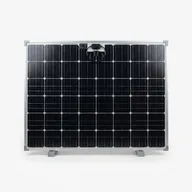
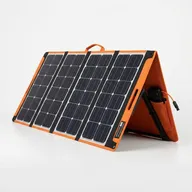
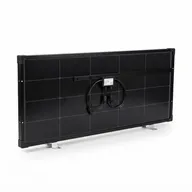
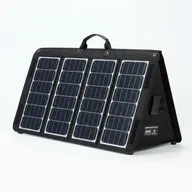
Below are the highest efficiency solar panels currently available for consumer purchase. Each has been evaluated for real-world performance, form factor appropriateness, and long-term reliability — not just lab spec numbers.
Prices and availability change often. Use the Amazon button to check the current price and product details for each panel.
| # | Product | Best For | Cell Type | Watts | Efficiency | Price |
|---|---|---|---|---|---|---|
| 1 | Best Overall High-Efficiency | MonocrystallineRigid | 400W | 22.8% | Check Current Price | |
| 2 | Best Portable Solar Panel | MonocrystallinePortable | 100W | 23.7% | Check Current Price | |
| 3 | Best Solar Panel for RV | MonocrystallineRigid | 200W | 21.6% | Check Current Price | |
| 4 | Best Solar Panel for Camping | MonocrystallineFoldable | 200W | 23.4% | Check Current Price | |
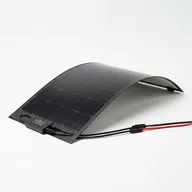
| 5 | Best Flexible Solar Panel | MonocrystallineFlexible | 200W | 22.4% | Check Current Price | |
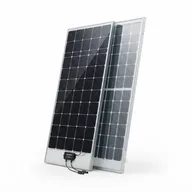
| 6 | Best Bifacial Solar Panel | TOPConRigid | 400W | 22.5% | Check Current Price | |
| 7 | Best Solar Panel Kit | MonocrystallineKit | 200W | 21.4% | Check Current Price | |
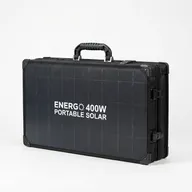
| 8 | Best for Solar Generator | MonocrystallinePortable | 400W | 22.6% | Check Current Price | |
| 9 | Best Budget High-Efficiency | MonocrystallineRigid | 100W | 21.2% | Check Current Price | |
| 10 | Best Premium Solar Panel | IBCRigid | 400W | 22.8% | Check Current Price |



Watts
400W
Cell
Monocrystalline
Eff.
22.8%
Watts
100W
Cell
Monocrystalline
Eff.
23.7%
Watts
200W
Cell
Monocrystalline
Eff.
21.6%
Watts
200W
Cell
Monocrystalline
Eff.
23.4%
Watts
200W
Cell
Monocrystalline
Eff.
22.4%
Watts
400W
Cell
TOPCon
Eff.
22.5%
Watts
200W
Cell
Monocrystalline
Eff.
21.4%
Watts
400W
Cell
Monocrystalline
Eff.
22.6%
Watts
100W
Cell
Monocrystalline
Eff.
21.2%
Watts
400W
Cell
IBC
Eff.
22.8%