Best Solar Panels for RV (2026)
Whether you need rigid rooftop panels, flexible panels for a curved roof, or portable panels for boondocking, here are the best high-efficiency solar panels for RV use.
Disclosure: As an Amazon Associate, we earn from qualifying purchases. This helps support our site at no extra cost to you.
Quick Comparison Table
Prices and availability change often. Use the Amazon button to check the current price and product details for each panel.
| # | Product | Best For | Cell Type | Watts | Efficiency | Price |
|---|---|---|---|---|---|---|
| 1 | Best Solar Panel for RV | MonocrystallineRigid | 200W | 21.6% | Check Current Price | |
| 2 | Best Flexible Solar Panel | MonocrystallineFlexible | 200W | 22.4% | Check Current Price | |
| 3 | Best Budget High-Efficiency | MonocrystallineRigid | 100W | 21.2% | Check Current Price |
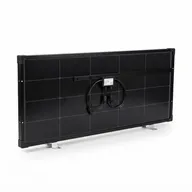
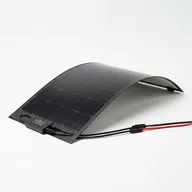

Watts
200W
Cell
Monocrystalline
Eff.
21.6%
Watts
200W
Cell
Monocrystalline
Eff.
22.4%
Watts
100W
Cell
Monocrystalline
Eff.
21.2%
Detailed RV Solar Panel Reviews
WATTS
200W
EFF.
21.6%
TYPE
Rigid
CELL
Monocrystalline
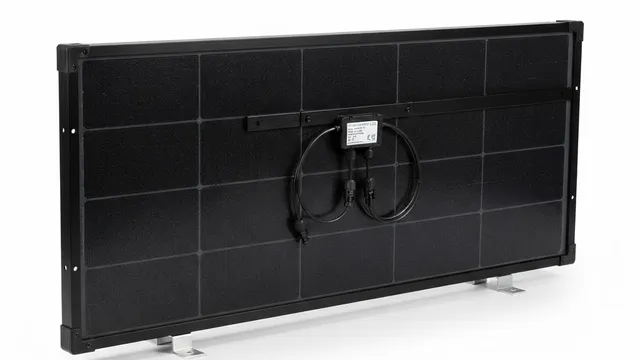
Rich Solar 200W 12V Monocrystalline Panel
by Rich Solar
Listed as a 12V-class monocrystalline module. Verify current electrical values, dimensions, mounting requirements, and warranty terms before designing an array.
Who this is for
- 200W-class rated output
- Rigid permanent-mount format
- Common use case for RV and small off-grid arrays
Avoid if
You need a flexible or frequently moved panel

WATTS
200W
EFF.
22.4%
TYPE
Flexible
CELL
Monocrystalline
Renogy 200W Flexible Solar Panel
by Renogy
Listed as a flexible monocrystalline module. Do not exceed the manufacturer-specified bend radius, and verify current mounting, temperature, warranty, and weather-resistance guidance.
Who this is for
- Low-weight flexible format
- Thin profile for constrained mounting situations
- 175W-class rated output
Avoid if
You prefer a ventilated rigid rack, frequent panel removal, or maximum structural protection
WATTS
100W
EFF.
21.2%
TYPE
Rigid
CELL
Monocrystalline
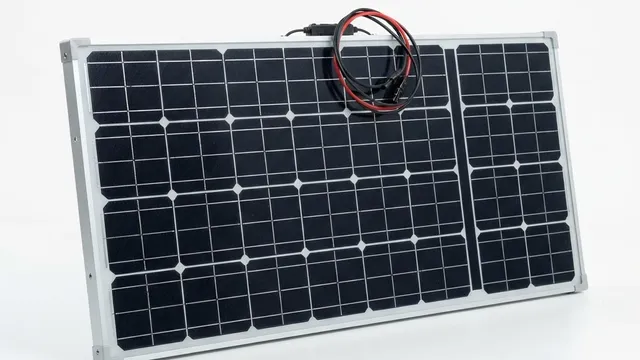
HQST 100W Monocrystalline Solar Panel
by HQST
Listed as a 100W monocrystalline rigid panel. Verify current dimensions, electrical specifications, weather rating, connectors, and warranty terms before use.
Who this is for
- Compact 100W-class format
- Rigid construction for permanent mounting
- Common size for small-system expansion
Avoid if
Your daily energy needs require substantially more array capacity
RV Solar Panel Buying Guide
Measure your usable roof space first. RV roofs have vents, AC units, antennas, and skylights that limit panel placement. Draw a rough diagram of your roof and identify the clear, flat areas. A 100W rigid panel is typically 21" × 47" — know how many fit before you shop. Don't forget clearance around roof edges.
How much solar do you actually need? The right wattage depends on your camping style. Weekend campers with basic loads (lights, phone, fan) typically need 200–400W. Full-time boondockers running a 12V refrigerator, laptop, TV, and CPAP typically need 600–1200W. Use our solar panel calculator to get a precise estimate for your load profile.
Always use an MPPT charge controller. MPPT controllers extract 15–30% more power from your panels compared to PWM controllers. For any system over 100W, MPPT is the correct choice. Renogy Rover, Victron SmartSolar, and Epever Tracer are the most popular options for RV use. Size your controller to handle your panel array's short-circuit current with a 25% safety margin.
Rigid vs flexible for your roof type. Rigid aluminum-framed panels are the best long-term choice for flat or near-flat RV roofs — they run cooler, last 25+ years, and produce more watts per dollar. Flexible panels make sense for significantly curved roofs (some teardrop trailers, Airstreams) where rigid panels won't sit flat. Flexible panels mounted directly to a hot metal roof lose significant output to heat — if you go flexible, leave a small air gap if possible.
Wiring: series or parallel? For 12V battery systems, wire panels in parallel (same voltage, additive current). For 24V systems with an MPPT controller, series wiring (additive voltage, lower current) reduces wire losses over long roof-to-battery runs and is generally preferred. Always match your wiring configuration to your controller's rated input voltage.
Consider a portable supplemental panel. Many experienced RVers mount 200–400W of rigid panels permanently on the roof and also carry a 100–200W foldable panel for campsite use. The portable panel can be positioned for optimal sun angle throughout the day, adding 30–50% more output vs fixed flat-roof panels during low-sun periods.
Frequently Asked Questions
What solar panel wattage is enough for full-time RV living?
For full-time RV living with a 12V refrigerator, laptop, lighting, phone charging, and a fan, most owners settle on 400–800W. Running rooftop AC on solar requires 1000W+ of solar and large battery storage — most full-timers use a generator supplement for high-draw AC use.
Should I get flexible or rigid solar panels for my RV?
Rigid monocrystalline PERC or HJT panels are the better choice for most RVs. They run cooler, last longer (25+ years vs 5–10 for flexible), and produce more watts per dollar. Flexible panels are worth considering only if your roof has significant curvature that prevents rigid panel mounting.
How many 200W solar panels do I need for an RV?
Two 200W panels (400W total) is a solid baseline for most Class B and Class C RVs running a 12V refrigerator and basic electronics. For larger Class A motorhomes or full-time boondocking, three to six 200W panels (600W–1200W) is more appropriate.
Get the Free Solar Panel Sizing Checklist
Enter your email and get a simple checklist to help choose the right solar panel wattage, panel type, and setup for your RV, cabin, camping gear, or backup power system.