100W vs 200W Solar Panels for Van Life: Which Size Fits Your Rig?
Choosing between a 100W and 200W solar panel for van life is less about picking the bigger number and more about matching solar input to your battery, available mounting space and daily energy use. A small system can be perfectly sensible for lights, phones and modest electronics, while heavier loads usually justify more collection capacity. This guide shows how to compare the two sizes without relying on unrealistic production promises.
Quick Answer
For light van-life electrical loads, 100W can be a useful starting point. A 200W panel or kit gives more collection capacity when roof space, controller limits and battery size allow it. Estimate your daily watt-hours first, then verify panel voltage, controller input limits and physical dimensions before buying.
Recommended Products
Based on listed specifications. Prices and availability change — check Amazon for current details.
Disclosure: As an Amazon Associate, we earn from qualifying purchases. This helps support our site at no extra cost to you.
Prices and availability change often. Use the Amazon button to check the current price and product details for each panel.
| # | Product | Best For | Cell Type | Watts | Efficiency | Price |
|---|---|---|---|---|---|---|
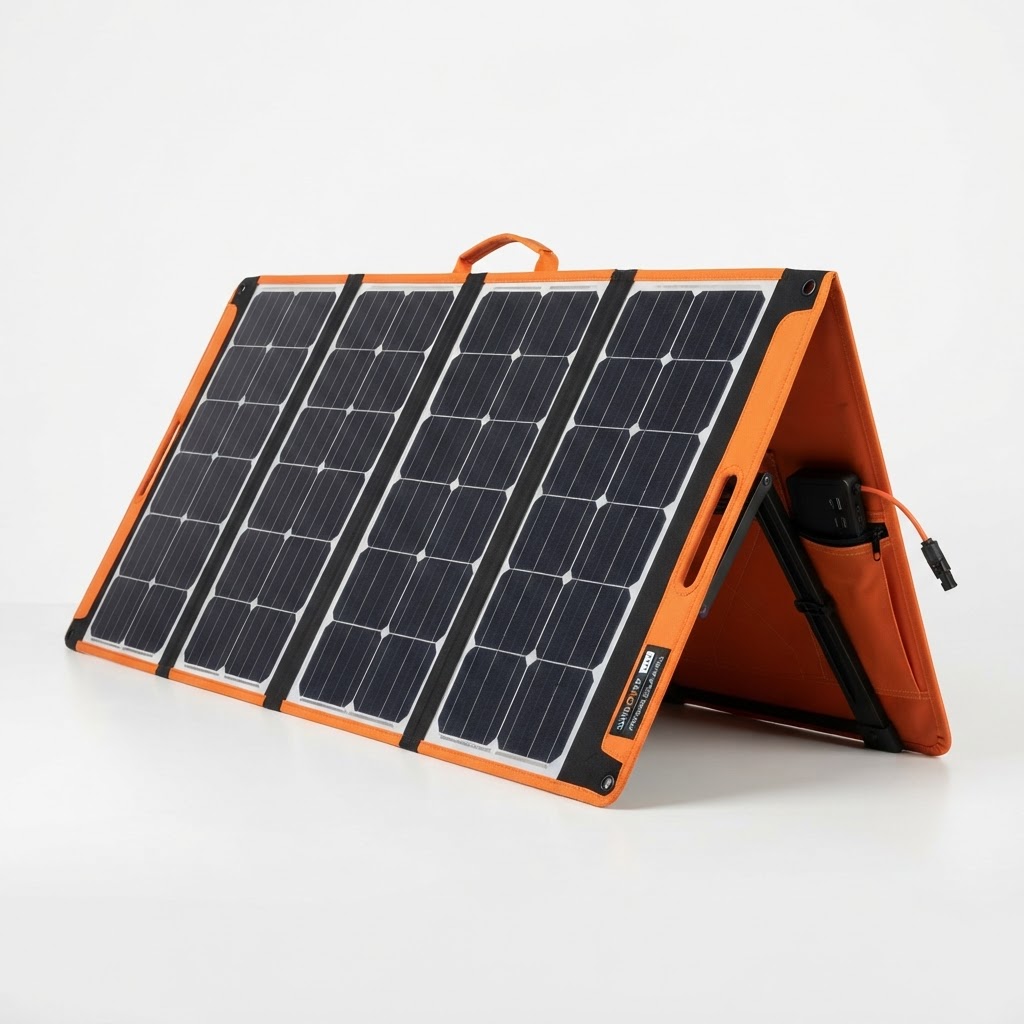
| 1 | Best Portable Solar Panel | MonocrystallinePortable | 100W | 23.7% | Check Current Price | |
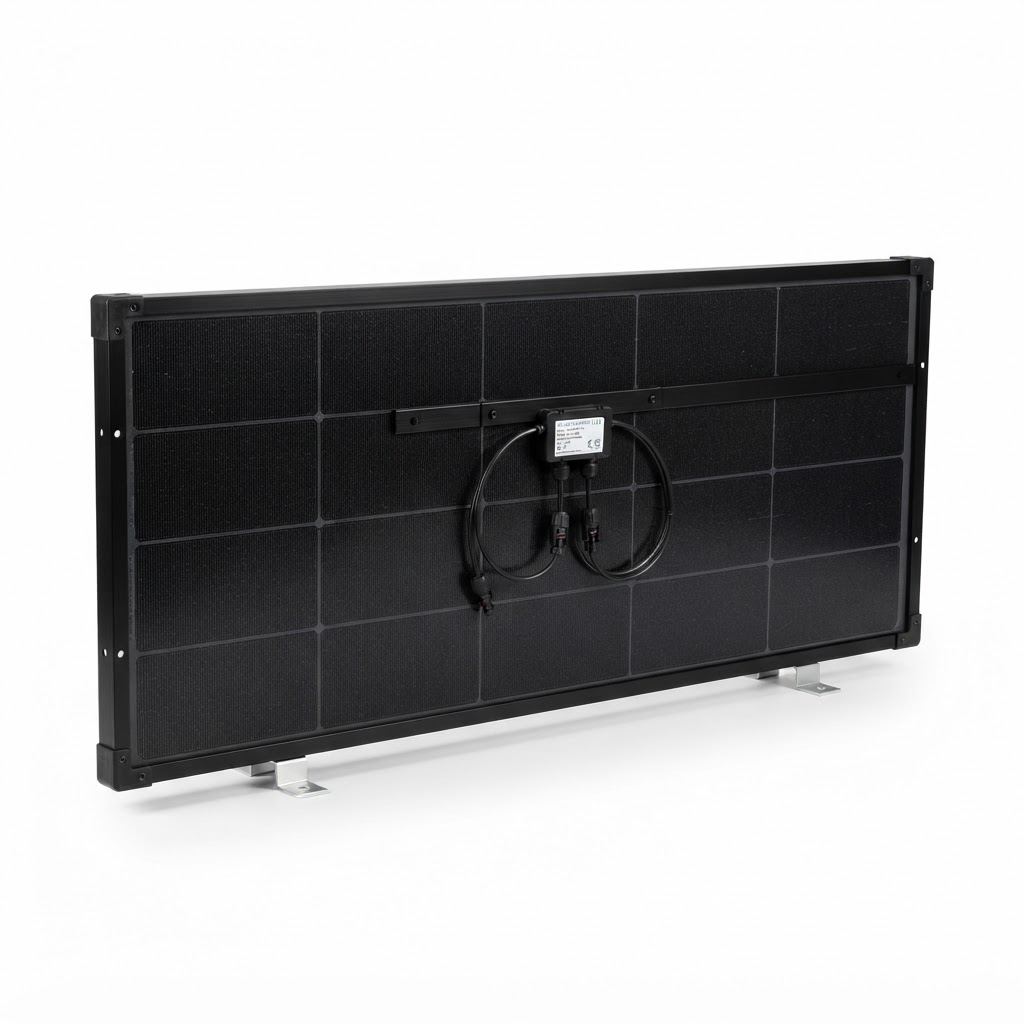
| 2 | Best Solar Panel for RV | MonocrystallineRigid | 200W | 21.6% | Check Current Price | |
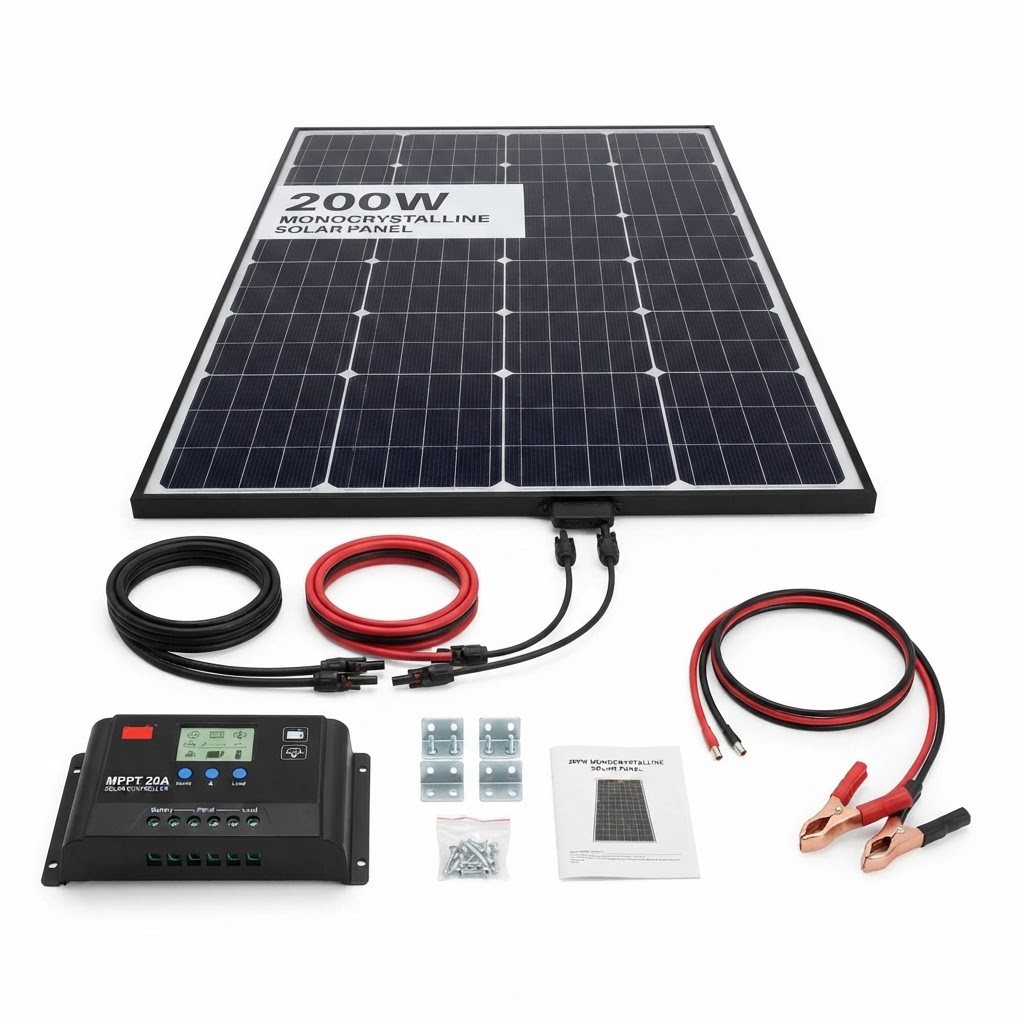
| 3 | Best Solar Panel Kit | MonocrystallineKit | 200W | 21.4% | Check Current Price | |
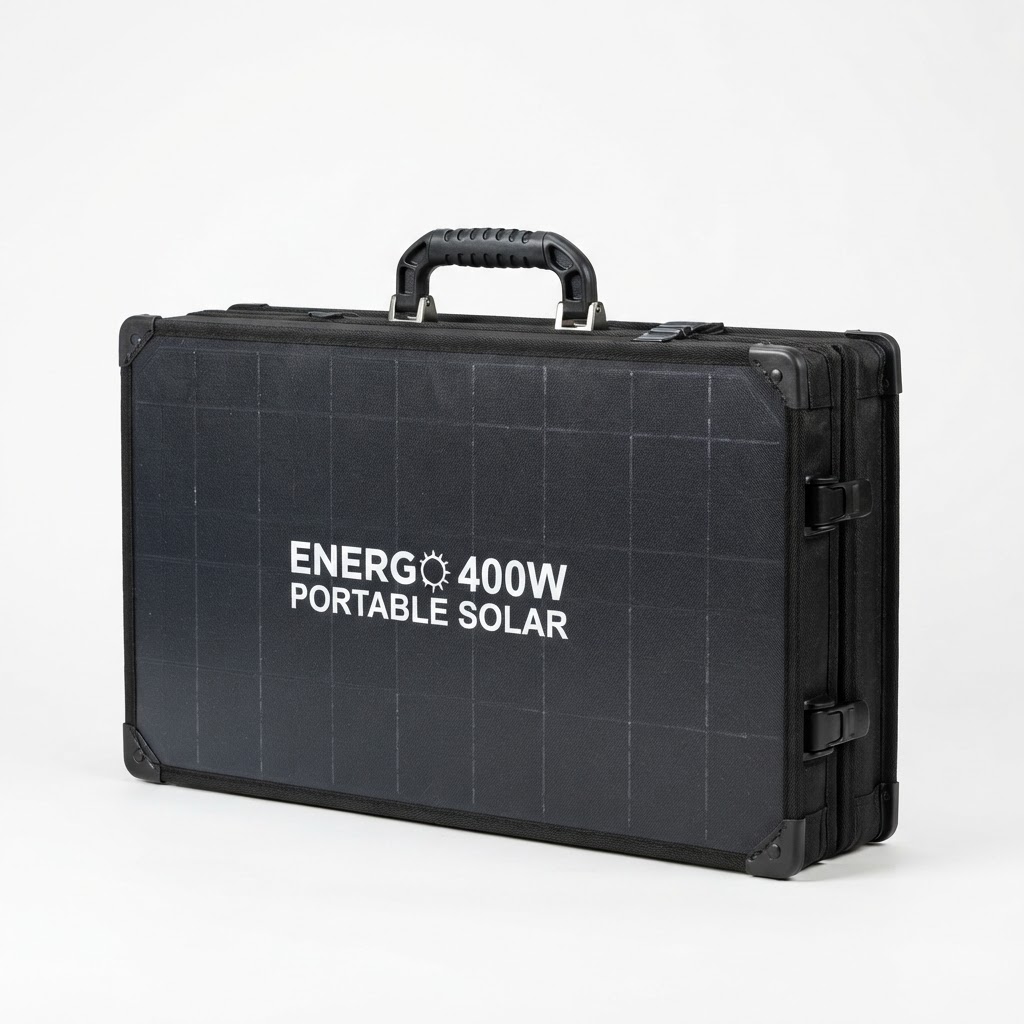
| 4 | Best for Solar Generator | MonocrystallinePortable | 400W | 22.6% | Check Current Price | |
| 5 | Best Budget High-Efficiency | MonocrystallineRigid | 100W | 21.2% | Check Current Price |
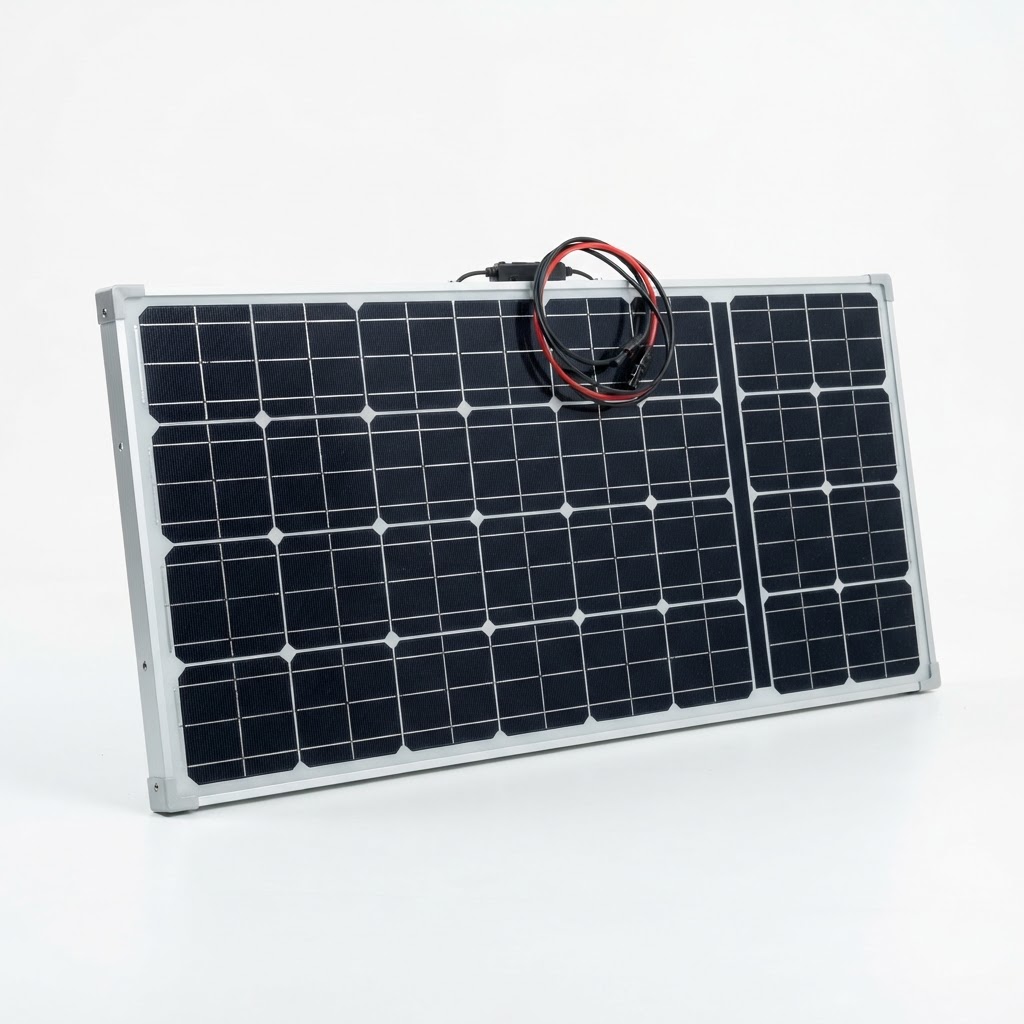
Watts
100W
Cell
Monocrystalline
Eff.
23.7%
Watts
200W
Cell
Monocrystalline
Eff.
21.6%
Watts
200W
Cell
Monocrystalline
Eff.
21.4%
Watts
400W
Cell
Monocrystalline
Eff.
22.6%
Watts
100W
Cell
Monocrystalline
Eff.
21.2%
Start With Daily Watt-Hours, Not Panel Wattage
List the devices you actually expect to run and estimate watt-hours per day. Multiply each device’s watts by the hours it operates, then add the totals. Solar-panel wattage is a laboratory-style nameplate figure, not a promise of daily energy. Weather, season, shading, panel angle, temperature and system losses all change output. Once you have a daily energy target, 100W and 200W become useful system-design choices instead of arbitrary labels. A smaller electrical load may leave little reason to sacrifice roof space for a larger panel, while refrigeration, laptops, fans and frequent device charging can make additional collection area valuable.
When a 100W Panel Makes Sense for Van Life
A 100W-class panel can suit a minimalist van, a supplemental portable setup or a system where roof space is fragmented by vents and racks. It is also easier to treat as a modular building block: two compatible 100W panels may provide placement flexibility that one larger module cannot. The tradeoff is that limited collection capacity gives you less margin during short winter days or cloudy stretches. If you plan to expand later, confirm that your charge controller, wiring and battery system can accommodate the future array rather than designing only around the first panel.
When 200W Is the Better Starting Point
A 200W-class panel or kit can be attractive when you want more charging potential without managing several smaller modules. For many vans, the decision hinges on whether a 200W panel physically fits the usable roof area and stays clear of vents, antennas and shaded zones. Portable 200W panels can also work when parking the van in shade while placing the panel in sun. Before purchasing, compare open-circuit voltage, operating voltage, current, connector type and controller limits. A wattage match alone does not establish electrical compatibility.
Rigid, Flexible, or Portable?
Rigid panels generally suit permanent roof racks and framed mounting. Flexible panels can help where low weight or a curved surface matters, but installation method and heat management deserve attention. Portable and foldable panels trade permanent collection for the ability to reposition toward sunlight and store the panel when traveling. A hybrid setup can be useful: permanent roof solar handles routine charging while a portable panel adds collection at camp. The right form factor depends on how you travel, how often you move and whether you are comfortable deploying equipment at each stop.
Battery and Charge Controller Compatibility
Solar panels should be evaluated as part of the complete charging system. Check the controller’s maximum solar input voltage and current, the battery charging requirements, wire sizing and fuse protection. If combining panels, verify that the electrical configuration is appropriate for the controller and that the panels are reasonably compatible. Do not assume that two panels with the same advertised wattage can always be mixed freely. Manufacturer documentation for the panel, controller and battery should be the final reference for electrical limits.
A Practical Buying Checklist
Measure usable roof or storage space, calculate daily watt-hours, identify your battery chemistry and capacity, and record the charge controller’s solar input limits. Then compare panel dimensions, weight, voltage, current, connector type, mounting method and warranty information. If buying through Amazon, check the current product listing for the exact model and specifications because listings can change. As an Amazon Associate, HighestEfficiencySolarCell.com may earn from qualifying purchases made through eligible links, at no additional cost to you.
Frequently Asked Questions
Is 100W of solar enough for van life?
It can be for modest electrical loads, but adequacy depends on daily watt-hours, sunlight, battery capacity and system losses rather than panel wattage alone.
Will a 200W panel charge twice as fast as a 100W panel?
Not necessarily. Nameplate wattage indicates rated capacity, while real charging depends on sunlight, temperature, orientation, controller behavior and battery acceptance.
Can I combine 100W and 200W panels?
Sometimes, but electrical characteristics and controller limits matter. Verify voltage, current and configuration requirements before mixing modules.
Are portable panels better for a van?
Portable panels can be repositioned and may let you park in shade, while rooftop panels collect without setup. Many travelers prefer one approach or a hybrid based on travel habits.
Should I buy the biggest panel that fits?
Not automatically. The array should be sized around energy needs, battery capacity, controller limits, roof layout and budget.
Disclosure: As an Amazon Associate, we earn from qualifying purchases. This helps support our site at no extra cost to you.