Are Flexible Solar Panels Worth It? (Honest 2026 Breakdown)
Flexible solar panels cost more per watt, last less than half as long as rigid panels, and produce slightly less power. So are they ever worth it? Yes — but only in specific situations. This guide gives you an honest breakdown.
Quick Answer
Flexible solar panels are worth it when you have a curved mounting surface, need an ultra-low-profile installation, or have strict weight limits. For flat surfaces and permanent installations, rigid panels are always the better value — they cost less per watt, last 25+ years vs 5-10, and produce more power.
Recommended Products
Based on listed specifications. Prices and availability change — check Amazon for current details.
Disclosure: As an Amazon Associate, we earn from qualifying purchases. This helps support our site at no extra cost to you.
WATTS
175W
EFF.
22.4%
TYPE
Flexible
CELL
Monocrystalline
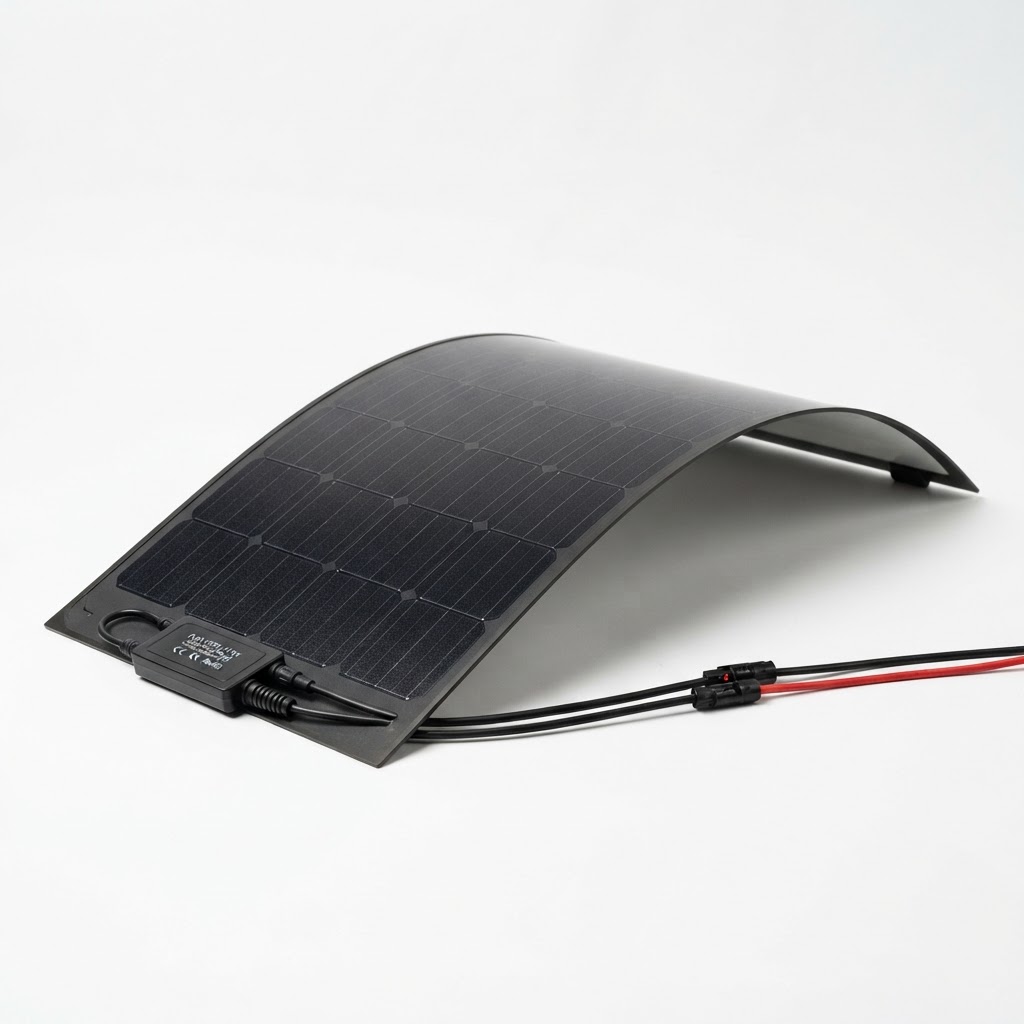
Renogy 175W Flexible Solar Panel
by Renogy
Uses advanced monocrystalline cells in a flexible laminate — top of class for flex panels
Who this is for
- Ultra-lightweight at only 6.2 lbs
- Bends up to 248° for curved surfaces
- Strong efficiency for a flexible panel
Avoid if
You want maximum long-term durability or need tilt-adjustable mounting
The cost reality
Flexible panels cost 20-40% more per watt than rigid panels. A 100W rigid panel costs $80-120; a 100W flexible panel costs $130-200. This premium pays for the flexible polymer substrate and thinner cell architecture. Over a 25-year period, rigid panels deliver 3-4x more energy per dollar invested. Flexible panels only make economic sense when rigid panels physically can't be used.
The lifespan gap
Rigid panels: 25-30 year lifespan with 80%+ output at 25 years. Flexible panels: 5-15 years typical lifespan. The primary failure modes are UV degradation of the polymer surface, delamination of cell layers, and micro-cracking from vibration and bending. If you install flexible panels, plan to replace them every 5-10 years — that recurring cost makes them significantly more expensive long-term than rigid panels.
When flexible panels ARE worth it
Flexible panels are worth the premium when: (1) Your mounting surface is curved and rigid panels can't conform — boat decks, curved RV roofs, Airstreams. (2) Weight is critical — ultralight builds, aircraft, backpacks. (3) You need a temporary or removable installation — seasonal use, rental properties, events. (4) Stealth matters — nothing visible above the roof line. In these specific cases, flexible panels solve a problem rigid panels can't.
When flexible panels are NOT worth it
Flexible panels are a poor choice when: (1) You have a flat mounting surface — rigid panels always perform better and cost less. (2) You want maximum long-term value — rigid panels last 3-5x longer. (3) You're in a hot climate — flexible panels glued flat run hotter and lose more output to heat. (4) You're on a tight budget — rigid panels give you more watts per dollar. If none of the 'worth it' conditions apply to you, choose rigid.
Frequently Asked Questions
Do flexible solar panels last as long as rigid panels?
No. Flexible panels typically last 5-10 years; rigid panels last 25-30 years. The flexible polymer substrate degrades faster than tempered glass, and the cells are more susceptible to micro-cracking from bending and vibration.
Are flexible solar panels less efficient?
Yes, typically 2-5% less efficient than equivalent rigid panels. This is due to thinner silicon wafers and higher operating temperatures when mounted without an air gap. The best flexible panels (using high-grade monocrystalline cells) approach rigid panel efficiency but never match it.
Should I buy flexible panels to save weight on my RV?
Only if weight is a real constraint. A 200W flexible array weighs 10-16 lbs vs 50-60 lbs for rigid. If your RV is near its payload limit, the weight savings matter. If not, the shorter lifespan and higher cost of flexible panels aren't justified by weight alone.
Disclosure: As an Amazon Associate, we earn from qualifying purchases. This helps support our site at no extra cost to you.
Related Guides
Flexible vs Rigid Solar Panels — Which Should You Buy?
Flexible vs rigid solar panels compared. Efficiency, durability, cost, and best use cases. Which panel type is right for your RV, van, or boat?
Best Flexible Solar Panels for RVs (2026) — Curved Roof Picks
Best flexible solar panels for RV roofs that are curved or can't fit rigid panels. ETFE vs PET, mounting tips, and product recommendations.
Best Flexible Solar Panels for Van Life (2026) — Stealth & Low-Profile
Best flexible solar panels for van life builds. Low-profile stealth installations for Sprinter, Transit, and Promaster vans. Mounting and product guide.