Best Foldable Solar Panels: How to Choose a Portable Panel Without Guessing
The best foldable solar panel is not simply the model with the largest wattage number. Camping, overlanding, emergency backup, and portable power stations create different priorities for packed size, weight, setup, connectors, and electrical compatibility.
Quick Answer
Choose a foldable solar panel by matching its voltage and connector setup to your power station or controller first, then compare wattage, packed size, weight, weather resistance, cable reach, and how easily the panel can be aimed at the sun. A smaller panel you will actually carry and position well can be more practical than an oversized panel that stays packed away.
Recommended Products
Based on listed specifications. Prices and availability change — check Amazon for current details.
Disclosure: As an Amazon Associate, we earn from qualifying purchases. This helps support our site at no extra cost to you.
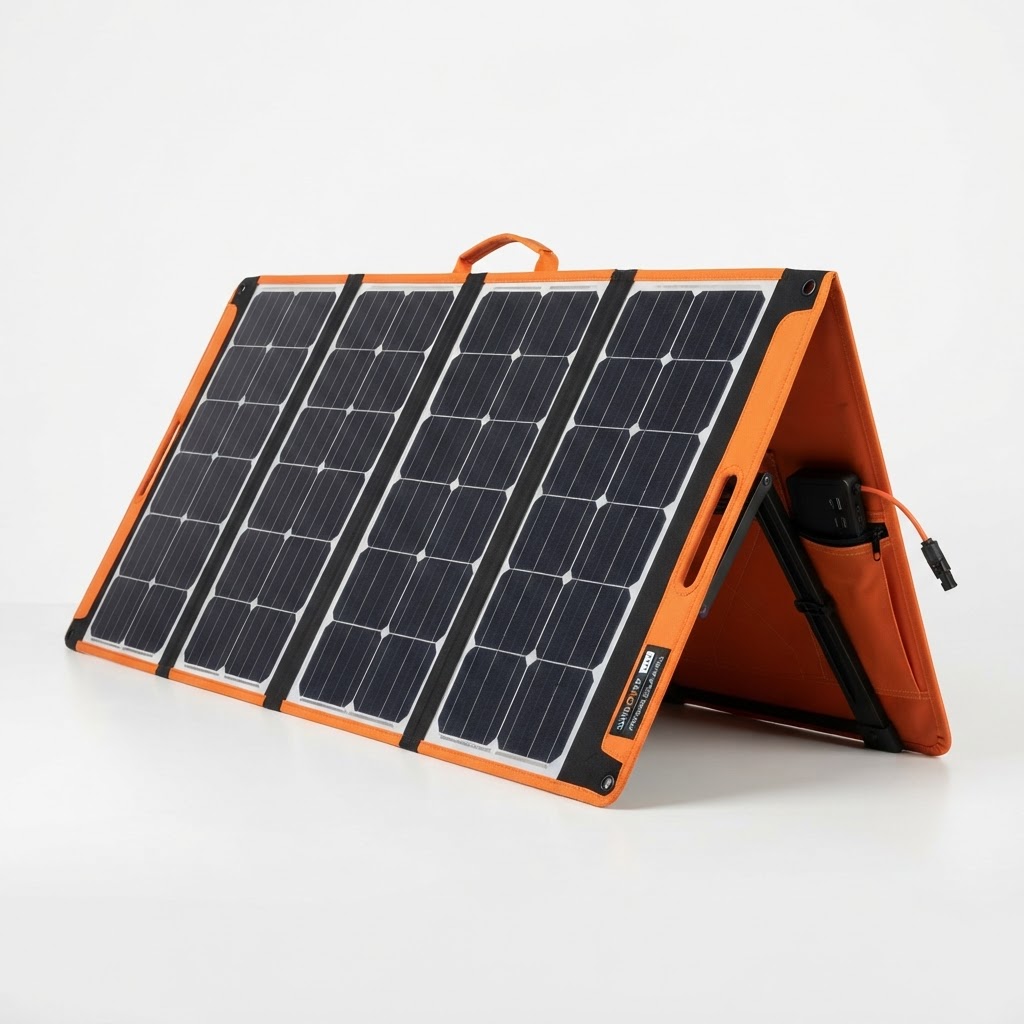
WATTS
100W
EFF.
23.7%
TYPE
Portable
CELL
Monocrystalline
Jackery SolarSaga 100W Portable Panel
by Jackery
Uses monocrystalline PERC cells with 23.7% cell efficiency in a foldable form factor
Who this is for
- Excellent portability and folding design
- High cell efficiency for portable class
- Built-in kickstand for easy angling
Avoid if
You need more than 100W or want universal MC4 compatibility
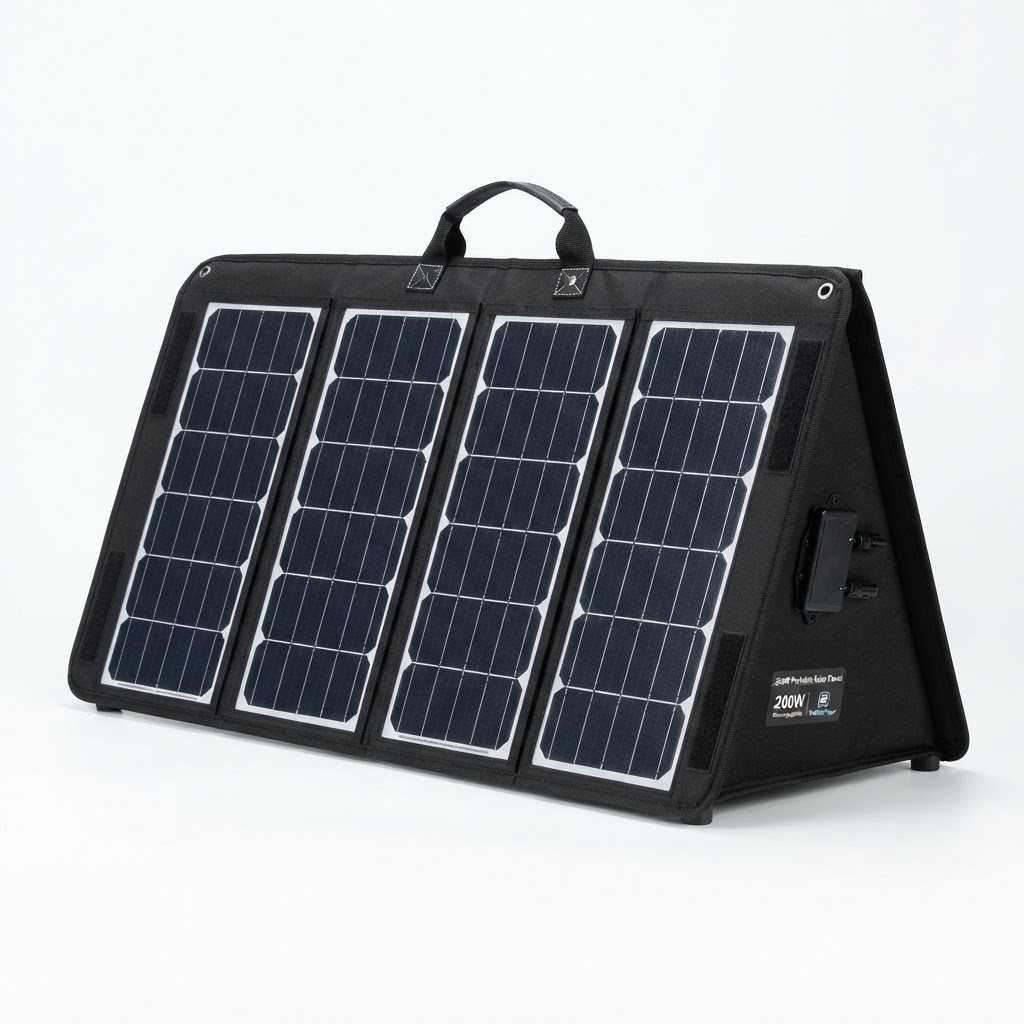
WATTS
200W
EFF.
23.4%
TYPE
Foldable
CELL
Monocrystalline
BougeRV 200W Portable Camping Panel
by BougeRV
High-efficiency monocrystalline cells deliver strong output in a foldable design
Who this is for
- High wattage in a foldable package
- Multiple connector options
- Adjustable kickstand included
Avoid if
You're backpacking or need ultra-light gear
Start With Electrical Compatibility, Not Brand Names
Before comparing portable panels, identify what will receive the solar power. A portable power station normally specifies a supported solar input voltage range, maximum input power, and connector arrangement. A separate charge controller has its own voltage and current limits. The panel must fit those requirements. Do not assume two products from the same general category connect directly just because both are marketed for camping. Check the current manuals and connector specifications for both devices. Adapters can solve some physical connector differences, but an adapter does not fix incompatible voltage or current. This compatibility check should happen before you compare convenience features because a beautifully portable panel is not useful if it cannot safely feed the equipment you intend to charge.
How Much Portable Solar Wattage Do You Need?
Think in terms of the loads you want to replenish and the amount of sunlight you can realistically capture. A 100-watt-class panel can be easier to carry and position for modest camping loads, while a 200-watt-class foldable panel can offer more rated capacity for larger batteries or heavier daily energy use. Actual energy collection varies with sunlight, panel angle, temperature, shading, system losses, and charging limits, so rated watts should not be treated as guaranteed real-world production. If your power station cannot accept the full output of a larger array, buying more panel may not translate into faster charging. Conversely, a larger compatible panel can provide useful headroom when conditions are less than ideal. Size the panel and the receiving device as a system.
Portability Features That Matter in the Real World
Packed dimensions and weight deserve as much attention as deployed wattage. Consider where the panel will ride in your vehicle, how far you expect to carry it, and how frequently you will set it up. Integrated stands can simplify aiming, while a longer cable may let you keep a power station in the shade while placing the panel in sunlight. Foldable construction saves storage space but still needs protection from repeated abrasion and rough handling. Weather-resistance claims should be checked against current manufacturer documentation, especially if the panel may encounter rain or dusty campsites. Also look at how securely the panel stands in wind. Portable solar works best when setup is easy enough that you are willing to reposition the panel as the sun moves.
Direct-Linked Foldable Panels to Compare
Our current catalog includes the BougeRV 200W Portable Camping Panel as a foldable direct-linked option and the Jackery SolarSaga 100W Portable Panel as another portable comparison point. Stored specifications list the BougeRV at 200 watts with a 23.4% claimed efficiency and the Jackery at 100 watts with a 23.7% claimed efficiency. Those numbers are useful for comparison but should be verified against current manufacturer listings because specifications can change. The better choice depends on your receiving equipment, portability needs, available storage space, and desired rated capacity. Use the product cards to inspect current Amazon product details rather than relying on a cached price or availability statement.
Foldable Panel vs Rigid Panel
A rigid panel is usually the natural format for a permanent roof or rack installation. A foldable panel trades permanent mounting for portability and the ability to reposition it. That can be valuable at camp because a vehicle can remain in the shade while the panel is moved into sunlight, subject to cable length and site conditions. The tradeoff is that portable panels require setup, storage, and theft awareness. If you live in a van or RV full time, a hybrid system can make sense: permanent roof solar for passive collection plus a compatible portable panel for extra capacity when parked. Before combining panels, make sure the controller or power station supports the intended configuration and electrical characteristics.
Frequently Asked Questions
Is a 100W or 200W foldable solar panel better for camping?
It depends on your energy needs, power-station input limits, storage space, and portability priorities. A 200W-class panel offers more rated capacity, while a 100W-class panel may be easier to transport.
Can I plug any foldable solar panel into a portable power station?
No. Check supported voltage, current, wattage, and connector requirements for the power station and panel before connecting them.
Do foldable solar panels work through a windshield?
For useful charging, place the panel where it receives direct unobstructed sunlight whenever practical. Glass, angle, heat, and shading can reduce useful solar input.
Can I leave a portable solar panel outside permanently?
Portable panels are designed around portability rather than permanent installation. Follow the manufacturer's current guidance for weather exposure, storage, and mounting.
Disclosure: As an Amazon Associate, we earn from qualifying purchases. This helps support our site at no extra cost to you.