Best Portable Solar Panel Wattage: 100W vs 200W vs 400W for Camping and Power Stations
Choosing portable solar by wattage sounds simple until weight, storage, charging limits, weather, and campsite layout enter the picture. A larger panel can collect more energy under suitable conditions, but only if your power station can accept the input and you are willing to transport and deploy the extra panel area. This guide compares the practical role of 100W, 200W, and 400W portable panels so you can choose a size around your actual equipment and travel style.
Quick Answer
For light camping and smaller power stations, a 100W portable panel is often the easiest size to carry and position. Around 200W offers a useful middle ground for buyers who want faster replenishment without jumping to a very large panel. A 400W portable panel makes more sense for high-capacity power stations and heavier daily energy use, provided the station’s solar input limits support it. Always check voltage, current, wattage, and connector compatibility before buying.
Recommended Products
Based on listed specifications. Prices and availability change — check Amazon for current details.
Disclosure: As an Amazon Associate, we earn from qualifying purchases. This helps support our site at no extra cost to you.
Prices and availability change often. Use the Amazon button to check the current price and product details for each panel.
| # | Product | Best For | Cell Type | Watts | Efficiency | Price |
|---|---|---|---|---|---|---|
| 1 | Best Portable Solar Panel | MonocrystallinePortable | 100W | 23.7% | Check Current Price | |
| 2 | Best Solar Panel for Camping | MonocrystallineFoldable | 200W | 23.4% | Check Current Price | |
| 3 | Best for Solar Generator | MonocrystallinePortable | 400W | 22.6% | Check Current Price |
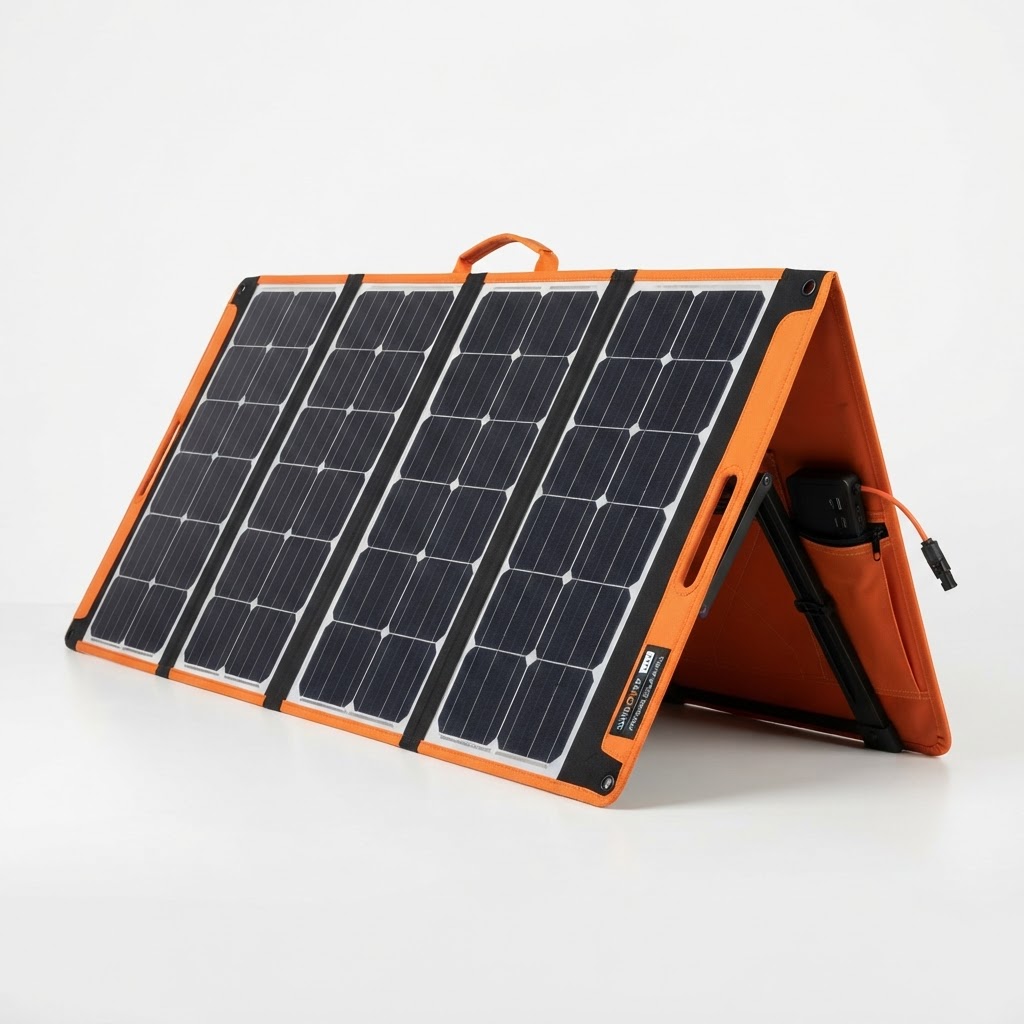
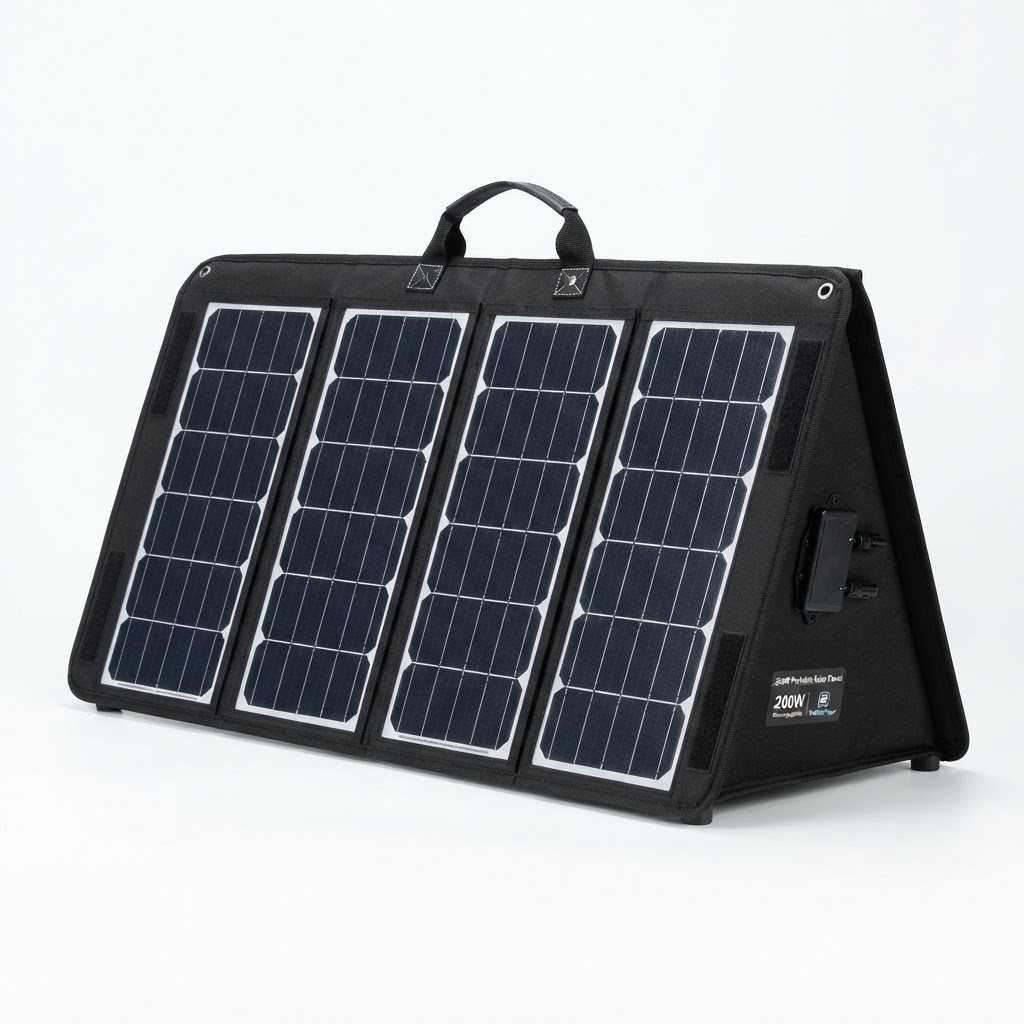
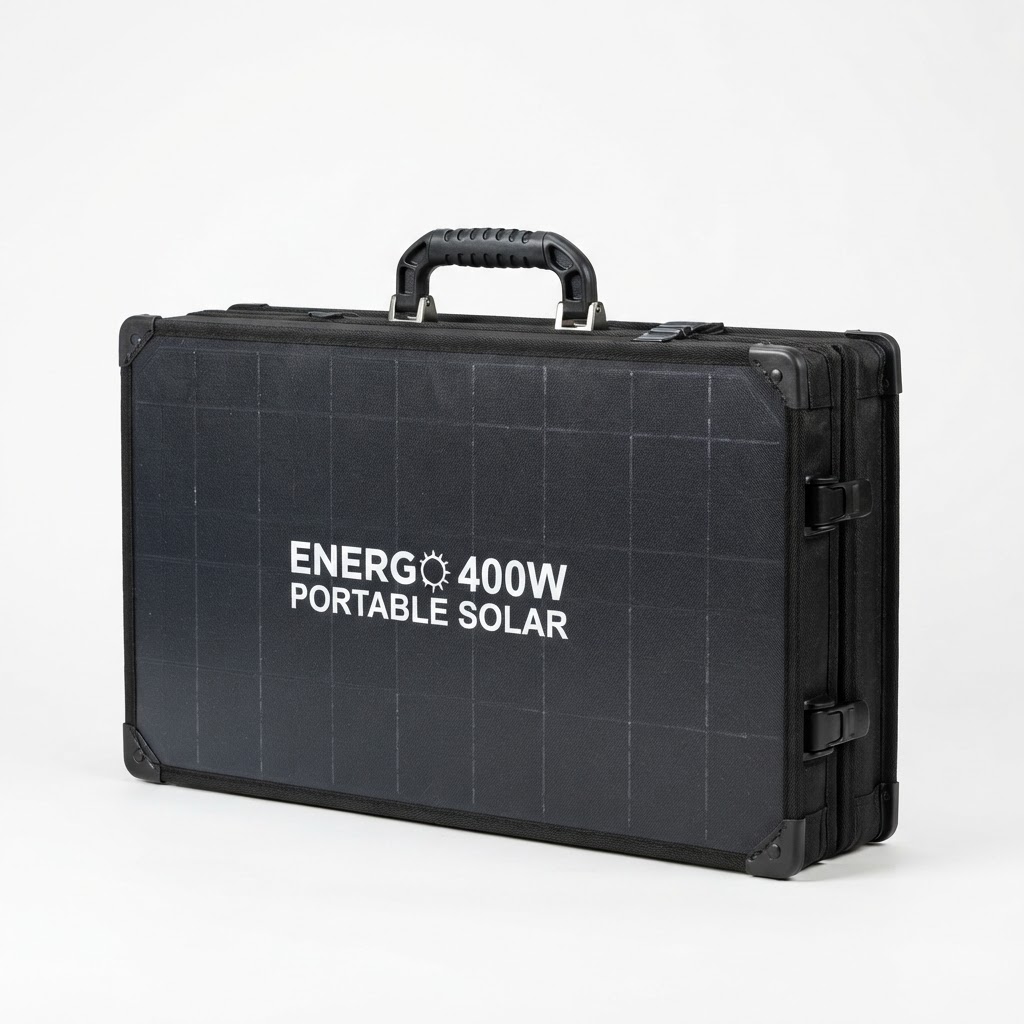
Watts
100W
Cell
Monocrystalline
Eff.
23.7%
Watts
200W
Cell
Monocrystalline
Eff.
23.4%
Watts
400W
Cell
Monocrystalline
Eff.
22.6%
Start With the Power Station’s Solar Input Limit
The best portable solar wattage is not simply the largest panel you can afford or fit in the vehicle. Begin with the power station or charge controller. Check its supported solar input voltage range, maximum current, and maximum input wattage. A panel whose rated wattage exceeds the station’s usable input may still have a role in some systems, but electrical compatibility must be confirmed rather than assumed. Connector type matters too. Adapters can solve some physical connector differences, but an adapter cannot make an electrically incompatible panel safe. Manufacturer specifications can change, so verify the current input limits for your exact power-station model and revision before ordering a panel.
100W Portable Panels: Easy to Carry and Position
A 100W-class portable panel is attractive because it is comparatively easy to store, move, and reposition as the sun changes. That can matter more than raw rated output on short camping trips. A compact panel can be moved away from tree shade while the tent, vehicle, or power station remains protected. This size is commonly considered for phones, lights, small electronics, and replenishing smaller portable power stations, but actual energy production depends on sun angle, temperature, clouds, shading, and conversion losses. If your daily consumption is high, a single 100W panel may require more charging time than your travel schedule allows. Think in daily watt-hours rather than assuming the panel’s wattage equals energy produced over an entire day.
200W Portable Panels: The Middle Ground
Around 200W can be a useful compromise between portability and charging capability. The panel is larger than a 100W model, but it can provide more potential solar input when conditions and the connected equipment allow it. This size can suit campers running a moderate power station, 12-volt refrigeration, lighting, device charging, and other recurring loads. Before choosing it, measure the folded dimensions and storage location. A portable panel that technically fits your electrical system but is awkward to transport may stay folded in the vehicle, producing exactly zero watts. Also check whether the panel includes the cable or connector arrangement your system requires rather than assuming every portable panel uses the same standard.
400W Portable Panels: For Larger Energy Budgets
A 400W portable panel targets a different use case. It can make sense with a larger power station, longer off-grid stays, or loads that create a substantial daily energy deficit. The tradeoff is physical size and weight. Deployment space becomes part of the buying decision, especially at crowded campsites or locations with uneven terrain. A large folding panel also needs to be positioned securely in wind. Most importantly, confirm that your power station can accept the panel’s voltage and current. Buying a 400W panel does not guarantee 400W of charging, and real solar input varies continuously with conditions. Treat rated wattage as a comparison specification, not a promise of constant output.
Calculate Wattage From Daily Energy Use
List the devices you expect to run and estimate their daily watt-hours. A device drawing 50 watts for four hours represents roughly 200 watt-hours before accounting for system losses. Repeat the calculation for refrigeration, lights, laptops, communications equipment, fans, and other loads. Then compare the total with your battery capacity and realistic solar-charging window. This approach reveals whether you need a small panel for occasional top-ups or a larger array intended to replace substantial daily consumption. It also prevents the opposite mistake: hauling an oversized panel when your actual energy use is modest.
Direct-Linked Portable Panels to Compare
Our current catalog includes direct Amazon product pages for the Jackery SolarSaga 100W Portable Panel, BougeRV 200W Portable Camping Panel, and EcoFlow 400W Portable Solar Panel. These three products provide useful reference points across the wattage range discussed in this guide. Compare their current electrical specifications, folded dimensions, weight, connector requirements, and compatibility with your equipment before purchasing. Product specifications and listings may change. As an Amazon Associate, HighestEfficiencySolarCell.com may earn from qualifying purchases made through eligible links at no additional cost to you.
Frequently Asked Questions
Is a 100W solar panel enough for camping?
It can be enough for light electrical use and smaller power stations, but the answer depends on your daily watt-hour consumption, available sun, battery size, and charging losses.
Is a 200W portable solar panel better than 100W?
It offers more rated capacity, but it is also larger. The better choice depends on your power station’s input limits, storage space, portability needs, and daily energy use.
Can I connect a 400W solar panel to any power station?
No. Check the power station’s solar voltage range, current limit, maximum wattage, and connector requirements. Electrical compatibility matters more than the wattage printed on the panel.
Does a 400W solar panel always produce 400 watts?
No. Rated wattage is measured under defined conditions. Real output varies with sunlight, temperature, angle, shading, panel condition, and system losses.
What size portable solar panel charges fastest?
Within a compatible system and suitable conditions, more available solar input can increase charging power until the power station or controller reaches its input limit. Bigger is not useful if the receiving equipment cannot accept the additional input.
Disclosure: As an Amazon Associate, we earn from qualifying purchases. This helps support our site at no extra cost to you.