Bifacial Solar Panels for RVs: When Two-Sided Solar Makes Sense
Bifacial solar panels can collect light from both the front and rear surfaces, but an RV roof is a very different installation from an elevated ground array. The buying decision comes down to mounting clearance, reflected light, available roof area, weight, and whether the rear surface will actually see useful light.
Quick Answer
Bifacial panels can be useful for RVs when they are mounted with enough clearance for reflected light to reach the rear surface. A panel installed nearly flush to a dark roof may gain little from its bifacial design, so compare mounting geometry and base front-side performance before paying for a feature your installation cannot use.
Recommended Products
Based on listed specifications. Prices and availability change — check Amazon for current details.
Disclosure: As an Amazon Associate, we earn from qualifying purchases. This helps support our site at no extra cost to you.
WATTS
455W
EFF.
22.5%
TYPE
Rigid
CELL
TOPCon
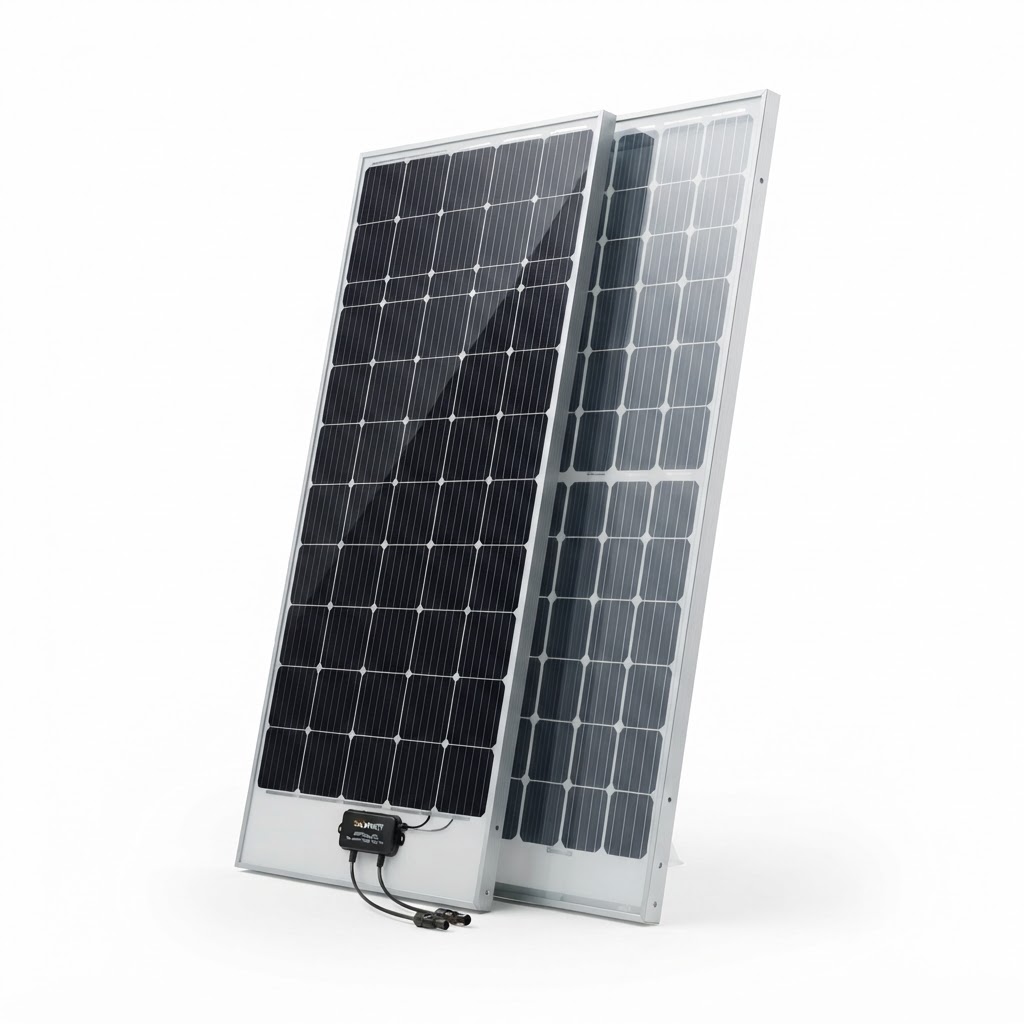
Canadian Solar 455W BiHiKu7 Bifacial Panel
by Canadian Solar
TOPCon bifacial cells with up to 30% rear-side gain in optimal albedo conditions
Who this is for
- Bifacial design captures rear-side light
- TOPCon technology for high efficiency
- Up to 30% bonus energy from albedo
Avoid if
You're flush-mounting on a dark roof or need portability
How Bifacial Solar Panels Work on an RV
A conventional panel is designed to collect most usable light through its front surface. A bifacial module also has an active rear surface that can convert reflected or indirect light. On an RV, that second surface only helps when light can actually reach it. A raised rack above a light-colored roof has a better chance of producing a rear-side contribution than a panel mounted almost flush to a dark membrane. This makes installation geometry part of the product decision. When comparing panels, start with the rated front-side specifications and treat possible rear-side production as installation-dependent upside rather than guaranteed wattage. Roof vents, air conditioners, antennas, shadows, and rack height can all affect the result. Buyers should also consider whether a larger rigid bifacial module physically fits the available roof zones without creating unsafe overhang or interfering with service access.
When Bifacial Solar Makes the Most Sense for RV Buyers
Bifacial technology is most compelling when the RV has an elevated rack, meaningful open space beneath the panel, and a surface capable of reflecting light toward the rear cells. It can also appeal to owners who sometimes deploy panels away from the vehicle, where tilt and ground reflectivity can be controlled more easily. If roof space is the main constraint, however, panel dimensions and front-side watts per square foot may matter more than the bifacial label. A high-output rigid module can be attractive for larger fifth wheels, toy haulers, buses, and custom rigs with substantial roof area. Smaller vans and compact trailers may be better served by panels whose dimensions fit awkward roof zones efficiently. Before buying, measure the usable roof, map all shade-producing hardware, and decide how the panel will be mounted. Those details tell you more than a technology badge alone.
Bifacial vs Monofacial Panels for RV Roofs
The practical difference is not simply two-sided versus one-sided. Compare wattage, dimensions, weight, cell technology, mounting requirements, connector type, voltage, and compatibility with the charge controller. A bifacial module that is too large or heavy for the planned rack is not automatically a better choice than a well-sized monofacial panel. Likewise, a standard panel may be easier to package tightly around roof equipment. Bifacial modules become more interesting when their conventional specifications already suit the system and the installation can expose the rear surface. For an RV electrical system, verify open-circuit voltage and current against the controller limits before connecting any panel or string. The solar module and controller must be electrically compatible regardless of how many active surfaces the module has.
A Direct-Linked Bifacial Option to Compare
The Canadian Solar 455W BiHiKu7 Bifacial Panel is one direct-linked product in our catalog for shoppers researching high-output bifacial modules. Its stored specifications list a 455-watt rating, TOPCon cell type, rigid form factor, and 22.5% claimed efficiency. Those specifications make it useful as a comparison point for larger RV or mobile installations where physical dimensions and electrical limits can accommodate a commercial-style module. Do not assume it fits your rig from wattage alone. Confirm current manufacturer specifications, dimensions, mounting requirements, controller compatibility, and current product details before purchasing. Check current details on Amazon through the product card rather than relying on a cached price or availability statement.
What to Check Before Buying
Measure the roof first, including service clearances around vents and air conditioners. Next, determine whether the planned mounting method leaves meaningful space beneath a bifacial panel. Check the panel's weight against the rack and roof structure, then compare voltage and current specifications with the solar charge controller. Think about cable routing and connector compatibility before installation day. If the rear side will remain heavily shaded by the roof, prioritize strong front-side performance and physical fit. If the panel will be elevated or used as a deployable array, bifacial capability may have more opportunity to contribute. Finally, compare warranty and current manufacturer documentation. Solar specifications and product listings can change, so verify current details before ordering.
Frequently Asked Questions
Do bifacial solar panels work when mounted on an RV roof?
Yes, but the rear surface needs access to reflected or indirect light to contribute meaningfully. A raised installation generally gives the rear side more opportunity than a nearly flush mount.
Do I need a special charge controller for a bifacial panel?
The key issue is electrical compatibility. Verify the panel or array voltage and current against the controller's input limits and follow the equipment manufacturers' guidance.
Are bifacial panels always better than regular RV solar panels?
No. Roof fit, weight, front-side output, mounting geometry, controller compatibility, and usable rear-side light all matter.
Should I count on extra bifacial wattage when sizing my RV system?
A conservative approach is to size around dependable front-side specifications and treat rear-side production as installation-dependent rather than guaranteed output.
Disclosure: As an Amazon Associate, we earn from qualifying purchases. This helps support our site at no extra cost to you.