Bifacial Solar Panels on White Roofs: Can Reflective Surfaces Help?
Bifacial solar panels can collect light on both the front and rear surfaces, which makes the surface beneath the array more important than it is for a conventional monofacial module. A light-colored or reflective roof may send more light toward the rear of a bifacial panel, but that does not mean every white-roof installation automatically produces a meaningful gain. Geometry, clearance and shading determine whether reflected light can actually reach the rear cells.
Quick Answer
A white or reflective roof can improve the rear-light environment for a bifacial panel, but the benefit depends heavily on mounting height, spacing, roof geometry and shade. A bifacial module mounted nearly flush to a roof may have limited rear exposure even when the roof is bright.
Recommended Products
Based on listed specifications. Prices and availability change — check Amazon for current details.
Disclosure: As an Amazon Associate, we earn from qualifying purchases. This helps support our site at no extra cost to you.
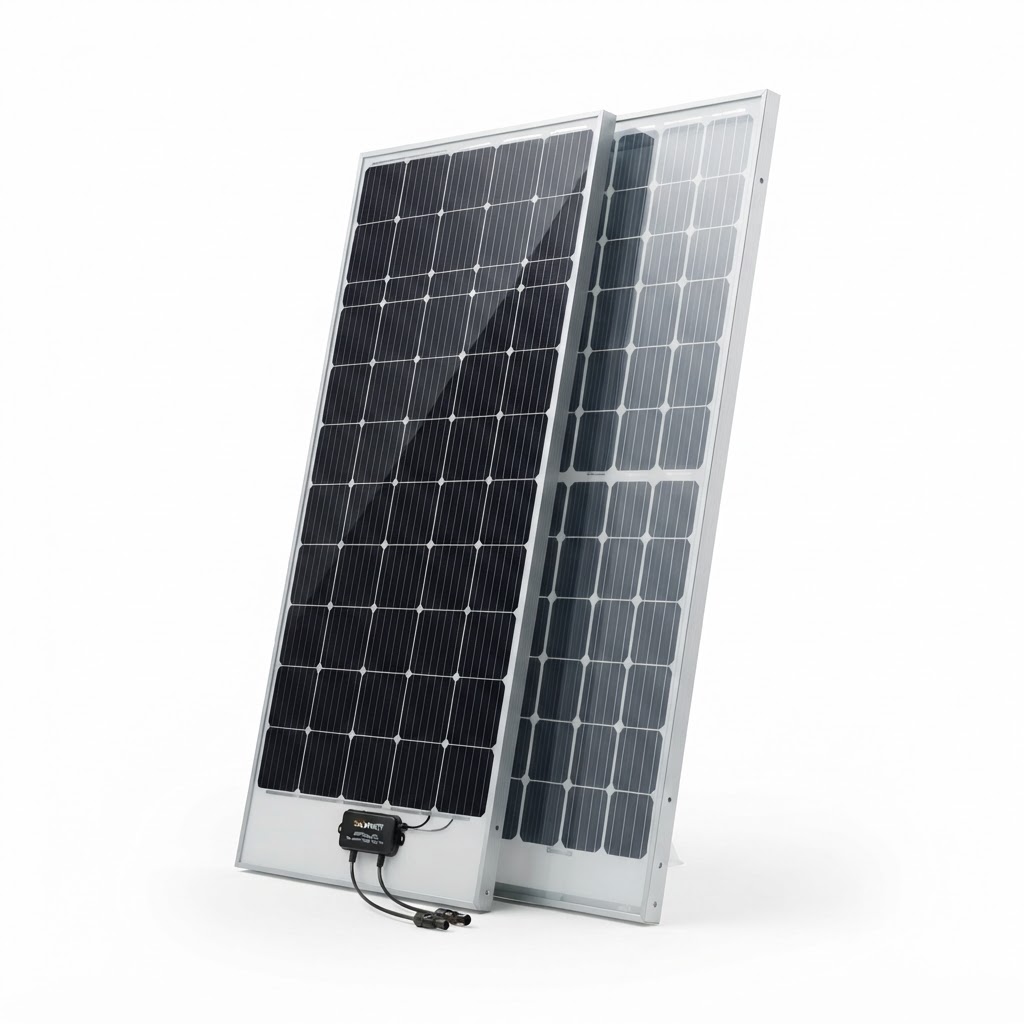
WATTS
455W
EFF.
22.5%
TYPE
Rigid
CELL
TOPCon
Canadian Solar 455W BiHiKu7 Bifacial Panel
by Canadian Solar
TOPCon bifacial cells with up to 30% rear-side gain in optimal albedo conditions
Who this is for
- Bifacial design captures rear-side light
- TOPCon technology for high efficiency
- Up to 30% bonus energy from albedo
Avoid if
You're flush-mounting on a dark roof or need portability
Why the Surface Under a Bifacial Panel Matters
A bifacial module is designed to accept useful light from its rear side as well as its front. Some rear-side light comes from diffuse sky light, while some can be reflected from the ground or roof below. Lighter surfaces generally reflect more incident light than very dark surfaces, but the module still needs a clear optical path to that reflected light. A bright roof hidden immediately behind a nearly flush-mounted panel cannot contribute in the same way as a reflective surface beneath an elevated array with open rear exposure.
White Roofs and Albedo
Albedo describes how much incoming light a surface reflects. The concept helps explain why snow, pale roofing materials and other bright surfaces can create a different rear-light environment than dark asphalt or soil. However, a roof color alone is not enough to calculate bifacial output. Dirt, aging, roof texture, sun angle and nearby objects affect reflection. Treat a white roof as a potentially favorable installation characteristic rather than a guaranteed performance multiplier.
Mounting Clearance Can Matter More Than Color
For rear-side collection, the panel needs room for reflected and diffuse light to reach the back surface. Increasing clearance can improve that exposure in some layouts, but mounting height also affects wind loading, structural requirements and installation complexity. Rails, wiring, roof equipment and the panel’s own frame can cast rear-side shadows. This is why a bifacial panel should not be selected solely because the roof is white. The mounting system and site geometry need to work together.
Where Bifacial Panels Make the Strongest Case
Bifacial technology is easiest to justify where the rear side has substantial exposure: elevated ground mounts, canopies, pergolas and some flat-roof systems with appropriate spacing. A reflective roof may strengthen the case for bifacial modules on a commercial or residential flat roof, especially when the design already requires elevated racking. On tightly packed or nearly flush installations, rear-side opportunity can be much smaller. Compare total system design, not just the module label.
Electrical Ratings Still Come First
Even when rear-side collection is attractive, buyers should compare the module’s front-side electrical ratings, dimensions, weight, temperature characteristics and compatibility with the inverter or charge controller. Bifacial contribution can vary with conditions, so avoid designing a system around an assumed rear-side bonus unless the system designer has modeled it appropriately. Manufacturer documentation and professional design guidance are especially important for grid-tied rooftop installations.
What to Check Before Buying
Confirm whether the module is truly bifacial, review its datasheet, measure available mounting area and determine how much rear clearance the racking provides. Consider the roof’s reflectivity, obstructions and maintenance needs. For the Canadian Solar bifacial product currently cataloged on this site, use the direct Amazon product page to verify the current model details before purchase because specifications and listings may change. As an Amazon Associate, HighestEfficiencySolarCell.com may earn from qualifying purchases made through eligible links, at no additional cost to you.
Frequently Asked Questions
Do bifacial solar panels work on a white roof?
They can. A light roof may provide a more reflective surface, but rear-side exposure, mounting clearance and geometry determine how much reflected light reaches the cells.
Do bifacial panels need to be elevated?
Rear-side collection generally benefits from open space behind the module. The appropriate mounting height depends on the installation and structural design.
Will painting a roof white guarantee more solar output?
No. Roof reflectivity is only one variable, and no specific energy gain should be assumed without considering the full installation.
Are bifacial panels only for ground mounts?
No. They can be used in suitable rooftop, canopy and other installations, provided the design gives the rear side useful light exposure.
Is TOPCon the same thing as bifacial?
No. TOPCon describes a cell technology. A TOPCon module may be bifacial or monofacial depending on its construction.
Disclosure: As an Amazon Associate, we earn from qualifying purchases. This helps support our site at no extra cost to you.