Bifacial vs Monofacial Solar Panels: Which Should You Buy?
Bifacial panels can collect light on both faces, while conventional monofacial modules primarily use the front. The better purchase depends on mounting height, the surface behind the panel, shading, available area and system design.
Quick Answer
Choose bifacial when the rear of the module will receive meaningful reflected light, especially on elevated ground mounts, canopies or bright surfaces. Choose monofacial when panels sit close to a surface that blocks rear illumination.
Recommended Products
Based on listed specifications. Prices and availability change — check Amazon for current details.
Disclosure: As an Amazon Associate, we earn from qualifying purchases. This helps support our site at no extra cost to you.
Prices and availability change often. Use the Amazon button to check the current price and product details for each panel.
| # | Product | Best For | Cell Type | Watts | Efficiency | Price |
|---|---|---|---|---|---|---|
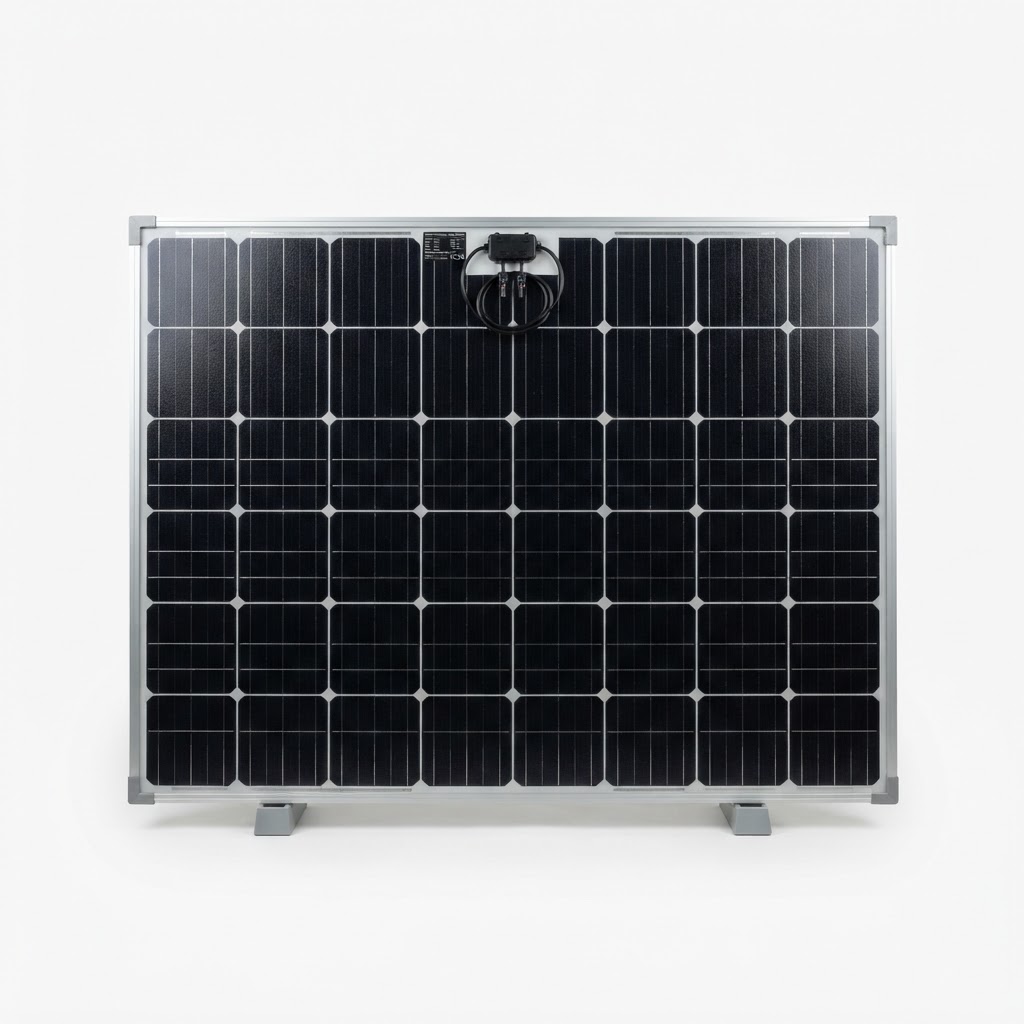
| 1 | Best Overall High-Efficiency | MonocrystallineRigid | 400W | 22.8% | Check Current Price | |
| 2 | 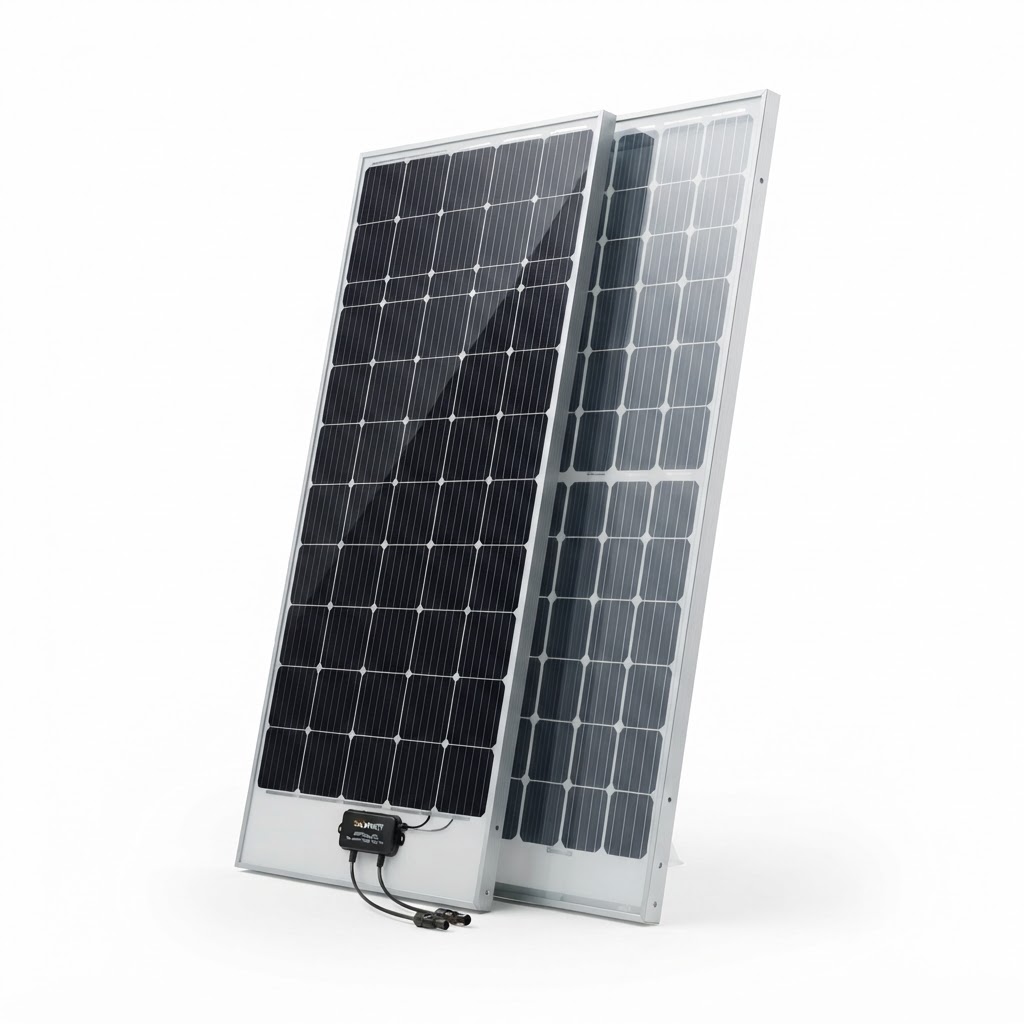 Canadian Solar 455W BiHiKu7 Bifacial Panel Canadian Solar | Best Bifacial Solar Panel | TOPConRigid | 455W | 22.5% | Check Current Price |
| 3 |  SunPower Maxeon 6 425W Panel SunPower | Best Premium Solar Panel | IBCRigid | 425W | 22.8% | Check Current Price |
Watts
400W
Cell
Monocrystalline
Eff.
22.8%
Watts
455W
Cell
TOPCon
Eff.
22.5%
Watts
425W
Cell
IBC
Eff.
22.8%
The core difference
A monofacial module is designed around light reaching its front surface. A bifacial module also has an active rear side that can convert some light reflected from the ground, roof or nearby surfaces. Rear-side output depends heavily on the installation. A bifacial panel mounted with open space beneath it over a bright surface has a different opportunity than the same panel mounted nearly flush to a dark roof. For buyers, front-side wattage, dimensions, cell technology and mounting requirements remain important. Treat bifacial capability as an installation-dependent bonus rather than assuming a fixed percentage increase.
When bifacial panels make sense
Bifacial designs become more compelling when light can reach the back of the panel. Elevated ground racks, pergolas, carports and some flat-roof systems can provide that exposure. Lighter surfaces can reflect more light than dark surfaces. Before buying, consider whether the mounting structure leaves the rear face open and whether rails or roof geometry will shade it. If those conditions are favorable, comparing a bifacial module such as the listed Canadian Solar 455W BiHiKu7 with conventional rigid panels can be worthwhile.
When monofacial is simpler
For many pitched roofs, RV roofs and tight installations, the back of a panel receives little useful light. A conventional rigid monofacial panel may provide a more straightforward installation. Space-limited buyers should compare rated front-side power, module dimensions and listed efficiency because those specifications affect how much nameplate capacity fits in the available footprint.
Compare cell technology too
Bifacial and monofacial describe how a module can collect light, not the entire cell architecture. Modern modules may use TOPCon, IBC, PERC or other monocrystalline designs. Compare the finished module’s listed efficiency, wattage, dimensions and mounting format. Buyers with limited roof area may prioritize front-side power density, while buyers with an open ground array may place more value on rear-side collection.
Which type should you buy?
For an elevated array with good rear exposure, bifacial deserves a place on the shortlist. For a close-mounted roof system, a strong monofacial module may be the more practical choice. As an Amazon Associate, HighestEfficiencySolarCell.com may earn from qualifying purchases made through eligible product links, at no additional cost to you.
Frequently Asked Questions
Are bifacial panels always better?
No. Rear-side output depends on reflected light and installation geometry.
Can bifacial panels work on a roof?
Yes, but potential rear-side benefit varies with roof color, clearance and shading.
Is TOPCon the same as bifacial?
No. TOPCon is a cell technology; bifacial describes collection from both sides.
Disclosure: As an Amazon Associate, we earn from qualifying purchases. This helps support our site at no extra cost to you.