Flexible Solar Panels for Van Life: When a Lightweight Roof Setup Makes Sense
Flexible solar panels can be attractive for van life because they reduce roof weight and can conform to surfaces where a conventional framed panel is awkward. The tradeoff is that installation details matter. Heat, airflow, roof shape, cable routing, controller compatibility, and the way the panel is attached can matter as much as its headline wattage. This guide explains where flexible panels fit well and when a rigid or portable panel may be the smarter purchase.
Quick Answer
Flexible solar panels for van life are most useful when low weight, a low-profile roof, or a gently curved mounting surface matters. Before buying, compare the panel’s electrical specifications with your charge controller, plan for heat management, and make sure the mounting method is appropriate for both the panel and your van roof.
Recommended Products
Based on listed specifications. Prices and availability change — check Amazon for current details.
Disclosure: As an Amazon Associate, we earn from qualifying purchases. This helps support our site at no extra cost to you.
WATTS
175W
EFF.
22.4%
TYPE
Flexible
CELL
Monocrystalline
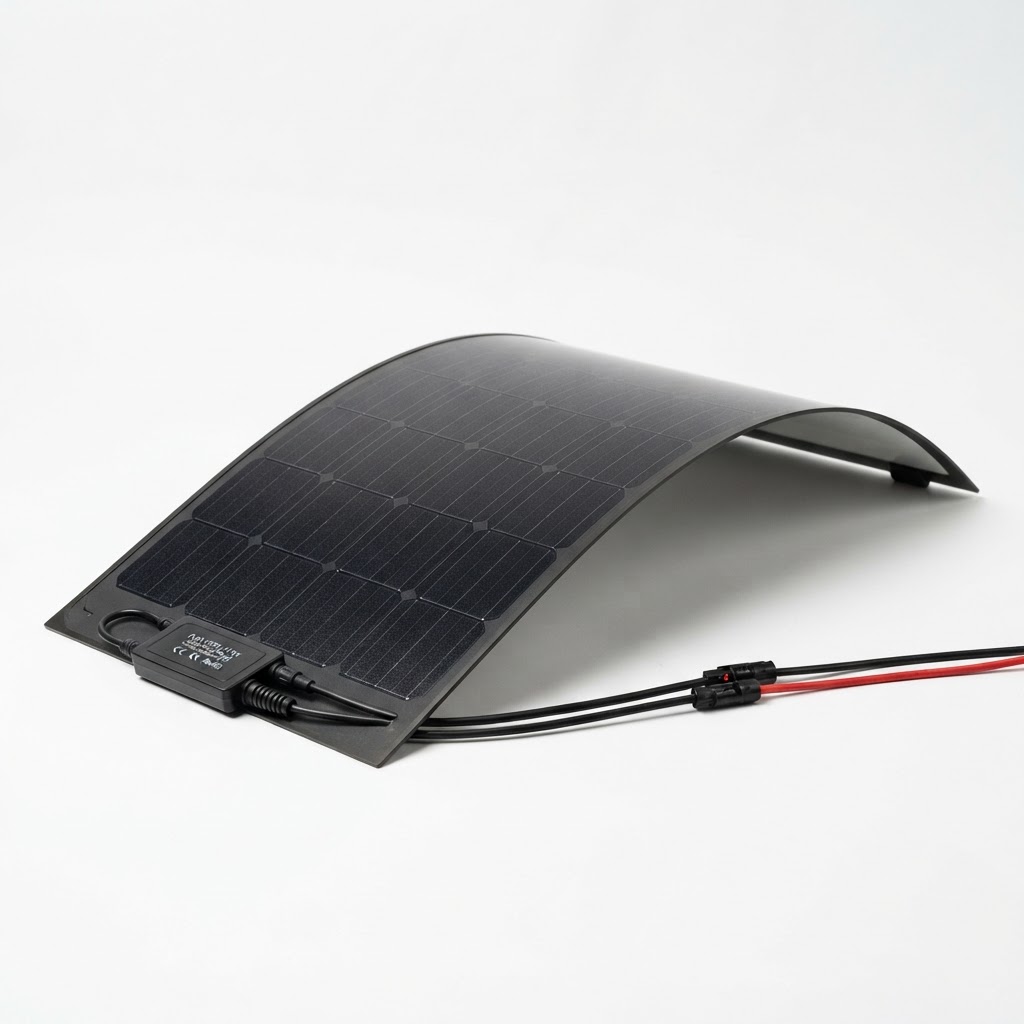
Renogy 175W Flexible Solar Panel
by Renogy
Uses advanced monocrystalline cells in a flexible laminate — top of class for flex panels
Who this is for
- Ultra-lightweight at only 6.2 lbs
- Bends up to 248° for curved surfaces
- Strong efficiency for a flexible panel
Avoid if
You want maximum long-term durability or need tilt-adjustable mounting
Why flexible solar panels appeal to van owners
A van roof has a limited amount of usable real estate once vents, fans, roof racks, antennas, and storage are accounted for. Flexible panels can make use of some spaces that are inconvenient for bulky framed modules, and their lower weight can be appealing when a build already carries substantial gear. They also sit closer to the roof, which can preserve a cleaner profile. Those advantages do not automatically make flexible panels the best choice for every build. A rigid panel mounted with an air gap can be easier to cool, inspect, remove, and replace. Think of flexible solar as a specialized tool rather than an automatic upgrade. If your roof is flat, has plenty of structural mounting points, and weight is not a concern, a conventional rigid array may offer a simpler long-term installation. If roof contour, height, or weight is the constraint, flexible panels deserve a closer look.
Start with your daily energy use, not panel wattage
Before choosing a panel, estimate how much energy your van actually uses in a normal day. Refrigeration, lighting, fans, laptops, water pumps, device charging, inverters, and electric cooking can produce very different energy profiles. Solar wattage alone does not tell you whether a system will keep up because sunlight hours, shading, temperature, battery capacity, and conversion losses all affect real output. A useful buying process starts with a daily watt-hour estimate, then works backward to battery capacity and solar input. This prevents the common mistake of buying a panel because its wattage sounds large without knowing whether it matches the load. It also makes it easier to decide whether a lightweight flexible roof panel should be the primary charging source or one part of a mixed system that also includes alternator charging, shore power, or a portable panel deployed when parked.
Check voltage, current, connectors, and controller limits
Compatibility is the unglamorous part of solar shopping that saves expensive headaches. Compare the panel’s open-circuit voltage, operating voltage, current, and connector arrangement with the input limits of your charge controller or power station. Do not assume that matching wattage means matching hardware. Series and parallel wiring can change array voltage and current, so the finished array must remain within the controller manufacturer’s limits. Connector adapters also need to be appropriate for the current and environment. If you are using a conventional battery bank, confirm that the controller is suitable for your battery chemistry and system voltage. If you are charging a portable power station, use its published solar-input specifications as the gatekeeper. Manufacturer specifications can change, so verify current electrical details before ordering components.
Heat management matters on a van roof
Solar modules produce less power as cell temperature rises, and a van roof can become a hot environment in direct sun. Flexible panels are often installed close to the roof surface, which can reduce airflow behind the module. That makes the installation method important. Follow the panel manufacturer’s mounting guidance rather than assuming that completely bonding every square inch to the roof is appropriate. Roof material, adhesives, removable mounting layers, drainage, and serviceability all deserve consideration. A panel that is difficult to inspect or replace can turn a simple future repair into a roof project. When comparing products, look beyond advertised efficiency and ask how the panel will live on your particular roof in July, how water will move around it, and how you would remove it if a cable or module eventually needs service.
When a portable panel may be better
Van travelers who regularly park in shade face a basic solar geometry problem: the van may be comfortable under trees while the roof array is starved for sunlight. A portable or foldable panel can sometimes solve that by letting you park the van in shade and position the panel in a sunnier location. Portable panels also avoid permanent roof attachment and can supplement a smaller roof array during longer stays. The downside is setup time, storage space, cable management, and the need to secure the panel. For many builds, the strongest solution is not choosing one format exclusively. A modest roof array can provide passive charging while driving or parked, while a portable panel adds collection area when conditions allow. Match the hardware to how you actually camp rather than to a showroom-style system diagram.
A practical flexible-panel buying checklist
Before purchasing, confirm physical dimensions against a measured roof layout, including space for vents and cable glands. Verify electrical specifications against the controller or power station. Check the panel manufacturer’s bend limits and mounting instructions. Decide how wiring will enter the van and how connections will be protected from weather and abrasion. Consider whether the installation allows inspection and eventual replacement. Compare warranty terms and documentation, but do not treat a long warranty as a substitute for correct installation. Finally, compare the flexible option with a rigid or portable alternative at the system level. The best panel is the one that fits your roof, electrical system, travel habits, and maintenance plan without forcing awkward compromises elsewhere in the build.
Frequently Asked Questions
Are flexible solar panels good for camper vans?
They can be. Flexible panels are especially useful when low weight, low profile, or a gently curved mounting surface matters. Rigid panels may be preferable when airflow, easy removal, and conventional mounting are priorities.
How many watts of flexible solar does a van need?
There is no universal wattage. Estimate your daily energy use in watt-hours, then account for available sunlight, battery capacity, charging losses, shading, and other charging sources before sizing the array.
Can I connect a flexible solar panel directly to a van battery?
A typical solar-to-battery system needs an appropriate charge controller between the panel array and battery. Follow the battery and controller manufacturers’ requirements for system voltage and battery chemistry.
Do flexible solar panels get hot?
All solar panels can become hot in direct sun. Installation and airflow influence operating temperature, so follow the manufacturer’s mounting instructions and consider heat management when planning a van-roof installation.
Is a flexible panel better than a portable panel for van life?
They solve different problems. A flexible roof panel can charge without setup, while a portable panel can be positioned away from a shaded van. Some travelers benefit from using both.
Disclosure: As an Amazon Associate, we earn from qualifying purchases. This helps support our site at no extra cost to you.