Flexible vs Rigid Solar Panels: Which Type Should You Buy?
Flexible and rigid solar panels can use similar photovoltaic technology while behaving very differently once you mount them to a vehicle or structure. The right choice depends on the surface, weight limits, airflow, installation method and whether you expect to move the panel. Instead of declaring one format universally better, this guide maps the tradeoffs to the kinds of projects shoppers actually build.
Quick Answer
Choose rigid panels when you have a suitable flat mounting area and want a framed module with mounting clearance. Consider flexible panels when low weight, a low profile or a gently curved surface is the priority. For either type, verify dimensions, electrical specifications, mounting instructions and charge-controller compatibility before ordering.
Recommended Products
Based on listed specifications. Prices and availability change — check Amazon for current details.
Disclosure: As an Amazon Associate, we earn from qualifying purchases. This helps support our site at no extra cost to you.
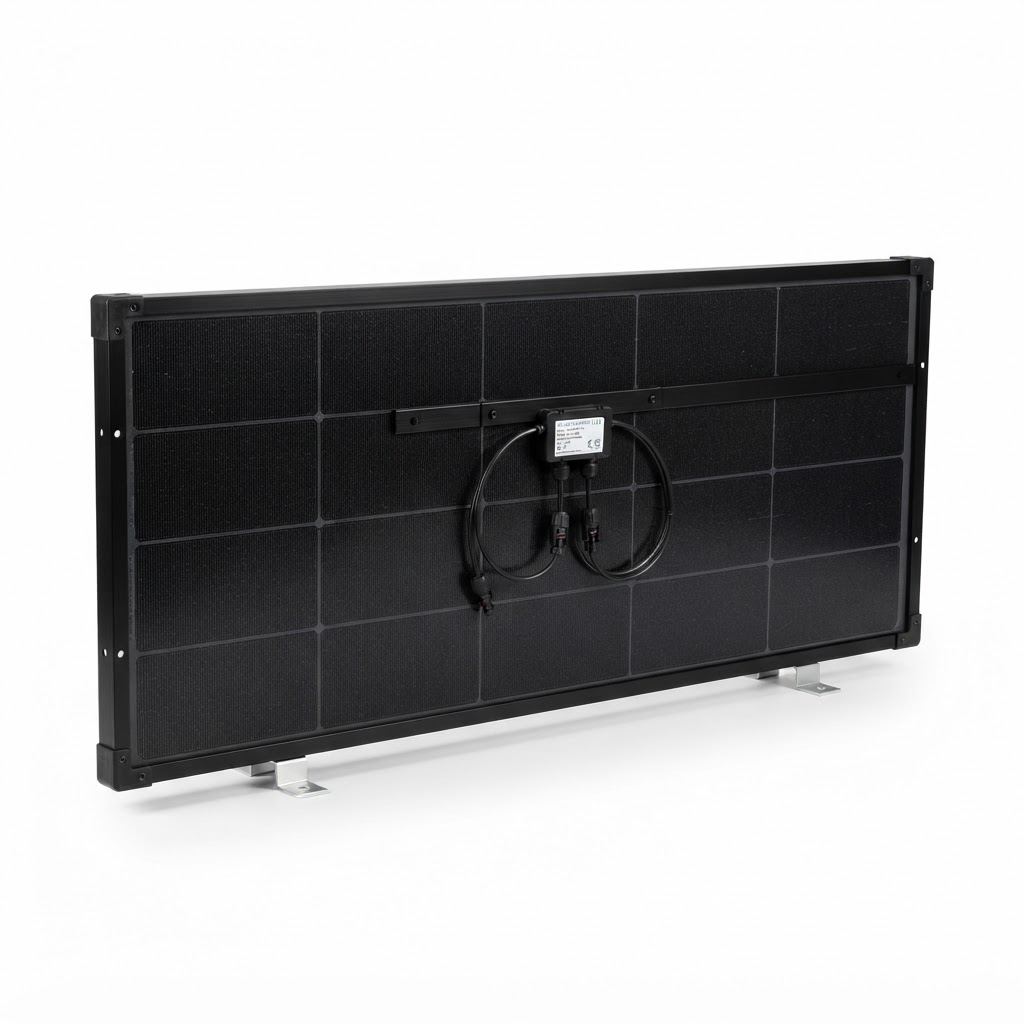
WATTS
200W
EFF.
21.6%
TYPE
Rigid
CELL
Monocrystalline
Rich Solar 200W 12V Monocrystalline Panel
by Rich Solar
Standard monocrystalline efficiency ideal for RV roof space optimization
Who this is for
- Great size-to-power ratio for RV roofs
- Affordable price per watt
- Standard MC4 connectors
Avoid if
You have a curved roof or need a lightweight portable panel
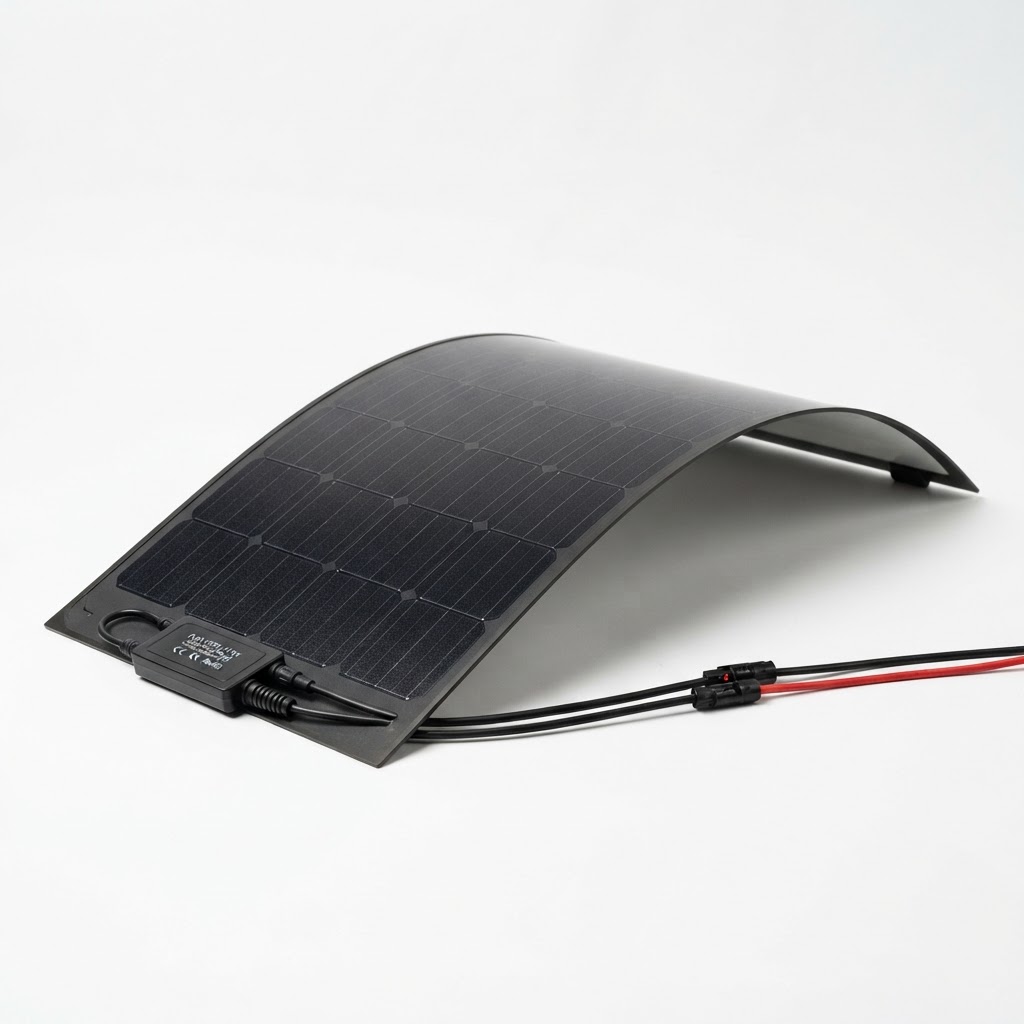
WATTS
175W
EFF.
22.4%
TYPE
Flexible
CELL
Monocrystalline
Renogy 175W Flexible Solar Panel
by Renogy
Uses advanced monocrystalline cells in a flexible laminate — top of class for flex panels
Who this is for
- Ultra-lightweight at only 6.2 lbs
- Bends up to 248° for curved surfaces
- Strong efficiency for a flexible panel
Avoid if
You want maximum long-term durability or need tilt-adjustable mounting
The Biggest Difference Is the Physical Package
Rigid panels use a framed structure that protects the module and creates defined mounting points. Flexible modules remove much of that rigid structure, reducing weight and allowing installation on some gently curved surfaces. That physical difference changes how the panel is mounted, cooled and handled. Buyers should decide which package fits the project before comparing small differences in headline efficiency.
Where Flexible Solar Panels Make Sense
Flexible panels can be appealing on vans, RVs, boats and other installations where weight and profile matter. A flexible module may conform to a surface that cannot easily accept a conventional framed panel. That convenience does not eliminate installation requirements. Follow the manufacturer's limits for bending and mounting, and consider how heat will be managed. A low-profile installation that traps heat may behave differently from a framed module with airflow beneath it.
Why Rigid Panels Remain a Strong Default
Rigid modules are straightforward to mount on racks and brackets designed for framed panels. The frame protects edges and creates spacing that can allow air circulation beneath the module. They are often a practical choice for flat roofs, ground mounts and vehicle racks with enough clearance. The tradeoff is additional weight and height, plus the need for suitable mounting hardware. For buyers without a curvature or weight constraint, rigid panels deserve serious consideration.
Compare a Flexible and Rigid Option
Our catalog includes the Renogy 175W Flexible Solar Panel, listed as a flexible monocrystalline module with a claimed efficiency of 22.4%. For a rigid RV-oriented comparison, the Rich Solar 200W 12V Monocrystalline Panel is listed at 200 watts and 21.6% claimed efficiency. Those figures are useful starting points, but the products differ in wattage and physical format. Check current dimensions, electrical specifications and installation instructions for the exact model before deciding.
Do Not Choose by Efficiency Alone
A small efficiency difference may matter less than whether the panel physically fits, stays within controller limits and can be mounted correctly. For vehicle projects, dimensions and weight can determine whether the installation works at all. For permanent arrays, mounting structure and airflow can favor a rigid design. Start with constraints, then compare wattage and efficiency among the products that actually fit those constraints.
A Simple Buying Decision Framework
Choose the installation surface first, then establish weight and height limits. Measure the usable area and determine whether curvature requires a flexible module. Next, check required wattage and verify voltage and current against the charge controller. Finally, compare product documentation, mounting requirements and direct purchase options. This order prevents an attractive specification from pulling you toward a panel that is awkward or incompatible in the real installation.
Frequently Asked Questions
Are flexible solar panels less efficient than rigid panels?
Not necessarily. Efficiency varies by product and cell design. Compare the specifications of the exact modules you are considering rather than assuming form factor determines efficiency.
Can flexible solar panels go on an RV roof?
They can be suitable for some RV installations, but follow the manufacturer's mounting, bending and ventilation guidance and verify the roof surface is appropriate.
Do rigid solar panels need airflow underneath?
Mounting guidance varies, but framed installations commonly provide clearance beneath the panel. Follow the module and mounting-system instructions for spacing and ventilation.
Can I replace a rigid panel with a flexible panel of the same wattage?
Only after checking voltage, current, connector type, dimensions and controller compatibility. Matching wattage alone does not guarantee two panels are interchangeable.
Which type is better for van life?
Rigid panels are a strong option when a roof rack or suitable mounting area is available. Flexible panels can be useful when weight, height or curvature is the dominant constraint. Portable panels are another option when parking in shade is common.
Disclosure: As an Amazon Associate, we earn from qualifying purchases. This helps support our site at no extra cost to you.