PERC vs TOPCon Solar Panels: Which Technology Makes More Sense?
PERC and TOPCon describe different approaches to improving crystalline-silicon solar cells, but the acronym on a specification sheet is only one part of a good buying decision. For homeowners, RV owners, and off-grid buyers, the useful question is whether a panel's complete electrical and physical specifications fit the available space and system. Here is how PERC and TOPCon differ and what deserves attention before you buy.
Quick Answer
TOPCon is a newer passivated-contact architecture commonly used in current high-efficiency modules, while PERC improved conventional crystalline-silicon cells with rear-side passivation. Buyers should compare the actual module efficiency, wattage, dimensions, voltage, current, warranty information, mounting needs, and system compatibility rather than choosing from the cell acronym alone.
Recommended Products
Based on listed specifications. Prices and availability change — check Amazon for current details.
Disclosure: As an Amazon Associate, we earn from qualifying purchases. This helps support our site at no extra cost to you.
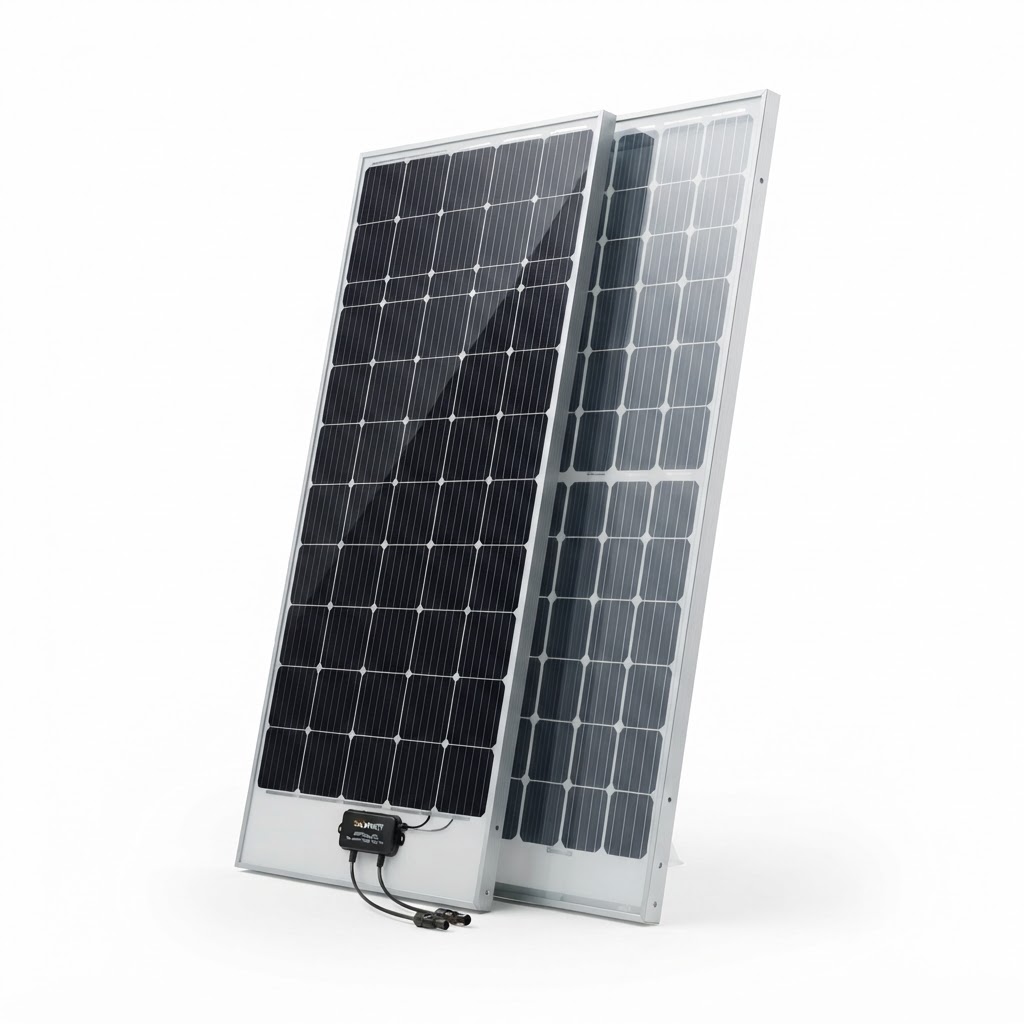
WATTS
455W
EFF.
22.5%
TYPE
Rigid
CELL
TOPCon
Canadian Solar 455W BiHiKu7 Bifacial Panel
by Canadian Solar
TOPCon bifacial cells with up to 30% rear-side gain in optimal albedo conditions
Who this is for
- Bifacial design captures rear-side light
- TOPCon technology for high efficiency
- Up to 30% bonus energy from albedo
Avoid if
You're flush-mounting on a dark roof or need portability
WATTS
425W
EFF.
22.8%
TYPE
Rigid
CELL
IBC
SunPower Maxeon 6 425W Panel
by SunPower
IBC (interdigitated back contact) cells deliver maximum efficiency by eliminating front-side busbars
Who this is for
- Industry-leading IBC cell technology
- 40-year useful life expectancy
- Best-in-class degradation rate
Avoid if
You're on a budget or need a temporary/portable solution
What PERC Changes in a Solar Cell
PERC stands for passivated emitter and rear cell. The design adds passivation at the rear of the cell to reduce some recombination losses and improve the cell's ability to use incoming light. PERC became widely used because it improved on conventional crystalline-silicon cell designs without requiring buyers to rethink how a solar module is used. For shoppers, however, PERC is not a single performance level. Different modules can use related cell technology while having different wattage, efficiency, temperature behavior, dimensions, construction, and electrical characteristics. Always compare the finished module specification rather than assuming the cell label tells the entire story.
What TOPCon Changes
TOPCon stands for tunnel oxide passivated contact. It uses a thin oxide layer and passivated contact structure intended to reduce carrier recombination and improve cell performance. TOPCon has become prominent in high-output and bifacial module designs. That does not mean every TOPCon panel automatically beats every alternative in every application. Module design, cell quality, packaging, operating temperature, installation, shading, and system electronics all influence useful output. For buyers with limited roof or rack space, module-level watts and efficiency can be especially important because they determine how much rated capacity can fit in the available area.
PERC vs TOPCon for Limited Space
When space is the binding constraint, compare watts per module, module dimensions, and listed efficiency together. A higher-efficiency panel can place more rated capacity into a given area, but physical dimensions still determine whether it fits the actual roof layout. Vents, setbacks, rack hardware, chimneys, antennas, and irregular roof shapes can turn a theoretically efficient panel into a poor physical fit. Measure the usable area first, then compare candidate modules. Cell architecture is useful context, but usable power density at the module level is what directly affects layout planning.
Where Bifacial TOPCon Panels Fit
TOPCon is often seen in bifacial modules designed to collect light on both the front and rear surfaces. Rear-side contribution depends heavily on installation conditions. A bifacial module mounted close to a dark roof may have less opportunity to benefit from reflected rear light than a module elevated over a bright or reflective surface. The Canadian Solar 455W BiHiKu7 in our catalog is a TOPCon bifacial example. Buyers considering bifacial technology should evaluate mounting height, rear obstruction, surface reflectivity, array spacing, and electrical compatibility rather than assuming a fixed bifacial gain.
Do Not Shop on Efficiency Percentage Alone
Efficiency is useful when area is limited, but it does not replace electrical compatibility. Check open-circuit voltage, operating voltage, current, connector type, charge-controller or inverter limits, module dimensions, weight, mounting requirements, and warranty documentation. A lower-wattage module that fits the system correctly can be a better purchase than a higher-rated panel that exceeds an input limit or does not fit the mounting area. Manufacturer specifications can change, so verify the current product documentation before purchasing or designing an array.
Which Technology Should You Buy?
For a new installation, TOPCon is worth considering when you want current high-efficiency module options, especially in space-constrained or bifacial applications. PERC can still be a practical choice when a specific module has the right dimensions, electrical characteristics, mounting format, and value for the system. Avoid turning the decision into a technology popularity contest. Compare the complete panel and the equipment it must connect to. The best module is the one that fits the electrical design, physical space, installation conditions, and energy goals.
Frequently Asked Questions
Is TOPCon more efficient than PERC?
TOPCon is commonly used in newer high-efficiency modules, but buyers should compare the listed efficiency of the specific finished modules rather than assume a universal difference based only on cell architecture.
Are TOPCon panels always bifacial?
No. TOPCon is a cell architecture and can be used in different module designs. Check whether the specific module is listed as bifacial.
Is PERC obsolete?
PERC panels remain in use. Whether one is a good choice depends on the specific module's specifications, system compatibility, installation needs, and purchasing priorities.
Does TOPCon matter for RV solar?
It can, especially where roof area is limited, but dimensions, voltage, current, weight, mounting format, and controller compatibility may matter more than the cell acronym.
Should I replace working PERC panels with TOPCon?
A technology difference alone is not a reason to replace a functioning system. Compare expected benefits, compatibility, usable space, project cost, and the condition of the existing equipment.
Disclosure: As an Amazon Associate, we earn from qualifying purchases. This helps support our site at no extra cost to you.