Portable Solar Panel for RV Battery Charging: What to Buy and How to Size It
A portable panel can add solar charging to an RV without permanently covering the roof, and it can be moved into the sun while the rig stays in shade. The right setup depends on the battery system and charge controller, not just the wattage printed on the panel.
Quick Answer
Size a portable RV panel from your daily energy use, then confirm that its voltage, current and connectors are compatible with the charge controller or power station receiving the solar input. Follow the equipment manufacturers’ approved connection instructions.
Recommended Products
Based on listed specifications. Prices and availability change — check Amazon for current details.
Disclosure: As an Amazon Associate, we earn from qualifying purchases. This helps support our site at no extra cost to you.
Prices and availability change often. Use the Amazon button to check the current price and product details for each panel.
| # | Product | Best For | Cell Type | Watts | Efficiency | Price |
|---|---|---|---|---|---|---|
| 1 | Best Portable Solar Panel | MonocrystallinePortable | 100W | 23.7% | Check Current Price | |
| 2 | Best Solar Panel for Camping | MonocrystallineFoldable | 200W | 23.4% | Check Current Price | |
| 3 | Best for Solar Generator | MonocrystallinePortable | 400W | 22.6% | Check Current Price |
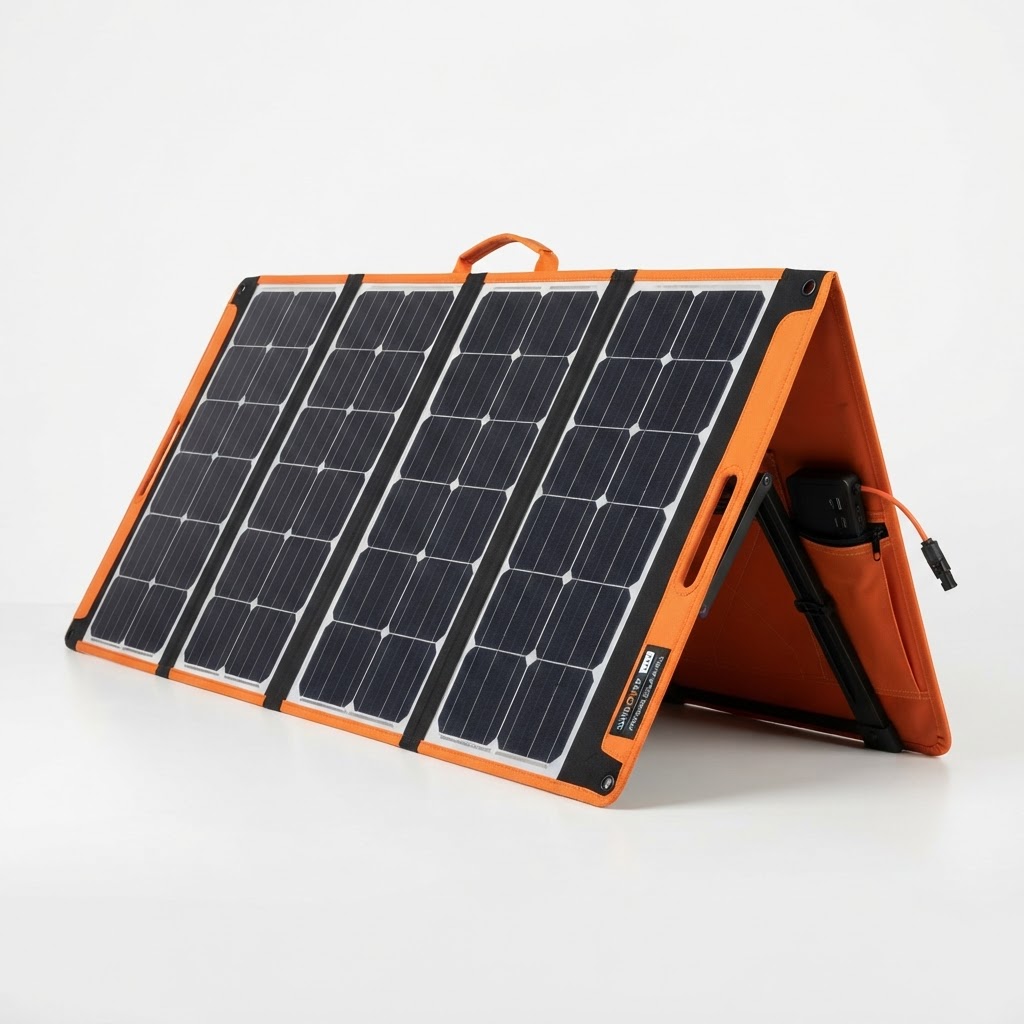
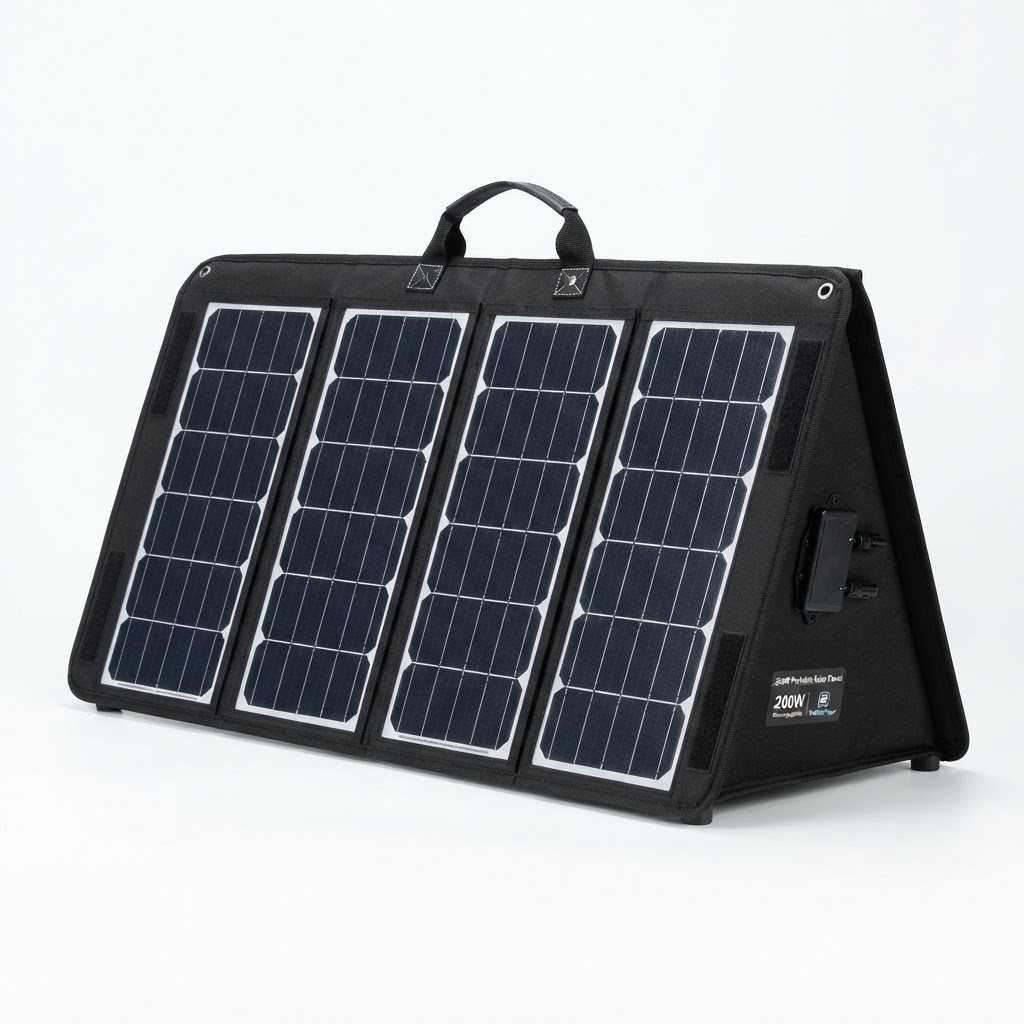
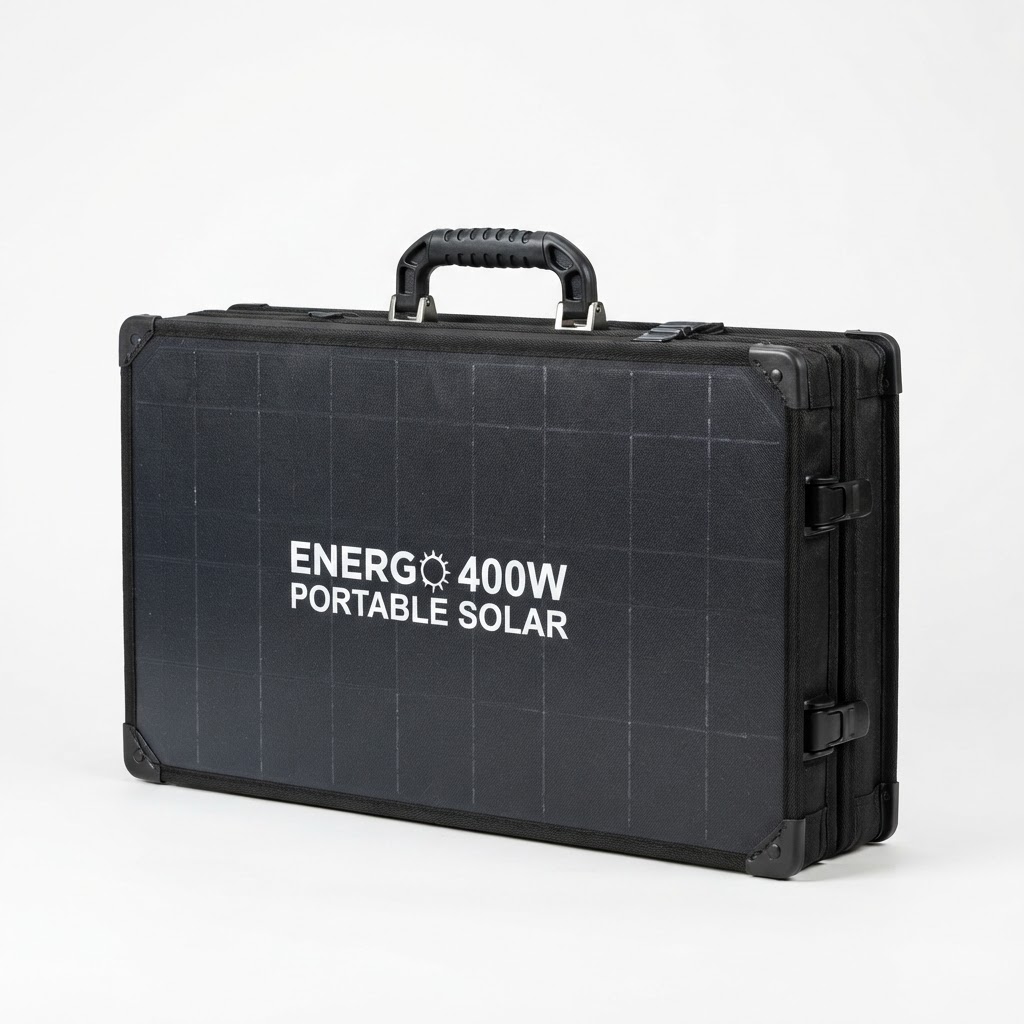
Watts
100W
Cell
Monocrystalline
Eff.
23.7%
Watts
200W
Cell
Monocrystalline
Eff.
23.4%
Watts
400W
Cell
Monocrystalline
Eff.
22.6%
Why portable solar works for RVs
Portable solar separates campsite positioning from solar positioning. You can park the RV where it is comfortable and place the panel where sunlight is better, within the limits of safe cable length and system design. Foldable panels are easier to store when solar is not needed and avoid permanent roof coverage. The tradeoff is setup time: a portable panel must be deployed, aimed, secured against wind and stored again. For weekend campers or rigs with crowded roofs, that flexibility can outweigh the extra handling.
Start with daily energy use
Estimate how much energy your RV uses over a typical day. Lights, fans, electronics, pumps, refrigeration and inverter loads all contribute. Solar wattage is only one part of the charging equation because actual energy harvest changes with sunlight, angle, temperature, shading and system losses. A 100W-class portable panel is easier to carry and store, while a 200W-class foldable panel provides more nameplate capacity when conditions and the receiving equipment allow it.
100W vs 200W portable panels
A 100W-class panel can be appealing when compact storage and quick setup matter most. A 200W-class foldable panel offers more nameplate capacity per deployed setup and may better suit users with greater daily consumption. The right choice depends on battery capacity, expected sun and how often the panel will actually be deployed. This site’s direct-linked catalog includes portable and foldable examples in both classes, allowing comparison without generic Amazon search pages.
Portable panel vs permanent roof solar
Permanent roof panels collect whenever the roof has sun and require little daily handling. Portable panels can be repositioned and may work around roof clutter or campsite shade. Some RV owners prefer a hybrid approach: fixed roof capacity for convenience plus portable capacity when extra charging is useful. If choosing only one, think about travel style. Frequent overnight stops favor convenience; longer camps may favor portable flexibility.
What to check before buying
Verify the panel’s listed output specifications against the receiving equipment, and check connector type, folded dimensions, deployed dimensions and weight. Product listings and specifications can change, so check current details before ordering. As an Amazon Associate, HighestEfficiencySolarCell.com may earn from qualifying purchases made through eligible product links, at no additional cost to you.
Frequently Asked Questions
Is 100W enough for an RV?
It can support modest energy needs in favorable conditions, but adequacy depends on daily consumption, sunlight, system losses and battery capacity.
Is a 200W portable panel better than a 100W panel?
It offers more nameplate capacity, but it is typically larger to deploy and store. Choose based on energy needs and available storage space.
Can I use a portable panel with a power station in my RV?
Often yes, if the panel’s specifications and connector arrangement fall within the power station manufacturer’s published solar-input requirements.
Portable or roof-mounted RV solar?
Portable panels offer positioning flexibility; roof-mounted panels offer convenience. Camping style and roof space should guide the choice.
Disclosure: As an Amazon Associate, we earn from qualifying purchases. This helps support our site at no extra cost to you.