Portable vs Rooftop Solar Panels for Camping: Which Setup Should You Buy?
Camping solar usually splits into two camps: panels permanently mounted on the vehicle or trailer, and portable panels that come out when you make camp. Neither format wins everywhere. Rooftop solar is convenient and can charge whenever sun reaches the vehicle, while portable panels can be repositioned toward better light and let you park in shade. The right purchase depends on how you travel, where you camp, and what equipment you need to charge.
Quick Answer
Choose rooftop solar when you value automatic, always-connected charging and have usable roof space. Choose portable solar when you want adjustable placement, park in shade, or cannot permanently mount panels. Many campers get the most flexibility from a modest roof array plus a compatible portable panel.
Recommended Products
Based on listed specifications. Prices and availability change — check Amazon for current details.
Disclosure: As an Amazon Associate, we earn from qualifying purchases. This helps support our site at no extra cost to you.
Prices and availability change often. Use the Amazon button to check the current price and product details for each panel.
| # | Product | Best For | Cell Type | Watts | Efficiency | Price |
|---|---|---|---|---|---|---|
| 1 | Best Portable Solar Panel | MonocrystallinePortable | 100W | 23.7% | Check Current Price | |
| 2 | Best Solar Panel for RV | MonocrystallineRigid | 200W | 21.6% | Check Current Price | |
| 3 | Best Solar Panel for Camping | MonocrystallineFoldable | 200W | 23.4% | Check Current Price |
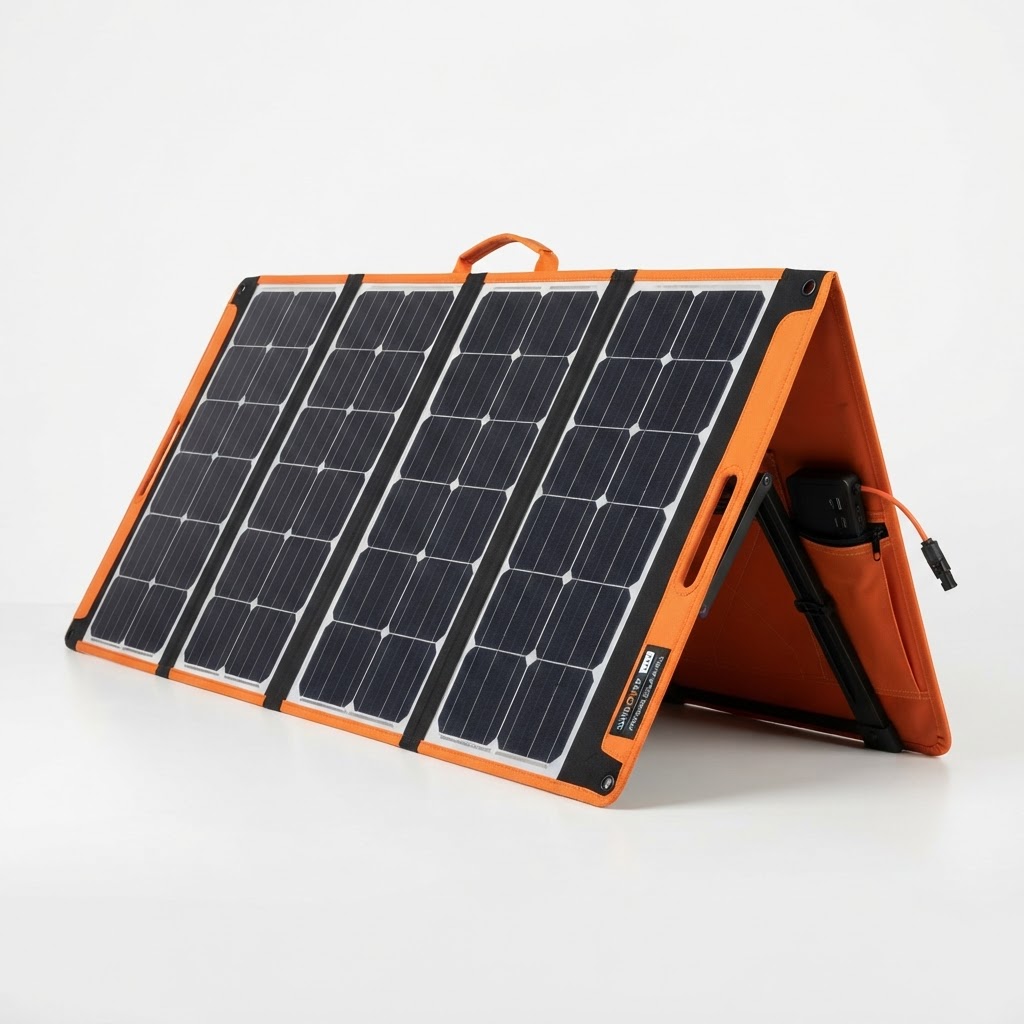
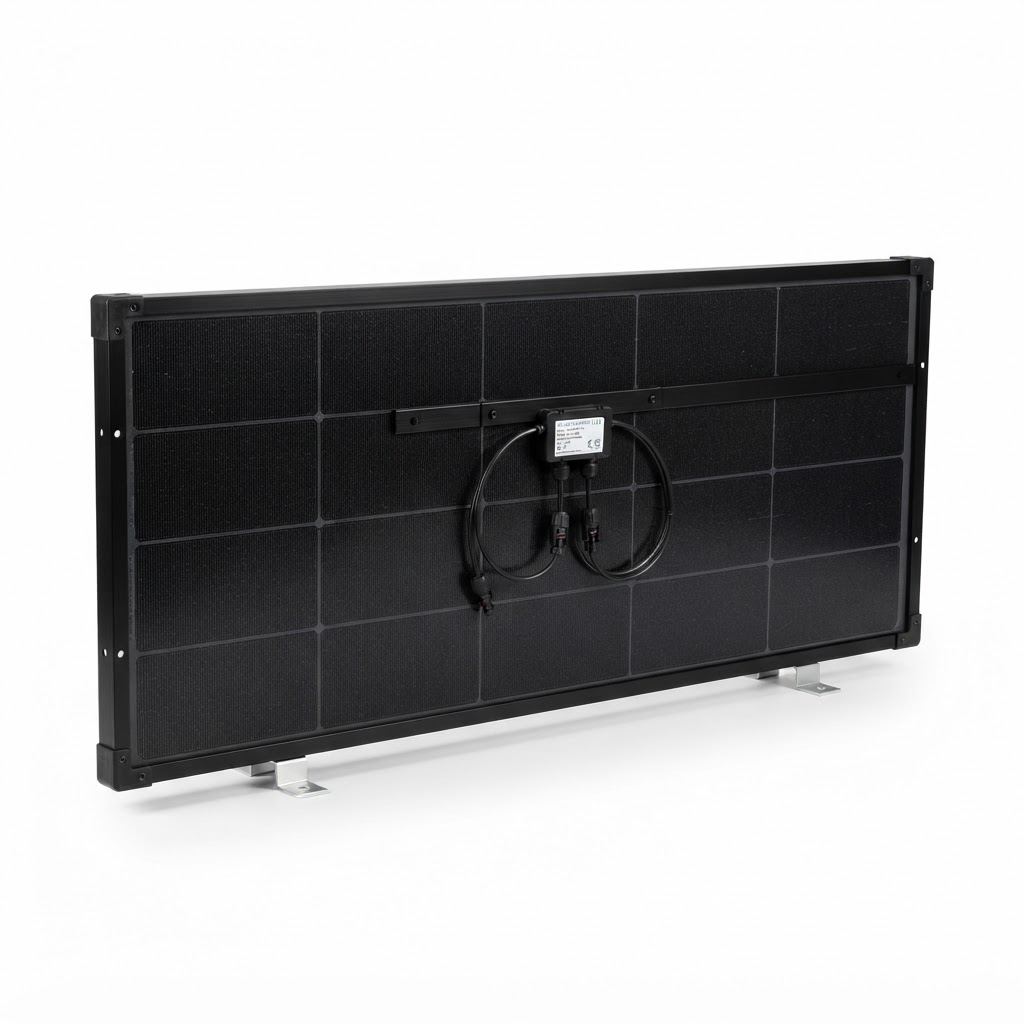
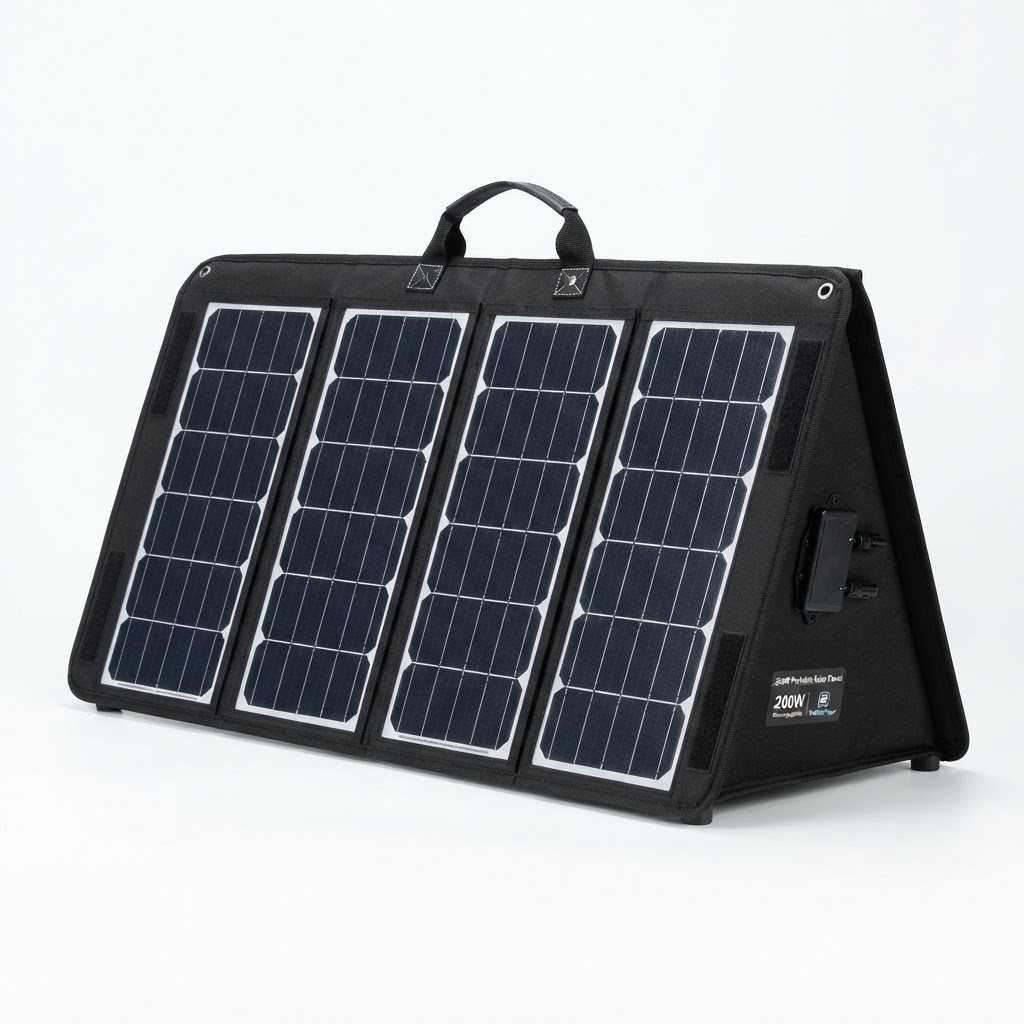
Watts
100W
Cell
Monocrystalline
Eff.
23.7%
Watts
200W
Cell
Monocrystalline
Eff.
21.6%
Watts
200W
Cell
Monocrystalline
Eff.
23.4%
Why Rooftop Solar Is So Convenient
A permanently mounted array removes a daily setup step. Once the system is installed and connected correctly, charging can begin whenever useful sunlight reaches the panels. That is attractive for travel days, quick stops, and campers who dislike unloading equipment. Rigid panels are common on RV and trailer roofs because they can be mounted with airflow beneath the module. The downsides are fixed orientation and competition for roof space with vents, air conditioners, racks, antennas, and other equipment. Roof panels also follow the vehicle into shade, which can sharply reduce useful production.
Why Portable Panels Work Well at Camp
Portable and foldable panels trade automatic charging for placement flexibility. You can park the vehicle where it is comfortable and move the panel toward clearer sun, subject to cable length and safe placement. You can also adjust orientation during the day when practical. This is useful in wooded campsites and for travelers who cannot modify a vehicle roof. The tradeoffs include storage, setup and takedown time, cable management, wind exposure, and securing the equipment when you leave camp. Product weight and folded dimensions can matter as much as rated wattage for frequent travelers.
100W, 200W, or 400W Portable Solar?
The right portable-panel wattage depends on the receiving equipment and your energy use. A 100W panel can be easier to carry and store for lighter charging needs. A 200W class panel offers more rated capacity while remaining practical for many camping setups. Larger portable modules can suit higher-demand power stations but require more storage area and handling. Do not choose by wattage alone. Verify the power station or charge controller's solar-input voltage, current, connector, and maximum supported input. Actual output also varies with sunlight, temperature, angle, shade, and system losses.
A Hybrid System Can Cover More Conditions
Combining roof and portable solar can reduce the weaknesses of either format alone. Roof panels provide passive charging without unloading gear, while a portable panel can supplement the system when the roof is shaded or when extra charging capacity is useful. Hybrid systems require careful electrical planning. Separate controllers or compatible inputs may be appropriate depending on the equipment. Never assume two panels can simply be connected together because their wattage seems similar. Voltage and current behavior, connectors, controller limits, and series or parallel configuration all matter.
What to Check Before Buying a Camping Panel
Start with the device that will receive the solar power. Record its accepted solar voltage range, maximum current, maximum wattage, and connector requirements. Then compare panel open-circuit voltage, operating voltage, current, wattage, dimensions, weight, weather resistance, cable arrangement, and mounting or kickstand design. For roof installations, also consider mounting hardware and airflow. For portable use, consider folded size and how you will secure the panel. Check current manufacturer and Amazon product details before purchase because specifications and included accessories can change.
Three Direct-Linked Options by Use Case
Our current product catalog includes direct Amazon product pages for several different camping strategies. The Jackery SolarSaga 100W represents a compact portable format, the BougeRV 200W is a larger foldable camping option, and the Rich Solar 200W is a rigid RV-oriented panel for a more permanent installation. These are examples of different form factors, not a claim that one universally outperforms the others. Compare each product's current specifications with your power station, controller, available space, and travel routine before choosing.
Frequently Asked Questions
Are portable solar panels better than roof panels for camping?
Portable panels offer placement flexibility, while roof panels offer convenience and automatic charging. The better choice depends on shade, storage, roof space, energy use, and how often you want to set up equipment.
Can I leave a portable solar panel outside all the time?
Check the specific manufacturer's weather-resistance and usage guidance. Portable designs vary, and connectors or accessories may have different exposure limits than the panel itself.
Can portable and rooftop panels charge the same battery?
They can in a properly designed system, but the controllers, voltage, current, connectors, and wiring configuration must be compatible. Follow equipment-manufacturer requirements.
Is 100W enough for camping?
100W may suit lighter loads and supplemental charging, but energy needs vary widely. Estimate daily watt-hours and compare them with realistic solar conditions and other charging sources.
Should I buy a foldable or rigid camping panel?
Foldable panels prioritize transport and repositioning. Rigid panels are generally better suited to permanent mounting. Choose based on storage, installation, electrical compatibility, and how you camp.
Disclosure: As an Amazon Associate, we earn from qualifying purchases. This helps support our site at no extra cost to you.