Solar Cell vs Solar Panel — What's the Difference?
People often use 'solar cell' and 'solar panel' interchangeably, but they're different things. This guide explains the difference and how solar cells are assembled into the solar panels you buy.
Quick Answer
A solar cell is a single semiconductor wafer that converts sunlight to electricity (typically 4-6 watts). A solar panel (module) is a collection of solar cells wired together and encapsulated in glass and a frame, producing 100-450 watts. Cells are the building blocks; panels are the finished product you install.
Recommended Products
Based on listed specifications. Prices and availability change — check Amazon for current details.
Disclosure: As an Amazon Associate, we earn from qualifying purchases. This helps support our site at no extra cost to you.
Prices and availability change often. Use the Amazon button to check the current price and product details for each panel.
| # | Product | Best For | Cell Type | Watts | Efficiency | Price |
|---|---|---|---|---|---|---|
| 1 | Best Overall High-Efficiency | MonocrystallineRigid | 400W | 22.8% | Check Current Price | |
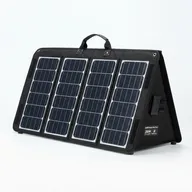
| 2 | Best Portable Solar Panel | MonocrystallinePortable | 100W | 23.7% | Check Current Price | |
| 3 | Best Solar Panel for RV | MonocrystallineRigid | 200W | 21.6% | Check Current Price | |
| 4 | Best Solar Panel for Camping | MonocrystallineFoldable | 200W | 23.4% | Check Current Price | |
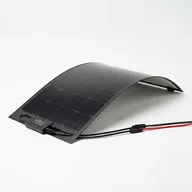
| 5 | Best Flexible Solar Panel | MonocrystallineFlexible | 175W | 22.4% | Check Current Price | |
| 6 | 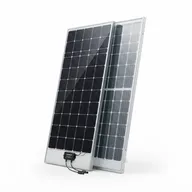 Canadian Solar 455W BiHiKu7 Bifacial Panel Canadian Solar | Best Bifacial Solar Panel | TOPConRigid | 455W | 22.5% | Check Current Price |
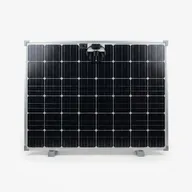
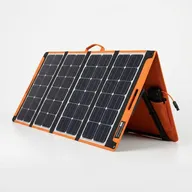
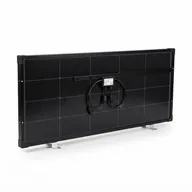
Watts
400W
Cell
Monocrystalline
Eff.
22.8%
Watts
100W
Cell
Monocrystalline
Eff.
23.7%
Watts
200W
Cell
Monocrystalline
Eff.
21.6%
Watts
200W
Cell
Monocrystalline
Eff.
23.4%
Watts
175W
Cell
Monocrystalline
Eff.
22.4%
Watts
455W
Cell
TOPCon
Eff.
22.5%
What is a solar cell?
A solar cell (photovoltaic cell) is a single semiconductor wafer, typically made of silicon, that converts sunlight directly into electricity through the photovoltaic effect. A single monocrystalline solar cell (6 inches square) produces roughly 4-6 watts under full sun at 0.5-0.6V. Cells are the fundamental building block of all solar panels — every panel is made of dozens of cells wired together.
What is a solar panel?
A solar panel (also called a solar module) is a finished product containing many solar cells wired in series and parallel, encapsulated between glass and a backing sheet, framed in aluminum, and equipped with a junction box and connectors. A residential panel typically contains 60-72 cells (or 120-144 half-cells) and produces 300-450 watts. Portable panels contain fewer cells (30-50) and produce 50-200W. The panel is what you buy and install — the cells are inside it.
How cells become panels
Manufacturers wire individual cells into strings (typically 10-12 cells in series), then arrange strings in a grid to form the panel. The cell grid is laminated between tempered glass (front) and a polymer backsheet, sealed with EVA encapsulant, framed in aluminum, and fitted with a junction box containing bypass diodes. This assembly protects the fragile cells from weather, mechanical stress, and moisture for 25+ years of outdoor operation.
Cell efficiency vs panel efficiency
Cell efficiency (the efficiency of a single cell in lab conditions) is always higher than panel efficiency (the efficiency of the finished panel). A cell might reach 24% efficiency in the lab, but when assembled into a panel, spacing between cells, frame area, wiring losses, and encapsulation reduce panel efficiency to 20-22%. When manufacturers quote 'cell efficiency' rather than 'panel efficiency,' the number is higher but less relevant to your actual power output. Always look at panel efficiency, not cell efficiency.
Frequently Asked Questions
What is the difference between a solar cell and a solar panel?
A solar cell is a single semiconductor wafer producing 4-6 watts. A solar panel is a finished product containing many cells wired together, encapsulated, and framed, producing 100-450 watts. Cells are the building blocks; panels are the product you install.
How many solar cells are in a solar panel?
A standard residential panel contains 60-72 cells (or 120-144 half-cells). Portable panels contain fewer cells (30-50). The exact number depends on the panel's wattage and cell size. More cells generally mean more wattage, but panel efficiency also affects the wattage per cell.
Is cell efficiency the same as panel efficiency?
No — cell efficiency is always higher than panel efficiency. A cell might reach 24% in the lab, but spacing, frame, wiring, and encapsulation losses reduce the finished panel to 20-22%. Always compare panel efficiency, not cell efficiency, when shopping for solar panels.
Disclosure: As an Amazon Associate, we earn from qualifying purchases. This helps support our site at no extra cost to you.