TOPCon vs IBC Solar Panels: Which High-Efficiency Cell Technology Should You Choose?
TOPCon and IBC are two technologies buyers increasingly encounter when comparing high-efficiency solar modules. Both aim to reduce electrical losses and extract more useful power from a limited panel area, but they use different cell architectures. The technology label can help narrow a shortlist, yet it should not replace comparison of the complete module. Wattage, dimensions, efficiency, temperature behavior, warranty terms, electrical specifications, installation requirements, and price all matter at the system level.
Quick Answer
Neither TOPCon nor IBC is automatically the best choice for every installation. IBC moves electrical contacts away from the cell’s front surface, while TOPCon uses a passivated-contact architecture designed to reduce recombination losses. Buyers should compare the efficiency and power density of the actual modules, then weigh dimensions, temperature characteristics, warranty, electrical fit, mounting requirements, and total installed cost.
Recommended Products
Based on listed specifications. Prices and availability change — check Amazon for current details.
Disclosure: As an Amazon Associate, we earn from qualifying purchases. This helps support our site at no extra cost to you.
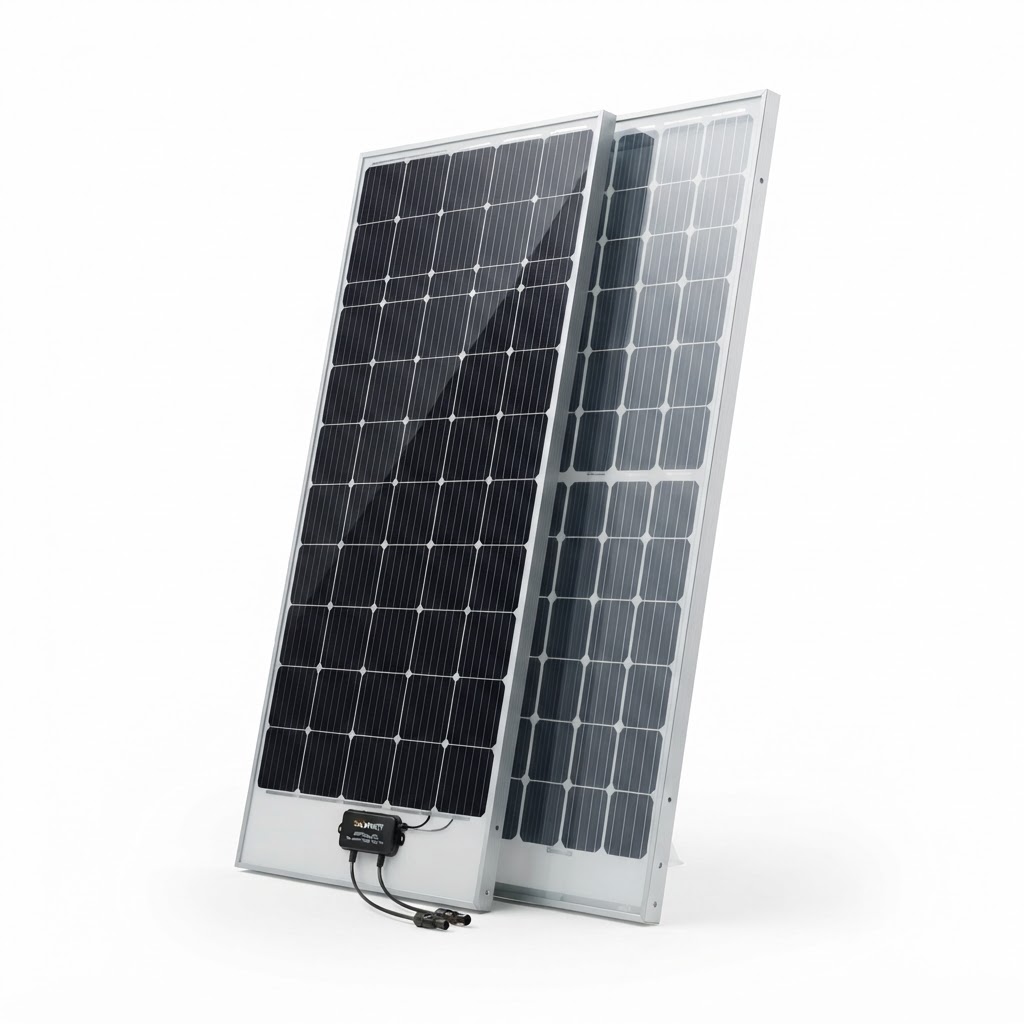
WATTS
455W
EFF.
22.5%
TYPE
Rigid
CELL
TOPCon
Canadian Solar 455W BiHiKu7 Bifacial Panel
by Canadian Solar
TOPCon bifacial cells with up to 30% rear-side gain in optimal albedo conditions
Who this is for
- Bifacial design captures rear-side light
- TOPCon technology for high efficiency
- Up to 30% bonus energy from albedo
Avoid if
You're flush-mounting on a dark roof or need portability
WATTS
425W
EFF.
22.8%
TYPE
Rigid
CELL
IBC
SunPower Maxeon 6 425W Panel
by SunPower
IBC (interdigitated back contact) cells deliver maximum efficiency by eliminating front-side busbars
Who this is for
- Industry-leading IBC cell technology
- 40-year useful life expectancy
- Best-in-class degradation rate
Avoid if
You're on a budget or need a temporary/portable solution
What TOPCon Means
TOPCon stands for tunnel oxide passivated contact. In simplified terms, the cell architecture uses a very thin oxide layer and passivated contact structure intended to reduce losses where electrical contacts interact with the silicon. For buyers, the important point is not the acronym itself but what the finished module delivers. Look at module efficiency, rated power, physical dimensions, voltage, current, temperature coefficients, bifacial capability when applicable, and warranty documentation. TOPCon is used across a growing range of module formats, including high-output rigid panels. Two products carrying the same technology label can still differ meaningfully in construction and system fit, so compare model-specific specifications rather than assuming every TOPCon panel behaves identically.
What IBC Means
IBC stands for interdigitated back contact. The defining idea is that electrical contacts are arranged on the rear of the solar cell rather than occupying space across the light-facing surface. That architecture can help maximize usable front surface area and is associated with premium high-efficiency designs. For a buyer with limited roof area, module-level efficiency and watts per square foot can be particularly important. But the IBC label by itself does not tell you whether a panel is the right electrical or mechanical fit. Check dimensions, rated output, voltage and current, temperature characteristics, mounting requirements, warranty terms, and the rest of the module specification sheet.
Efficiency Matters Most When Space Is Limited
The practical value of higher module efficiency is power density. If two modules occupy similar roof area, the more efficient design can potentially provide more rated output from that limited space. This matters on small residential roofs, RVs, vans, boats, and commercial projects where usable mounting area is constrained. If space is abundant, other factors can carry more weight in the economics. Buyers should therefore avoid paying for an efficiency number without understanding what problem that efficiency solves. Compare the module’s rated wattage and dimensions together. A percentage is more meaningful when translated into how many modules fit the actual installation area and what total array capacity that layout provides.
Temperature and Real-World Operation
Solar modules are rated under standardized test conditions, while roofs operate across a much wider range of temperatures and sunlight levels. Module output generally changes as cell temperature changes, so temperature coefficient specifications can help compare products intended for hot environments. Mounting and ventilation also influence operating temperature. This does not make one cell technology universally superior in every climate; it means buyers should evaluate the complete module data sheet. For a high-value installation, model the expected array rather than selecting a panel solely from its advertised efficiency. Manufacturer specifications can change, so verify current documentation for the exact model before finalizing a design.
Bifacial Capability Can Add Another Variable
Some TOPCon modules are offered in bifacial designs capable of collecting light from the rear surface as well as the front. Whether that creates meaningful additional energy depends on installation geometry, rear-side exposure, ground reflectivity, shading, and spacing. A bifacial module mounted almost flush against an opaque surface cannot use its rear side the same way an elevated array over a reflective surface can. IBC and TOPCon should therefore be compared within the intended mounting environment rather than as abstract cell technologies. If bifacial production is part of the plan, include racking height and site reflectivity in the decision.
Which Technology Should You Buy?
Choose the actual module that best fits the project rather than choosing an acronym first. For a space-constrained installation, prioritize module efficiency, power density, dimensions, and electrical compatibility. For a larger project, include warranty terms, temperature behavior, mounting ecosystem, inverter compatibility, service considerations, and total installed cost. Our catalog currently includes the Canadian Solar 455W BiHiKu7 Bifacial Panel listed as TOPCon and the SunPower Maxeon 6 425W Panel listed as IBC, both with direct Amazon product pages. They are useful comparison points, not a declaration that either technology wins every application. Check current manufacturer and Amazon product details before purchasing. As an Amazon Associate, HighestEfficiencySolarCell.com may earn from qualifying purchases made through eligible links at no additional cost to you.
Frequently Asked Questions
Is TOPCon more efficient than IBC?
Not universally. Efficiency varies by the specific cell and module design. Compare the published efficiency of the exact modules rather than assuming one architecture always has a higher percentage.
What is the main difference between TOPCon and IBC?
TOPCon uses a passivated-contact structure designed to reduce recombination losses, while IBC places electrical contacts on the rear of the cell. Both approaches can be used in high-efficiency modules.
Are TOPCon panels bifacial?
Some are, but TOPCon does not automatically mean bifacial. Check the specifications of the exact module.
Are IBC solar panels good for small roofs?
High-efficiency IBC modules can be attractive where roof area is limited, but compare actual module efficiency, dimensions, wattage, electrical specifications, and installed cost.
Should I choose solar panels based only on cell technology?
No. Cell architecture is one factor. Module efficiency, dimensions, wattage, temperature coefficients, warranty, electrical compatibility, mounting, and project economics should be evaluated together.
Disclosure: As an Amazon Associate, we earn from qualifying purchases. This helps support our site at no extra cost to you.