Best Solar Panels for Van Life: Flexible, Rigid, and Portable Options
Van life solar setups have unique constraints: limited roof space, curved Sprinter and Transit roofs, weight sensitivity, and the need for quiet off-grid power. This guide covers the best solar panels for van builds — whether you want a low-profile flexible array, efficient rigid panels, or a portable supplemental panel.
Disclosure: As an Amazon Associate, we earn from qualifying purchases. This helps support our site at no extra cost to you.
Van Life Solar Panel Comparison
Prices and availability change often. Use the Amazon button to check the current price and product details for each panel.
| # | Product | Best For | Cell Type | Watts | Efficiency | Price |
|---|---|---|---|---|---|---|
| 1 | Best Portable Solar Panel | MonocrystallinePortable | 100W | 23.7% | Check Current Price | |
| 2 | Best Solar Panel for Camping | MonocrystallineFoldable | 200W | 23.4% | Check Current Price | |
| 3 | Best Flexible Solar Panel | MonocrystallineFlexible | 200W | 22.4% | Check Current Price | |
| 4 | Best for Solar Generator | MonocrystallinePortable | 400W | 22.6% | Check Current Price |
Watts
100W
Cell
Monocrystalline
Eff.
23.7%
Watts
200W
Cell
Monocrystalline
Eff.
23.4%
Watts
200W
Cell
Monocrystalline
Eff.
22.4%
Watts
400W
Cell
Monocrystalline
Eff.
22.6%
Recommended Van Life Solar Panels
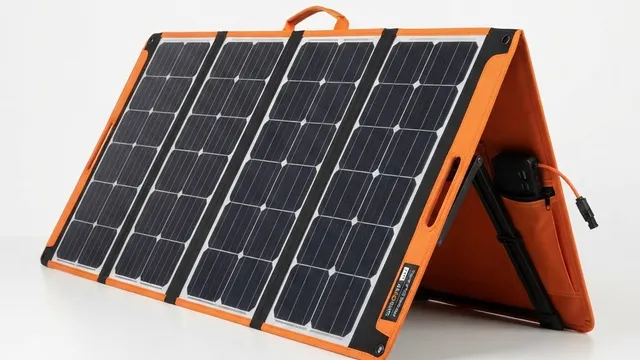
WATTS
100W
EFF.
23.7%
TYPE
Portable
CELL
Monocrystalline
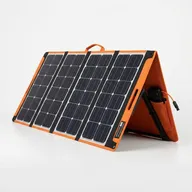
Jackery SolarSaga 100W Air Portable Solar Panel
by Jackery
Listed as a portable monocrystalline panel. Verify current cell-efficiency, connector, weather-resistance, and power-station compatibility information in current manufacturer documentation.
Who this is for
- Portable folding form factor
- 100W-class rated output
- Designed for temporary outdoor deployment
Avoid if
You need substantially more solar input or require a connector standard not supported by the current model
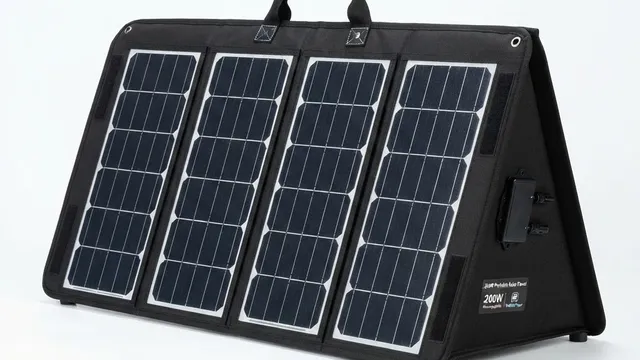
WATTS
200W
EFF.
23.4%
TYPE
Foldable
CELL
Monocrystalline
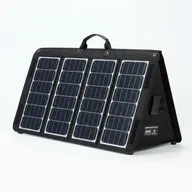
BougeRV 200W Portable Camping Panel
by BougeRV
Listed as a foldable monocrystalline panel. Verify current unfolded dimensions, connectors, weather rating, and electrical specifications with the manufacturer.
Who this is for
- 200W-class portable format
- Foldable for transport and storage
- Suitable category for power-station charging
Avoid if
You need backpack-scale weight or a permanently mounted module

WATTS
200W
EFF.
22.4%
TYPE
Flexible
CELL
Monocrystalline
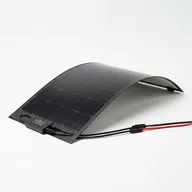
Renogy 200W Flexible Solar Panel
by Renogy
Listed as a flexible monocrystalline module. Do not exceed the manufacturer-specified bend radius, and verify current mounting, temperature, warranty, and weather-resistance guidance.
Who this is for
- Low-weight flexible format
- Thin profile for constrained mounting situations
- 175W-class rated output
Avoid if
You prefer a ventilated rigid rack, frequent panel removal, or maximum structural protection
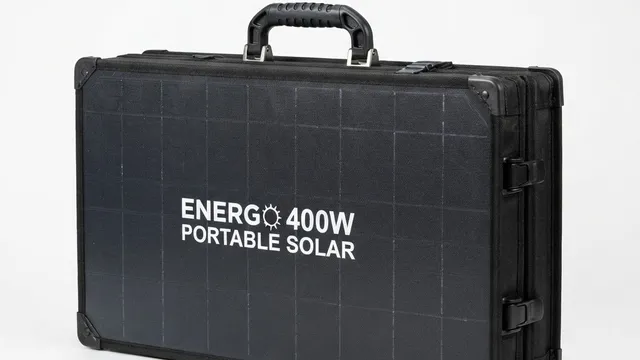
WATTS
400W
EFF.
22.6%
TYPE
Portable
CELL
Monocrystalline
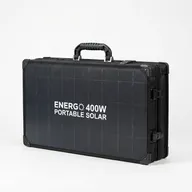
EcoFlow 400W Portable Solar Panel
by EcoFlow
Listed as a 400W portable monocrystalline panel. Verify the current unfolded size, weight, weather rating, connector arrangement, and power-station input compatibility before purchase.
Who this is for
- 400W-class portable nameplate rating
- Portable rather than permanent-mount format
- Relevant to large power-station charging setups
Avoid if
You need a lightweight backpacking panel or your power station cannot accept the proposed input
Flexible vs Rigid Panels for Van Life
Rigid panels for flat van roofs. If your Sprinter, Transit, or Promaster has a flat or near-flat metal roof, rigid monocrystalline panels are the best long-term choice. They run cooler (the 1-2 inch air gap under mounting brackets keeps cells 15-20°C cooler than glued flexible panels), last 25+ years, and produce more watts per dollar. A high-roof Sprinter 144-inch model fits roughly 300W of rigid panels; the 170-inch extended fits 400-600W.
Flexible panels for curved roofs and low-profile builds.Many van builders choose flexible panels for their ultra-low profile (no mounting brackets, nothing visible above the roof line) and their ability to conform to curved roof sections. Flexible panels are glued directly to the roof with 3M VHB tape or marine adhesive. The trade-off: shorter lifespan (5-10 years vs 25+), higher operating temperature, and 2-5% lower efficiency. For a stealth van build where profile matters more than lifespan, flexible panels are the right choice.
The hybrid approach — best of both. Many experienced van builders mount rigid panels on the flat sections of the roof and use a portable foldable panel deployed at camp. The roof panels charge while you drive and when parked; the portable panel can be angled directly at the sun for maximum output. A 200W roof array plus a 200W portable panel gives you 400W total when parked, with the portable positioned optimally.
Weight considerations. A 200W rigid panel weighs 25-30 lbs; a 200W flexible panel weighs 5-8 lbs. For a Sprinter or Transit already loaded with a build-out, cabinet, water tanks, and gear, every pound matters. Flexible panels reduce weight on the roof and lower the vehicle's center of gravity. This is a real advantage for smaller vans and builds at the payload limit.
How Much Solar Do You Need for Van Life?
Weekend van campers: 200-300W. If you use your van for weekend trips with basic loads (LED lights, phone charging, a small fan, occasionally a laptop), 200-300W of solar paired with a 100-200Ah battery handles your needs comfortably. This is the most common van life solar setup.
Part-time van life: 300-500W. If you spend weeks at a time in the van running a 12V compressor fridge, laptop, lights, a ventilation fan, and device charging, 300-500W of solar with 200-300Ah of LiFePO4 storage is the sweet spot. This covers your daily needs with margin for cloudy days.
Full-time van life: 400-800W. Full-time van dwellers running a fridge, laptop, ventilation, water pump, and occasional high-draw appliances (induction cooktop, microwave) typically need 400-800W of solar with 300-600Ah of lithium storage. Most full-timers also have alternator charging (via a DC-DC charger) to top up while driving.
Use our solar panel calculator to get a precise estimate based on your specific devices and daily usage.
Frequently Asked Questions
Are flexible or rigid solar panels better for van life?
For flat van roofs, rigid panels are better — they last longer, run cooler, and produce more power per dollar. For curved roofs or stealth builds where a low profile matters, flexible panels are the right choice. Many van builders use rigid on flat sections and a portable panel for camp use.
How many watts of solar do I need for van life?
Weekend van campers: 200-300W. Part-time van life: 300-500W. Full-time van life: 400-800W. The exact amount depends on your daily energy consumption — use our solar panel calculator for a precise estimate.
Can I run a van fridge on solar?
Yes. A 12V compressor fridge (like the Dometic or Nova Kool) uses 40-80Wh per day. A 200W solar array in 5 sun hours produces 800-1000Wh — more than enough to run a fridge plus basic electronics. Pair with a 100Ah+ LiFePO4 battery for overnight operation.
Should I add alternator charging to my van solar setup?
Yes — most full-time van lifers use a DC-DC charger (battery-to-battery charger) to charge the house battery from the van's alternator while driving. This supplements solar on cloudy days and during winter when solar production drops. A 30-60A DC-DC charger is standard for most van builds.
What is the best solar panel for a Sprinter van?
For a high-roof Sprinter 144-inch, a 300W rigid array (two 150W or three 100W panels) or a 200-300W flexible array works well. For the 170-inch extended, you can fit 400-600W. Pair with a 30A MPPT controller and 200-300Ah of LiFePO4 storage.
Get the Free Solar Panel Sizing Checklist
Enter your email and get a simple checklist to help choose the right solar panel wattage, panel type, and setup for your RV, cabin, camping gear, or backup power system.