Best Bifacial Solar Panels (2026) — Dual-Sided Picks
Bifacial solar panels capture sunlight on both the front and rear faces, generating extra energy from reflected and diffuse light. When installed correctly over a reflective surface, they can produce 10-30% more energy than monofacial panels. This guide covers the best bifacial panels and how to maximize their advantage.
Quick Answer
The best bifacial solar panels are mounted over reflective surfaces (white gravel, snow, light-colored concrete) with clearance underneath for the rear face to capture reflected light. Bifacial panels add 5-30% energy yield depending on surface reflectivity and mounting height. They're not worth it for flat RV roof mounts where the rear face is blocked.
Recommended Products
Based on listed specifications. Prices and availability change — check Amazon for current details.
Disclosure: As an Amazon Associate, we earn from qualifying purchases. This helps support our site at no extra cost to you.
WATTS
455W
EFF.
22.5%
TYPE
Rigid
CELL
TOPCon
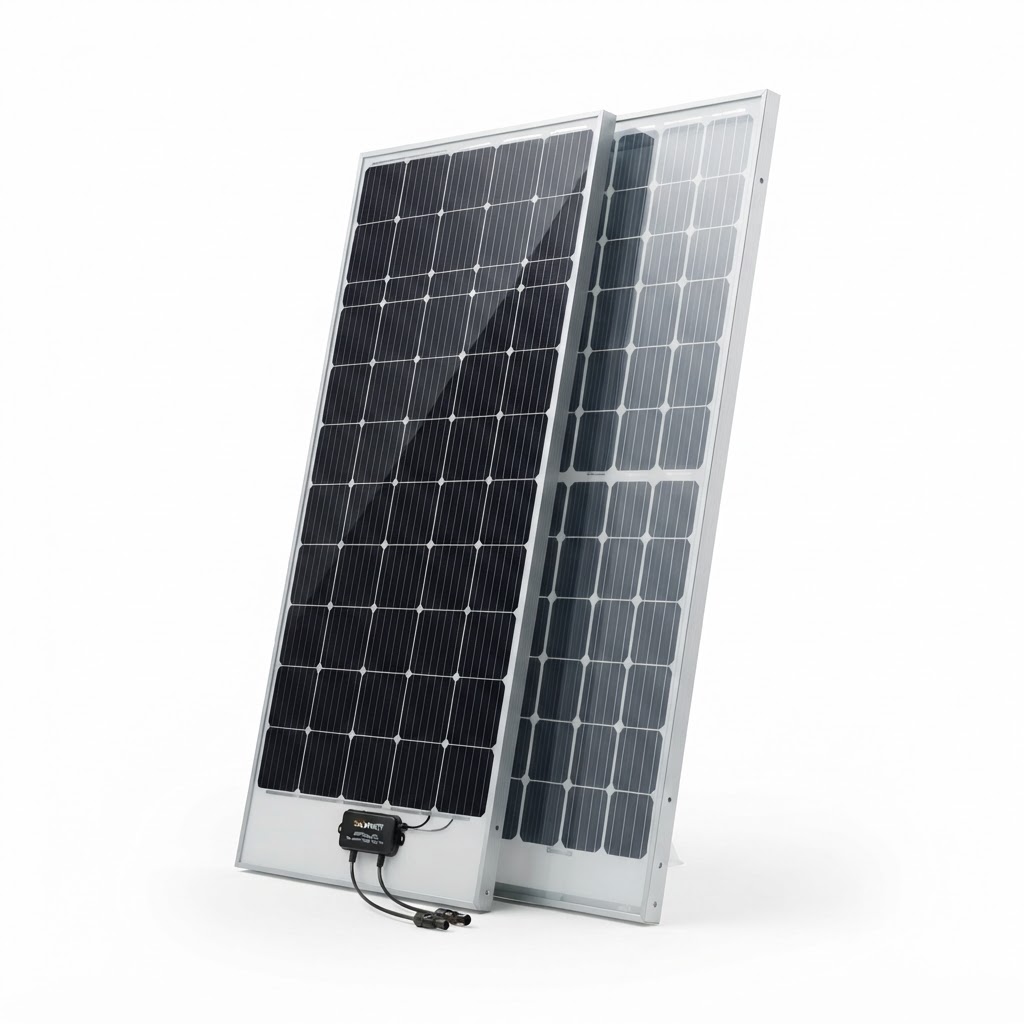
Canadian Solar 455W BiHiKu7 Bifacial Panel
by Canadian Solar
TOPCon bifacial cells with up to 30% rear-side gain in optimal albedo conditions
Who this is for
- Bifacial design captures rear-side light
- TOPCon technology for high efficiency
- Up to 30% bonus energy from albedo
Avoid if
You're flush-mounting on a dark roof or need portability
How bifacial panels work
A bifacial panel has solar cells on both the front and rear faces. The front captures direct sunlight as normal; the rear captures light reflected off the surface below and surrounding diffuse light. The energy gain (bifacial gain) depends on the albedo (reflectivity) of the surface beneath. White surfaces (snow, light gravel, white paint) reflect 60-90% of light; dark surfaces (asphalt, dark soil) reflect only 5-15%. The higher the albedo, the more extra energy the rear face produces.
Best mounting for bifacial panels
Bifacial panels perform best when mounted with clearance underneath — at least 1-3 feet above the ground surface. Ground-mounted arrays on poles or racks, pergola installations, and awning-style mounts all work well. The rear face needs an unobstructed view of the reflective surface below. Flush-mounting bifacial panels on an RV roof (rear face touching the roof) eliminates nearly all bifacial gain — the rear face can't capture any reflected light.
Real-world bifacial energy gain
Based on field studies and manufacturer data: over white gravel or snow, bifacial panels produce 15-30% more energy than equivalent monofacial panels. Over light concrete, 10-20% more. Over grass or soil, 5-15% more. Over dark asphalt or when rear face is blocked, near 0% gain. The premium for bifacial panels is typically 5-15% over monofacial — so over a reflective surface, the payback is positive; over a non-reflective surface, it's a poor investment.
Bifacial panels for RVs and vans — usually not worth it
For RV and van roofs, bifacial panels rarely deliver meaningful gains because the rear face sits against the roof surface with no clearance or reflected light. Some RV owners report 2-5% gain from light reflected off a white RV roof, but this is marginal. For portable setups where the panel is tilted on a kickstand over a reflective surface (sand, snow, light ground), bifacial portable panels can deliver 10-15% more energy — a worthwhile upgrade for camping in snowy or sandy environments.
Frequently Asked Questions
Do bifacial solar panels work on an RV roof?
Marginally. The rear face needs clearance and a reflective surface to produce extra energy. On an RV roof, the rear face is blocked, so bifacial gain is typically 0-5%. Bifacial panels are much better suited to ground mounts, pergolas, and awning installations with clearance underneath.
How much more energy do bifacial panels produce?
Over a highly reflective surface (snow, white gravel) with proper mounting clearance, bifacial panels produce 15-30% more energy than equivalent monofacial panels. Over grass or soil, 5-15% more. Over dark surfaces or when the rear face is blocked, the gain is near zero.
Are bifacial panels more expensive?
Bifacial panels typically cost 5-15% more than equivalent monofacial panels. Over a reflective surface with proper mounting, the extra energy production more than justifies the premium. Over a non-reflective surface or blocked rear face, the premium is not worth paying.
Disclosure: As an Amazon Associate, we earn from qualifying purchases. This helps support our site at no extra cost to you.
Related Guides
Are Bifacial Solar Panels Worth It? (2026 Honest Review)
Are bifacial solar panels worth the extra cost? Real-world bifacial gain explained, best use cases, and whether you should upgrade.
Bifacial vs Monocrystalline Solar Panels — What's the Difference?
Bifacial vs monocrystalline solar panels compared. Understand the difference, when each is better, and which panel type is right for your installation.
Bifacial Solar Panel Market: Growth, Trends & Consumer Impact (2026)
Bifacial solar panel market overview for 2026. Market growth, technology trends, price changes, and what it means for buyers considering bifacial panels.