Most Efficient Commercially Available Solar Panels: What Efficiency Really Means
Searching for the most efficient commercially available solar panels can turn into a percentage race, but the highest number is not automatically the best purchase. Efficiency tells you how effectively a panel converts incoming sunlight into electricity under specified conditions. For buyers, its biggest practical advantage is fitting more rated power into limited area. This guide explains how to compare high-efficiency panels without treating one specification as the entire decision.
Quick Answer
High-efficiency panels are most valuable when roof or mounting area is limited. Compare efficiency together with rated wattage, panel dimensions, cell technology, electrical specifications, warranty terms and installation constraints. Use manufacturer documentation for current specifications because product lines and ratings can change.
Recommended Products
Based on listed specifications. Prices and availability change — check Amazon for current details.
Disclosure: As an Amazon Associate, we earn from qualifying purchases. This helps support our site at no extra cost to you.
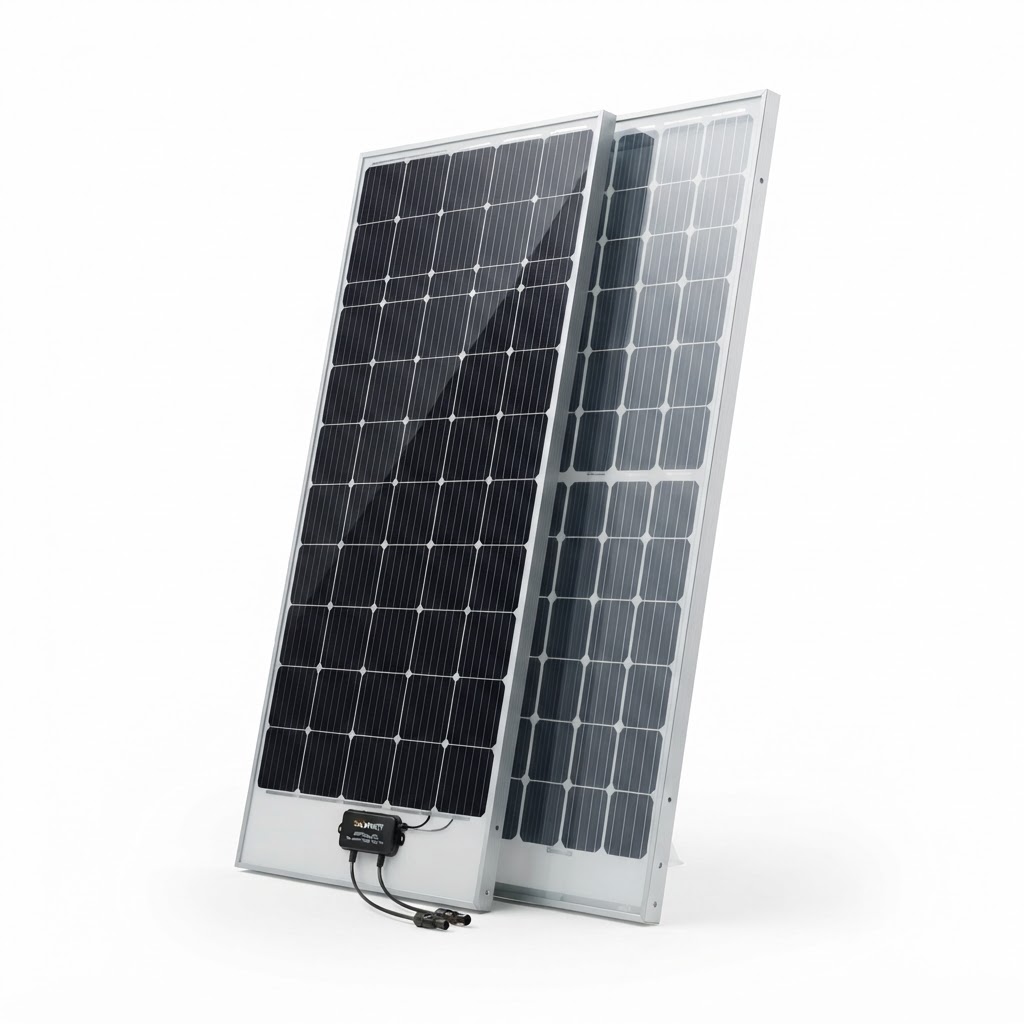
WATTS
455W
EFF.
22.5%
TYPE
Rigid
CELL
TOPCon
Canadian Solar 455W BiHiKu7 Bifacial Panel
by Canadian Solar
TOPCon bifacial cells with up to 30% rear-side gain in optimal albedo conditions
Who this is for
- Bifacial design captures rear-side light
- TOPCon technology for high efficiency
- Up to 30% bonus energy from albedo
Avoid if
You're flush-mounting on a dark roof or need portability
WATTS
425W
EFF.
22.8%
TYPE
Rigid
CELL
IBC
SunPower Maxeon 6 425W Panel
by SunPower
IBC (interdigitated back contact) cells deliver maximum efficiency by eliminating front-side busbars
Who this is for
- Industry-leading IBC cell technology
- 40-year useful life expectancy
- Best-in-class degradation rate
Avoid if
You're on a budget or need a temporary/portable solution
What Solar Panel Efficiency Measures
Module efficiency expresses the share of incoming solar energy converted to electrical output under standardized test conditions. It is useful for comparing how much rated power manufacturers fit into a given area, but it does not guarantee a particular amount of energy at your home, RV or job site. Temperature, orientation, shade, dirt and local weather affect real production. Treat efficiency as an important density metric rather than a promise of daily output.
Why High Efficiency Matters Most When Space Is Tight
If you have a large unobstructed mounting area, lower-efficiency modules may still meet the required system size by using more panel area. The equation changes on a small roof, van, boat or other constrained surface. In those situations, squeezing more rated watts into each square foot can be valuable. That is why buyers should compare panel dimensions alongside efficiency and wattage. A high percentage becomes meaningful when it solves a real space constraint.
IBC, TOPCon and Modern Monocrystalline Options
Modern high-efficiency products use several cell architectures. Interdigitated back contact, or IBC, designs move electrical contacts to the rear of the cell, while TOPCon is another high-performance architecture used in current modules. Conventional and advanced monocrystalline designs also cover a wide performance range. Cell technology can help explain why panels differ, but buyers should still compare the complete module specification rather than assuming an acronym automatically makes one product superior.
Two High-Efficiency Products to Compare
Our direct-linked catalog includes the SunPower Maxeon 6 425W panel, listed as an IBC rigid panel with a claimed efficiency of 22.8%, and the Canadian Solar 455W BiHiKu7, listed as a TOPCon bifacial rigid panel with a claimed efficiency of 22.5%. Those stored specifications provide useful comparison points, but manufacturer details may change. Check the current product documentation and Amazon listing before purchase, particularly dimensions, electrical limits and the exact model being sold.
Efficiency vs Wattage: Do Not Confuse the Two
Wattage is the module's rated power under specified test conditions, while efficiency relates that output to the module's area and incoming light. A physically larger panel can have a higher wattage without having the highest efficiency. Buyers with limited space should look at both figures. Buyers with abundant area may care more about total system economics, mounting constraints and compatibility than winning the efficiency percentage contest.
What to Check Before Buying a Premium Panel
Verify physical dimensions, weight, connector type, operating voltage and current, open-circuit voltage, mounting requirements and compatibility with your inverter or charge controller. For bifacial products, consider whether the installation allows useful light to reach the rear surface. Review current manufacturer warranty documentation rather than relying on an old summary. Premium efficiency makes the most sense when the additional power density solves a practical problem in your installation.
Frequently Asked Questions
What does a 22% efficient solar panel mean?
It means the module is rated to convert roughly 22% of incident solar energy into electrical output under specified test conditions. Actual energy production varies with installation and environmental conditions.
Is the highest-efficiency solar panel always the best panel?
No. Efficiency is especially valuable when mounting area is limited, but dimensions, wattage, electrical compatibility, durability, warranty terms and total system design also matter.
What is the difference between IBC and TOPCon solar panels?
They are different solar-cell architectures designed to improve performance. Buyers should compare the finished module specifications and installation requirements rather than choosing solely by the cell-technology label.
Do bifacial panels have higher efficiency?
Bifacial panels can collect light from both sides when installed appropriately, but bifacial capability and front-side module efficiency are separate concepts. Rear-side contribution depends heavily on installation conditions.
Should I pay more for higher efficiency?
Higher efficiency can justify a premium when roof or mounting area is the limiting resource. With abundant space, other factors may have greater influence on the best overall system choice.
Disclosure: As an Amazon Associate, we earn from qualifying purchases. This helps support our site at no extra cost to you.