Best Solar Panels for Sheds: How to Size a Small Off-Grid System
A shed solar system can be wonderfully simple if you start with the loads instead of the panel. Lighting and occasional tool charging may need far less solar than a mini fridge, heater or workshop equipment. This guide walks through the buying decisions in the right order so you can build a small system around what you actually plan to power. As an Amazon Associate, HighestEfficiencySolarCell.com earns from qualifying purchases.
Quick Answer
List each device, estimate its daily watt-hours, then size the panel, battery and charge controller as one system. A compact rigid panel can suit basic shed loads, while larger or multiple panels may be appropriate when daily energy use is higher. Always verify controller voltage/current limits and battery charging requirements before connecting components.
Recommended Products
Based on listed specifications. Prices and availability change — check Amazon for current details.
Disclosure: As an Amazon Associate, we earn from qualifying purchases. This helps support our site at no extra cost to you.
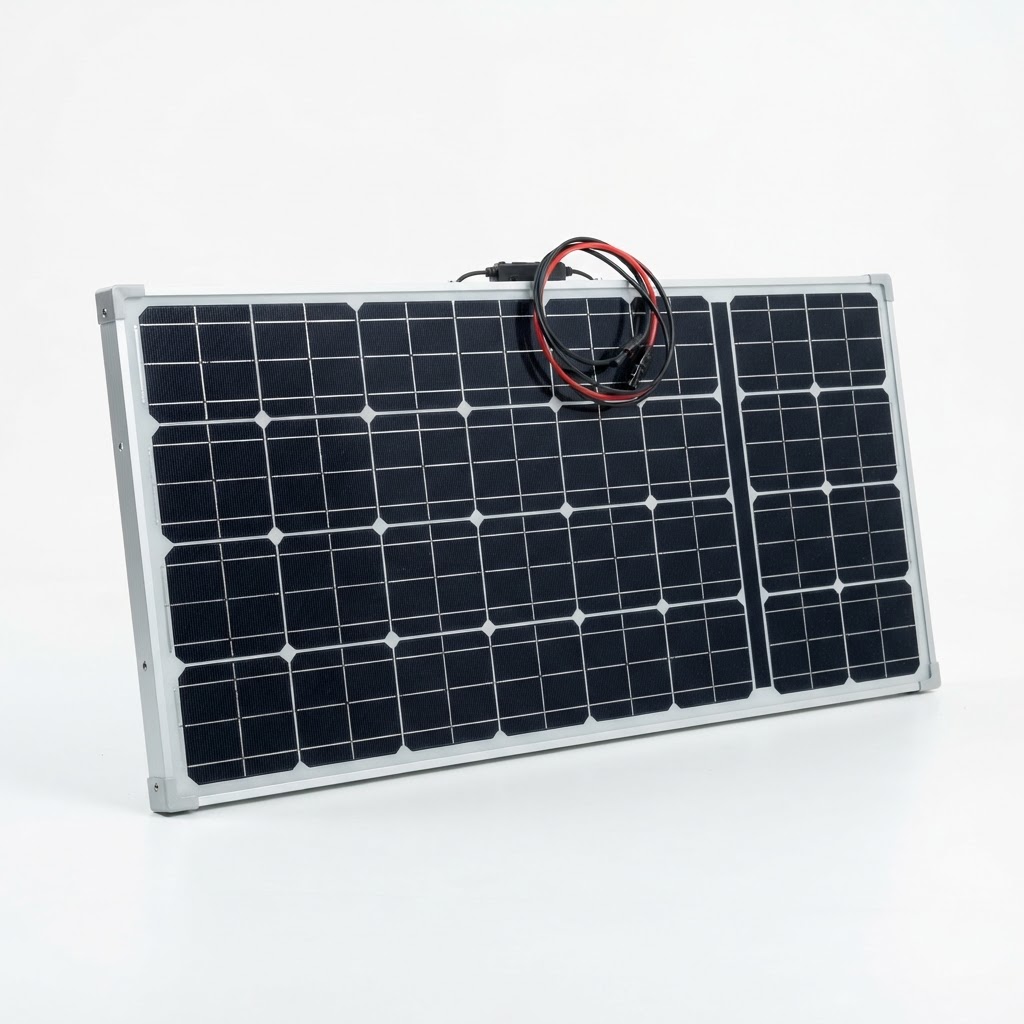
WATTS
100W
EFF.
21.2%
TYPE
Rigid
CELL
Monocrystalline
HQST 100W Monocrystalline Solar Panel
by HQST
Delivers solid monocrystalline efficiency at a budget-friendly price point
Who this is for
- Excellent price per watt
- Solid monocrystalline efficiency
- Compact and manageable size
Avoid if
You need more than basic power or want premium build quality
Start with daily watt-hours, not panel wattage
Write down each device's watts and expected hours of use, then multiply watts by hours to estimate daily watt-hours. Add the loads together. This gives you a useful energy target for comparing panel capacity and battery storage without pretending one panel size fits every shed.
Decide whether you need a battery
If you only use power while the sun is available, some specialized setups can operate without meaningful storage. Most sheds benefit from a battery because lighting and tools are often used when solar output is low. Match the battery chemistry, voltage and charging profile to a compatible charge controller rather than connecting a panel directly to a battery.
Rigid panels usually make sense for a permanent shed
A rigid panel is a natural fit when the shed has a suitable roof or nearby rack and the installation can be secured correctly. Measure usable mounting space, account for shade from trees and buildings, and consider roof condition before choosing module dimensions. A portable panel is more useful when you want to move the solar source between locations.
Match panel voltage to the charge controller
Panel wattage alone is not enough. Check open-circuit voltage, operating voltage and current against the controller's published input limits. If combining panels, remember that series and parallel wiring change array voltage and current differently. Design the array from actual equipment specifications.
Think about inverter loads separately
DC lighting and USB charging can sometimes avoid an inverter, reducing complexity. AC tools require an inverter with appropriate continuous and surge capability, plus a battery able to support the load. High-power heating equipment can change the economics of a small solar shed quickly, so calculate those loads before buying hardware.
A compact panel to research
The HQST 100W Monocrystalline Solar Panel in our catalog is a rigid MC4-equipped option that may suit modest shed projects when its electrical specifications match the rest of the system. Use the direct product page and manufacturer documentation to confirm current specifications before purchase. As an Amazon Associate, HighestEfficiencySolarCell.com earns from qualifying purchases.
Frequently Asked Questions
What size solar panel do I need for a shed?
It depends on daily watt-hours, local solar conditions and system losses. Calculate your loads first, then size the array and battery together.
Can a 100W solar panel power a shed?
It can support some modest loads, but whether it is enough depends on what you run and for how long. Lighting is very different from power tools or refrigeration.
Do I need a battery for shed solar?
Usually, if you want reliable power outside sunny periods. Choose battery capacity and chemistry based on your energy needs and compatible charging equipment.
Can I plug a solar panel directly into a battery?
Normally you should use a compatible solar charge controller between the panel and battery. Follow the battery, controller and panel manufacturers' instructions.
Is portable or rooftop solar better for a shed?
Permanent rigid panels are convenient for a fixed shed with suitable mounting. Portable panels can be useful when shade changes or you want to use the panel elsewhere.
Disclosure: As an Amazon Associate, we earn from qualifying purchases. This helps support our site at no extra cost to you.