Bifacial Solar Panel Mounting Height: Why Rear-Side Clearance Matters Before You Buy
Bifacial modules are designed to receive light from both the front and rear, which makes the space behind the panel part of the buying decision. Mounting a bifacial module flush against an opaque surface can undermine the reason for choosing a two-sided design. Before buying, evaluate rear clearance, the surface below the array, structural shading and the rack itself.
Quick Answer
There is no single mounting height that is best for every bifacial installation. Rear-side opportunity depends on module design, rack geometry, surface reflectivity, row spacing and site conditions. Follow the module and racking manufacturers’ installation guidance and preserve meaningful rear exposure rather than treating bifacial panels like flush-mounted monofacial modules.
Recommended Products
Based on listed specifications. Prices and availability change — check Amazon for current details.
Disclosure: As an Amazon Associate, we earn from qualifying purchases. This helps support our site at no extra cost to you.
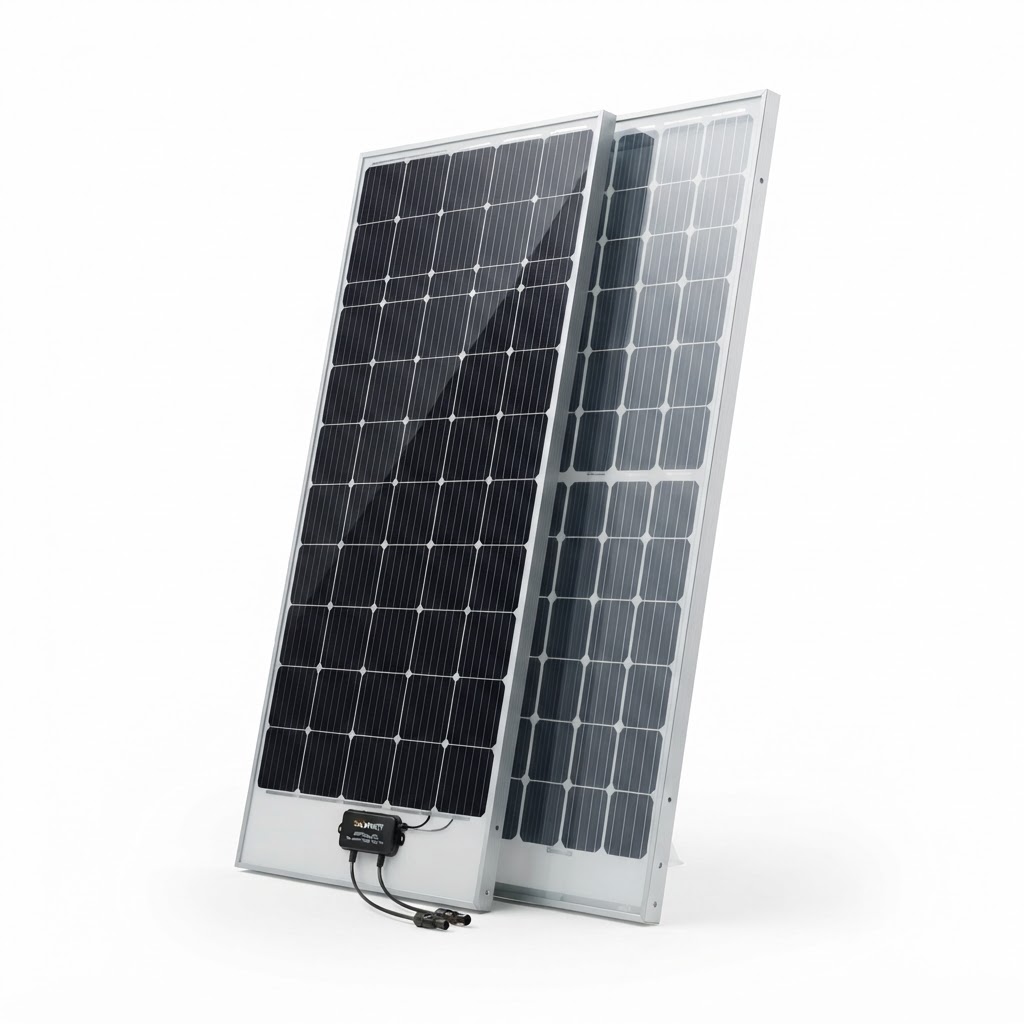
WATTS
455W
EFF.
22.5%
TYPE
Rigid
CELL
TOPCon
Canadian Solar 455W BiHiKu7 Bifacial Panel
by Canadian Solar
TOPCon bifacial cells with up to 30% rear-side gain in optimal albedo conditions
Who this is for
- Bifacial design captures rear-side light
- TOPCon technology for high efficiency
- Up to 30% bonus energy from albedo
Avoid if
You're flush-mounting on a dark roof or need portability
Why Bifacial Panels Need Rear Exposure
A bifacial panel has active collection capability on its rear side, so rear irradiance matters. Light can reach the back from reflections off the ground or roof and from the surrounding environment. If the back is blocked by an opaque mounting surface, the installation may not take advantage of that design feature.
Mounting Height Is Only One Variable
Increasing clearance can change how reflected light reaches the rear surface, but height alone does not determine performance. Rack rails, torque tubes, wiring, neighboring rows, roof features and the surface below can all create rear-side shading. Evaluate the whole mounting geometry instead of chasing a universal clearance number.
Surface Reflectivity and Albedo
Bright or reflective surfaces can return more incident light toward the rear of a bifacial module than dark surfaces. This property is often described using albedo. Actual rear contribution depends on site-specific conditions, so avoid treating a reflective surface as a guaranteed percentage gain. Use manufacturer or system-design guidance when estimating energy production.
Ground Mounts vs Rooftops
Ground mounts often give designers more freedom to create rear clearance and control row spacing. Rooftops may have tighter structural and wind-loading constraints. On either type of installation, racking must be engineered for the site and installed according to applicable instructions and codes.
Electrical Specs Still Come First
Bifacial construction does not eliminate normal electrical checks. Compare module voltage, current, wattage, temperature characteristics and inverter or charge-controller limits. If a bifacial design is expected to receive meaningful rear irradiance, system designers should account for the manufacturer’s electrical design guidance rather than relying only on the front-side nameplate concept.
Bifacial Buyer Checklist
Before buying, confirm that the site can provide rear exposure, review the module installation manual, choose compatible racking, consider surface reflectivity and structural shading, and verify electrical compatibility. If the intended mounting position blocks the rear surface, compare whether a conventional monofacial module would be a simpler fit. As an Amazon Associate, HighestEfficiencySolarCell.com earns from qualifying purchases. Product specifications and compatibility should be verified with the manufacturer and the current product listing before purchase.
Frequently Asked Questions
How high should bifacial solar panels be mounted?
There is no universal best height. Use the panel and racking manufacturers’ guidance and evaluate rear clearance, rack shading, surface reflectivity, row spacing and site constraints.
Can bifacial panels be mounted flat on a roof?
They can be installed only in configurations permitted by the module and racking instructions, but blocking rear exposure can reduce the practical value of the bifacial design.
Does a white roof guarantee more bifacial output?
No. A reflective surface may improve rear irradiance, but actual energy contribution depends on geometry, shading, sunlight and other site conditions.
Are bifacial panels only for ground mounts?
No, but ground mounts often provide more design freedom for rear clearance. Rooftop suitability depends on the specific roof, rack and module.
Should I buy bifacial panels if the rear will be shaded?
Compare the installation carefully. If rear exposure will be minimal, the bifacial feature may offer less practical value than it would in a more open mounting configuration.
Disclosure: As an Amazon Associate, we earn from qualifying purchases. This helps support our site at no extra cost to you.