Bifacial Solar Panels for Ground Mounts: When Rear-Side Production Is Worth Considering
Ground-mounted arrays give bifacial modules something rooftop installations often struggle to provide: controllable space behind the panel. That makes them an interesting option, but the word bifacial is not a promise of a fixed energy bonus. Rear-side contribution depends on the site, racking and light reaching the back of the module. This guide focuses on the purchase decisions you can evaluate before ordering hardware. As an Amazon Associate, HighestEfficiencySolarCell.com earns from qualifying purchases.
Quick Answer
Bifacial panels are most compelling on ground mounts when the rear surface has meaningful exposure to reflected light and the racking provides clearance rather than blocking the back. Compare the complete system, including module electrical specs, racking, row spacing, ground surface and inverter or controller limits, instead of buying solely for the bifacial label.
Recommended Products
Based on listed specifications. Prices and availability change — check Amazon for current details.
Disclosure: As an Amazon Associate, we earn from qualifying purchases. This helps support our site at no extra cost to you.
WATTS
455W
EFF.
22.5%
TYPE
Rigid
CELL
TOPCon
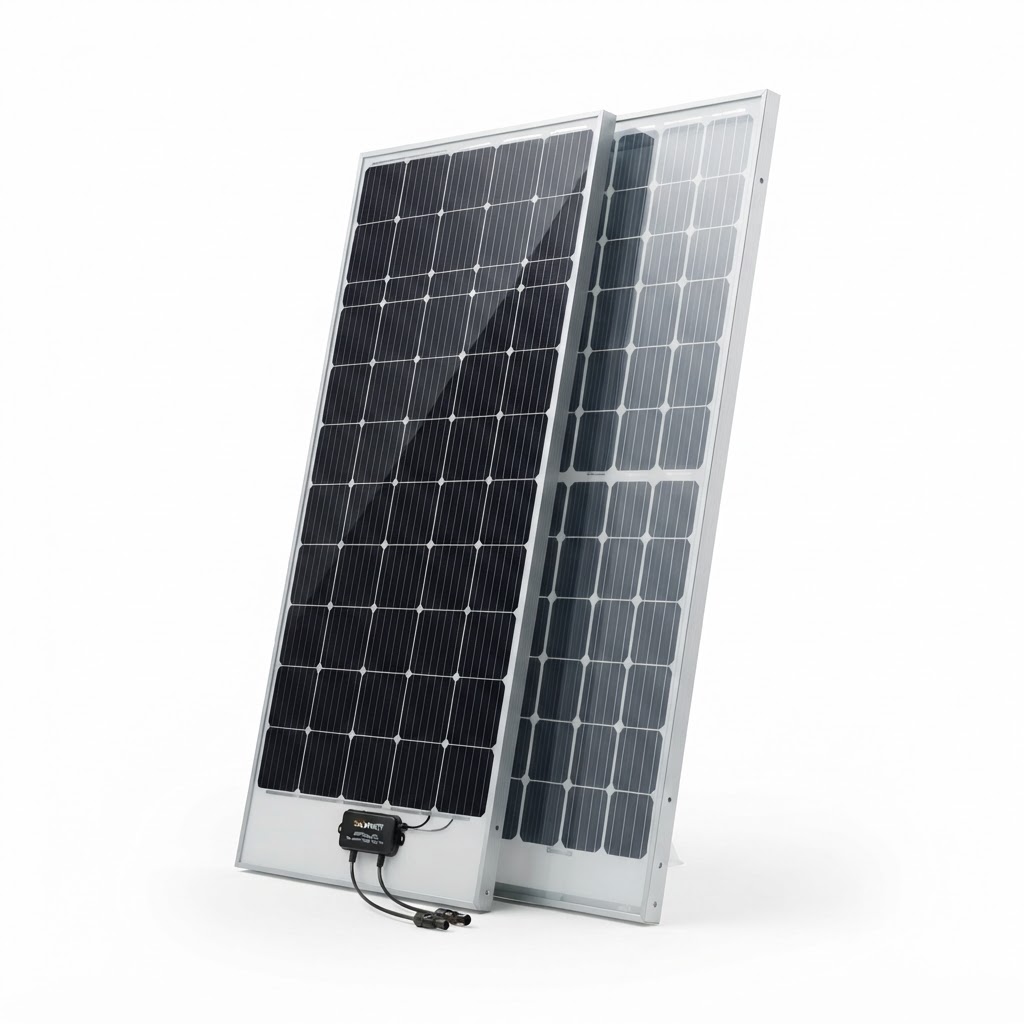
Canadian Solar 455W BiHiKu7 Bifacial Panel
by Canadian Solar
TOPCon bifacial cells with up to 30% rear-side gain in optimal albedo conditions
Who this is for
- Bifacial design captures rear-side light
- TOPCon technology for high efficiency
- Up to 30% bonus energy from albedo
Avoid if
You're flush-mounting on a dark roof or need portability
Why ground mounting can favor bifacial modules
A ground mount can elevate modules above the surface and expose more of the rear side than a flush installation. It also gives the designer more control over tilt, row spacing and the surface beneath the array. Those variables influence how much reflected light can reach the back of a bifacial panel.
Ground surface matters
Different surfaces reflect different amounts of incoming light, and conditions can change with weather and season. A bright surface can send more light toward the rear than a dark, absorptive one, but there is no universal rear-side gain that applies to every property. Treat any production estimate as site-specific and ask an installer or design tool to model the actual layout.
Racking can help or hurt rear exposure
Rails, posts, wiring and other hardware can shade the rear of a module. When comparing ground-mount systems, look beyond panel specifications and consider how the racking is positioned behind the active area. The goal is not simply more clearance; it is a layout that balances structure, wind and snow requirements, maintenance access and useful rear illumination.
Check electrical compatibility like any other array
Bifacial construction does not remove the need to design around voltage, current and inverter or charge-controller limits. Use the module data sheet and the system equipment specifications when determining string length and array configuration. Temperature conditions can also affect electrical design, so a permanent grid-connected installation is a good place for qualified system design.
When monofacial may be the simpler purchase
If the rear of the array will be heavily shaded, close to a dark surface or blocked by the mounting structure, a bifacial module may offer little practical reason to choose it over an otherwise suitable monofacial option. Compare module dimensions, wattage, efficiency, warranty terms and total installed-system requirements rather than treating cell architecture as the only buying criterion.
A bifacial product to research
The Canadian Solar 455W BiHiKu7 Bifacial Panel is stored in our catalog as a rigid TOPCon bifacial option with a direct Amazon product page. Use the current listing and manufacturer documentation to confirm specifications and installation requirements before buying. We do not assume a rear-side energy gain because that depends on the installation. As an Amazon Associate, HighestEfficiencySolarCell.com earns from qualifying purchases.
Frequently Asked Questions
Are bifacial panels good for ground mounts?
They can be. Ground mounts can provide rear clearance and controllable site conditions, but the benefit depends on reflected light, shading, racking and layout.
How high should bifacial panels be above the ground?
There is no single height that is correct for every system. Structural requirements, terrain, vegetation, snow, maintenance and rear illumination all influence the design.
Does white gravel guarantee more bifacial energy?
No. A reflective surface can improve rear illumination, but actual energy contribution depends on the complete geometry, weather, shading and module characteristics.
Do bifacial panels need a special inverter?
Not simply because they are bifacial, but the array's voltage and current must remain within the inverter or controller specifications. Design from the module data sheet and equipment limits.
Should I buy bifacial instead of monofacial panels?
Choose based on the site and whole-system economics. Bifacial is more relevant when the rear can receive useful reflected light; otherwise other module characteristics may deserve more weight.
Disclosure: As an Amazon Associate, we earn from qualifying purchases. This helps support our site at no extra cost to you.